
24/7 Customer Support

Free returns

Same-day & Next-day Delivery

Quality Guaranteed

Unlock Your Welcome Offers: FREE Delivery | Up to 80% OFF | Free 30-day JoyPlus trial
Download the APP
Choosing between men’s leather wallets and card holders is not simply a matter of colour or branding. The wrong design can become uncomfortable, overfilled or difficult to use within weeks. For UK commuters, office workers and frequent travellers, the key questions are practical: how many cards do you carry, do you need cash and coins, and will the wallet fit comfortably in your usual pocket?
This guide explains the specifications worth checking before buying, then matches selected products to different everyday requirements.
A very thin wallet may look appealing online but provide only a few card slots and no practical space for folded notes. Conversely, a wallet advertised with many compartments can become bulky once filled.
Check the number and position of card slots, not just the external measurements. A compact men's wallet should make frequently used cards easy to reach without forcing every slot beyond its intended capacity.
Leather descriptions can vary considerably. Some products use 100% genuine leather, full-grain leather or a leather blend, while others use synthetic leather. None of these labels automatically tells you how a wallet will feel or age, so read the material composition carefully.
For example, a genuine leather men's card holder and a smooth synthetic card holder may both offer a neat appearance, but they have different material characteristics and care requirements.
A wallet measuring 0.4 inches when empty can occupy noticeably more space once it contains banknotes and several cards. A bifold wallet for men usually offers more organisation than a card holder, but the folded construction may create additional pocket pressure.
Look for the listed dimensions, then consider your real carry load. If you carry only payment cards and identification, a card wallet may be more comfortable. If you use cash, loyalty cards or coins, a fuller design may be more suitable.
Material affects appearance, maintenance and the way the wallet responds to everyday use.
A black leather wallet is a versatile option for business clothing, commuting and casual outfits. Textured finishes, such as pebble or caviar grain, can also make minor surface marks less prominent, although care instructions still matter.
Count the features you genuinely need:
A wallet with card slots positioned on the outside may provide quicker access, while internal slots generally create a more enclosed layout. Neither arrangement is automatically preferable; the right choice depends on how often you use each card.
Dimensions should be compared in centimetres as well as inches. A card holder around 10–11cm wide and 7.7–8cm high is designed for cards rather than large amounts of cash. Traditional billfolds tend to be thicker because they fold around notes and additional compartments.
Before ordering, measure the pocket you normally use. Front-pocket carrying usually favours a slim men's wallet or card holder, while a coat or bag may accommodate a larger bifold design.
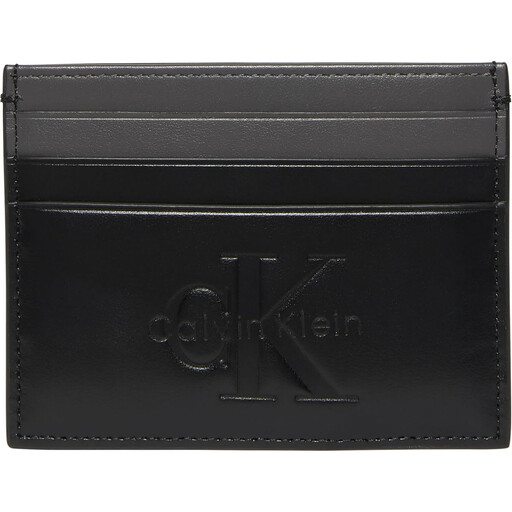
Why This Fits Their Persona: A straightforward option for shoppers moving from a traditional wallet to a lighter card-carrying setup for commuting, work or daily errands.
Its listed construction is smooth synthetic leather, making the material specification clear rather than implying genuine leather.
Slim black profile, multiple card slots and a wipe-clean care routine.
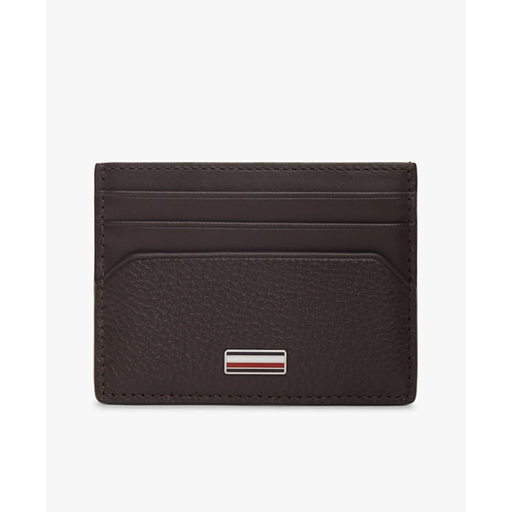
Why This Fits Their Persona: Suitable for someone who wants a genuine leather men's card holder with a recognisable but compact branded finish for business and smart-casual use.
The product listing specifies 100% genuine leather, a pebble-grain finish, exterior card slots and a central receipt or folded-note pocket.
Approximate dimensions of 10.3cm × 0.5cm × 7.7cm and a textured finish designed for low-bulk carrying.
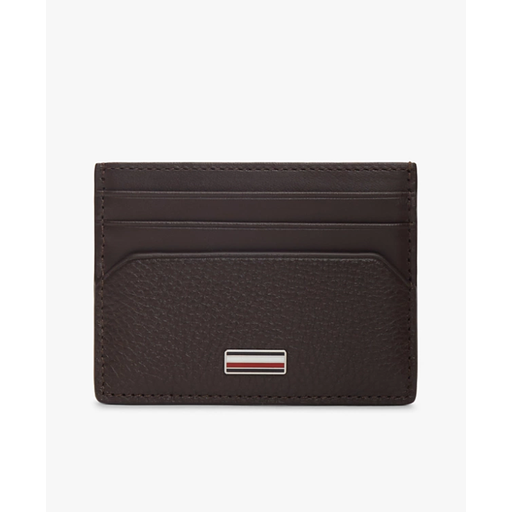
Why This Fits Their Persona: A practical match for UK users who carry banknotes as well as cards and want a conventional bifold wallet for men.
It uses a stated bifold layout with a deep billfold pocket and multiple internal card slots, rather than relying on a slim appearance alone.
100% genuine leather construction, internal card organisation and a listed size of approximately 10.5cm × 1cm × 8.8cm.
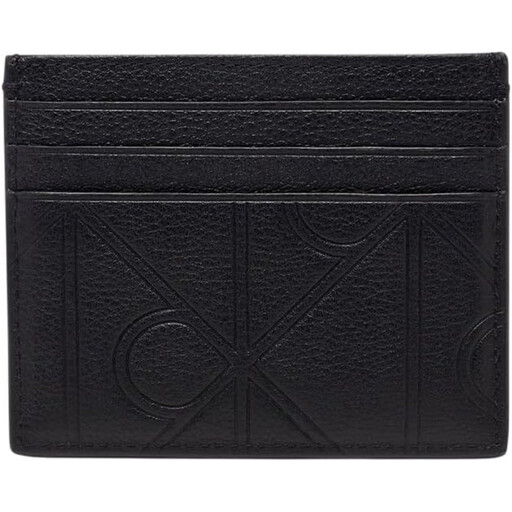
Why This Fits Their Persona: Designed for users wanting a black leather wallet alternative with a restrained appearance and enough structure for everyday cards.
The listing identifies full-grain genuine leather and specifies multiple card positions plus a central slip pocket.
Approximate dimensions of 10cm × 1cm × 8cm, grained texture and a lightweight card-holder format.
We have compiled a complete, real-time list of products that fully satisfy these strict selection criteria and UK safety regulations.
Some are suitable for a few folded notes or receipts if they include a central slip pocket. They are not normally designed for a full stack of banknotes, coins or numerous loyalty cards. If cash storage is important, choose a bifold wallet or a design with a dedicated bill compartment.
The practical number depends on slot design and card thickness. Start with the cards you use regularly—such as bank, travel and identification cards—and avoid filling every compartment simply because it is available. An overfilled wallet may become harder to close and less comfortable in a trouser pocket.
Use a soft, dry cloth for routine dust. For small marks, follow the product’s care instructions and use only a lightly dampened cloth where permitted. Avoid bleach, solvents, alcohol-based products, abrasive tools and soaking, as these may affect the surface finish or structure.