
24/7 Customer Support

Free returns

Same-day & Next-day Delivery

Quality Guaranteed

Unlock Your Welcome Offers: FREE Delivery | Up to 80% OFF | Free 30-day JoyPlus trial
Download the APP
Navigating the market for men's waterproof hiking boots can feel like trekking through a bog. Every label promises complete protection and ultimate comfort, yet many pairs fall short when faced with the reality of a wet and muddy British trail. As a Joybuy Product Recommendation Officer, my role is to help you sidestep the common purchasing traps and focus on the features that genuinely deliver performance and value. Before you spend your hard-earned money, let's look at the pitfalls that catch out even experienced walkers.
To ensure your next pair of boots is an asset, not a liability, focus on these non-negotiable technical specifications.
The heart of any reliable waterproof boot is its inner membrane. This microscopic layer is engineered with pores small enough to block water droplets from entering, yet large enough to allow smaller water vapour (sweat) molecules to exit. When assessing a boot, look for explicit mentions of a breathable and waterproof membrane. Without this dual function, a boot will fail to keep you comfortable and dry from the inside out, no matter how waterproof it claims to be. This is the defining feature of high-performance rugged outdoor footwear.
The outsole is where the rubber meets the trail. Do not be swayed by looks alone. Examine the sole for the following:
A secure fit is critical for preventing blisters and providing ankle support. While traditional laces work, modern systems offer significant advantages. Quick lace hiking boots often feature a dial or a cord-lock mechanism that allows for micro-adjustments, even with one hand. These systems provide a consistent, locked-in fit that will not loosen over a long day's hike, ensuring your foot remains stable inside the boot.
Here are our recommendations, matched to specific hiking profiles to help you find the right fit for your adventures.
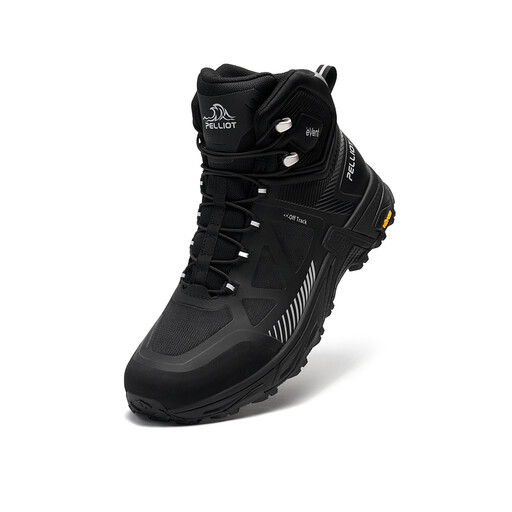
Why This Fits Their Persona: Ideal for the hiker who values efficiency and precision on challenging terrain. This user tackles varied gradients and surfaces, requiring a boot that adapts quickly and provides a consistently secure fit.
Directly counters the "Lacing Let-down" with its upgraded Fitgo Quick-Lace System, allowing for one-handed, micro-second adjustments without the risk of loosening on the move.
The combination of a rapid lacing system and an aggressive lug pattern provides confidence and speed on technical ground.
Why This Fits Their Persona: Perfect for the walker who heads out whatever the weather forecast says. From stream crossings to sudden downpours, their priority is staying dry, warm and protected from the elements.
It solves the "Waterproof Myth" by incorporating a genuine breathable and waterproof membrane, ensuring feet stay dry from both external moisture and internal perspiration.
Features a protective toe cap and an abrasion-resistant upper, offering robust, all-round protection from rocks, scree and brush in any weather.
Why This Fits Their Persona: Designed for serious hikers and mountaineers undertaking multi-day journeys with a heavy pack. For them, stability, support and unwavering grip are non-negotiable for safety and endurance.
This boot shatters the "All-Terrain Illusion" with its high-traction rubber sole and a specialised lug pattern engineered for outstanding grip on wet rock, loose scree and muddy slopes.
Delivers hardcore all-terrain capability and stability, keeping you steady and reducing fatigue when carrying heavy loads over long distances.
We have compiled a complete, real-time list of products that fully satisfy these strict selection criteria and UK safety regulations.
The most reliable method is to measure your foot length in millimetres and compare it directly against the manufacturer's size chart, which is usually provided on the product page. As a general rule, consider ordering half a size or even a full size larger than your standard shoe size to allow room for thicker hiking socks and natural foot swelling during a long walk. If you find yourself between two sizes, opting for the larger one is the safer choice for comfort.
While the terms are often used interchangeably, there is a subtle distinction. Men's trekking boots are typically heavier and more rigid, engineered to provide maximum support for multi-day expeditions where you might be carrying a heavy backpack. Hiking boots cover a broader spectrum, from lightweight, flexible boots for day hikes to more substantial models. The key is to match the boot's stiffness and ankle support to the demands of your typical hike.
Proper care is essential for longevity. After every use, remove excess mud and dirt with a brush and wipe the boots down with a damp cloth. Allow them to air dry naturally and completely, but keep them away from direct heat sources like radiators or fires, as intense heat can warp the materials and weaken the adhesives. Periodically re-applying a suitable waterproofing treatment will help maintain the performance of the outer material.