
24/7 Customer Support

Free returns

Same-day & Next-day Delivery

Quality Guaranteed

Unlock Your Welcome Offers: FREE Delivery | Up to 80% OFF | Free 30-day JoyPlus trial
Download the APP
Choosing menstrual hygiene products can be more complicated than it first appears. Pack sizes, absorbency labels and claims such as “ultra-thin” or “leak-proof” do not always tell you how a product will perform during a commute, overnight or a heavier-flow day.
The right choice depends on your flow, preferred format, skin sensitivity and how often you want to replace or wash the product. This guide explains the practical details to check before buying sanitary pads, tampons, period pads and reusable alternatives.
“Regular”, “super” and “super plus” are useful comparisons within a product range, but absorbency can vary between brands. A super plus tampon may be unsuitable on a light-flow day, while a regular tampon may require more frequent changes during heavy flow.
Use the lowest absorbency suitable for your flow and change tampons according to the instructions on the packaging. This helps you avoid paying for unnecessary absorbency and supports safer use.
Ultra-thin sanitary pads can feel discreet and comfortable during daytime use, but they may not provide the coverage needed for sleeping, movement or heavy flow. Check the pad’s length, wing design, back coverage and intended use rather than relying on thickness alone.
For overnight protection, look for a longer shape, secure side barriers and a design that stays in place when you turn in bed. Overnight period pants can be an alternative where you prefer full-coverage underwear-style protection.
Menstrual pads and incontinence pads are designed for different types of fluid and usage patterns. Always Discreet Incontinence Pads Women Normal, for example, are specifically labelled for urinary incontinence and should not be used to absorb menstrual flow. Similarly, adult protective underwear and adult nappies are intended for incontinence rather than periods.
Reading the product purpose, size information and disposal instructions before checkout can prevent an unsuitable purchase.
Match the format to your usual routine:
If you have sensitive skin, check whether the product is fragrance-free, dye-free or made with a soft topsheet. Breathable period products may help reduce the warm, enclosed feeling associated with prolonged wear, although comfort is personal and depends on fit, clothing and changing frequency.
Products containing cotton topsheets may appeal to shoppers who prefer a natural-feel surface. However, review the complete materials list rather than relying on front-of-pack wording such as “natural” or “hypoallergenic”.
A pad should sit centrally in the gusset, with wings wrapping securely underneath. Tampons should be inserted according to the enclosed instructions and changed at the stated interval. Washable period underwear requires correct sizing and careful laundering; fabric softener and bleach can affect absorbency in some products.
Disposable menstrual products should be wrapped and placed in a bin. Do not flush pads, tampons, wipes or period pants, as they can contribute to blocked plumbing.
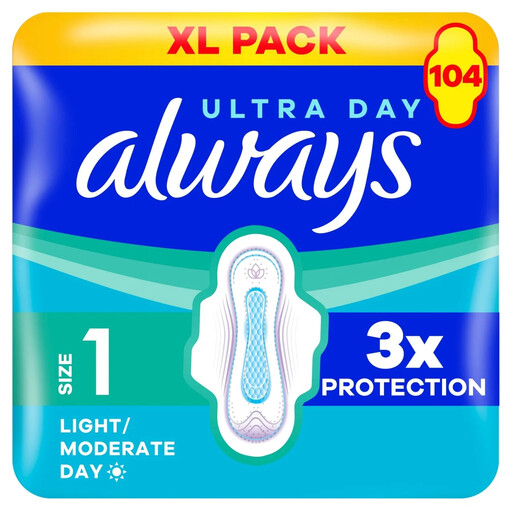
Why This Fits Their Persona: A large 104-pad pack is practical for shoppers building a regular at-home supply of daytime period pads.
The pack states its Size 1 format and normal-flow use, making it easier to compare with your usual daytime needs.
Ultra-thin construction, adhesive backing and a 104-pad quantity for regular replenishment.
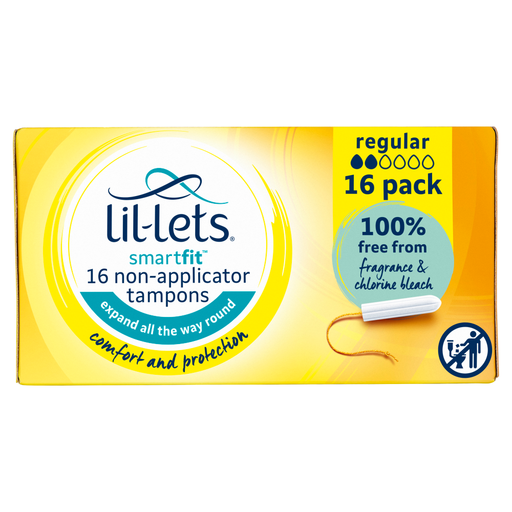
Why This Fits Their Persona: Suitable for shoppers seeking regular tampons with a compact, non-applicator format and a fragrance-free design.
The listed regular absorbency helps avoid defaulting to a higher absorbency, while the materials list identifies a fragrance-free and chlorine-bleach-free design.
Non-applicator format, rounded tip and a 16-tampon pack for light to medium flow days.
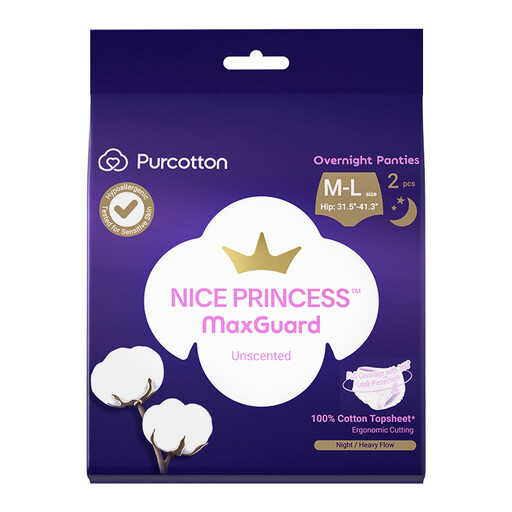
Why This Fits Their Persona: An underwear-style option for people wanting overnight or heavy-flow coverage without relying solely on adhesive pads.
Its stated M-L hip range, full elastic coverage and 3D guard provide practical details to check instead of relying only on “leak-proof” wording.
Ultra-thin breathable construction, cotton topsheet and pull-on design for overnight use.
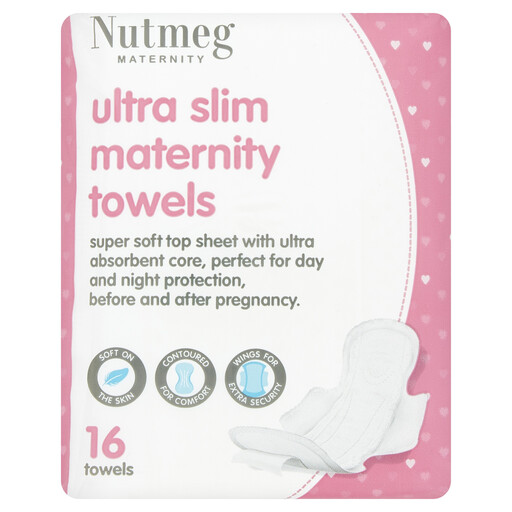
Why This Fits Their Persona: Designed for before and after pregnancy, this pack suits shoppers looking for maternity towels for postpartum care at home or in hospital.
The product is clearly identified for postpartum use and lists wings, an absorbent core and day-and-night coverage.
Soft topsheet, ultra-slim profile and 16-pack format with winged attachment.
Washable period underwear can reduce dependence on disposable products, but it requires planning. Check the size chart, gusset construction and washing instructions before purchasing. Bodyform Cotton Period Pants Washable Underwear in size L uses a multi-layer gusset and should be rinsed in cold water before machine washing at 40°C. The instructions advise avoiding fabric softener and bleach, which may affect absorbency.
Reusable products are most practical when you have enough pairs to rotate while others are drying. Consider drying time, access to laundry facilities and whether the stated capacity suits your flow.
Change pads and period pants according to flow, comfort and the product instructions. Tampons should generally be changed every 4 to 8 hours, or sooner if saturated. Super plus tampons may have a shorter stated interval, so follow the pack leaflet and use the lowest suitable absorbency.
They can reduce repeat purchases over time, but the initial cost, number of pairs required and washing routine matter. Compare the expected washing life, care instructions and size before calculating running costs. Disposable overnight period pants may be more convenient for travel or occasional heavy-flow use.
Postpartum bleeding requires products labelled for maternity or postpartum use, such as maternity towels. Choose a size and absorbency suited to your needs, change regularly and seek advice from your midwife or healthcare professional if bleeding or discomfort causes concern.