
24/7 Customer Support

Free returns

Same-day & Next-day Delivery

Quality Guaranteed

Unlock Your Welcome Offers: FREE Delivery | Up to 80% OFF | Free 30-day JoyPlus trial
Download the APP
A men's merino wool beanie can be useful for commuting, walking, hiking and everyday winter wear, but product listings often make similar hats sound interchangeable. The important differences are usually hidden in the fibre blend, lining, size range and care instructions.
Before buying, watch for three common pitfalls:
Check whether the product is made from 100% merino wool or a blend. Merino fibres are commonly selected for their soft feel, natural insulation and breathable character. However, a blend can be more suitable for shoppers who want a lighter, everyday knitted beanie.
For example, the Lyle & Scott options listed below use 30% merino wool and 70% cotton, with a stated fabric weight of 220 GSM. This is different from the thicker-feeling construction of a fleece-lined winter beanie, which combines a merino outer layer with a polyester fleece interior.
Do not treat a higher fibre percentage as automatically suitable for every situation. For mild UK autumn weather or indoor-outdoor commuting, a breathable wool beanie may be more comfortable than a heavily insulated hat.
A fleece lining adds a soft inner layer and can reduce the amount of cold air reaching the head. It is particularly relevant for skiing, hiking, running in snow or standing outdoors for extended periods.
The TOP-EX fleece-lined designs specify a 100% merino wool outer and 100% polyester fleece lining. This construction is more focused on insulation than an unlined men's wool hat. The trade-off is that a lined hat may feel warmer indoors or during active use.
For everyday errands and train journeys, an unlined rib-knit style may be easier to wear. For exposed hills, winter sports or cold-weather camping, look for a fleece-lined winter beanie with a suitable size range.
Measure around the widest part of the head, keeping the tape level above the eyebrows and ears. Compare that measurement with the product listing rather than relying only on labels such as M/L or XL.
Useful reference points include:
A cuffed watch cap normally sits closer to the head, while a fisherman beanie has a shorter crown and a more structured appearance. Some designs allow the cuff to be folded in different ways, giving more flexibility for casual styling.

Why This Fits Their Persona: A practical option for first-time buyers who want a lightweight men's merino wool beanie for commuting, casual outfits and regular autumn-to-winter use in the UK.
The listing clearly states its 30% merino wool and 70% cotton composition, so shoppers are not left assuming it is a 100% merino wool beanie.
220 GSM fabric; stretchy rib-knit construction; stated fit for 55–61 cm head circumferences.
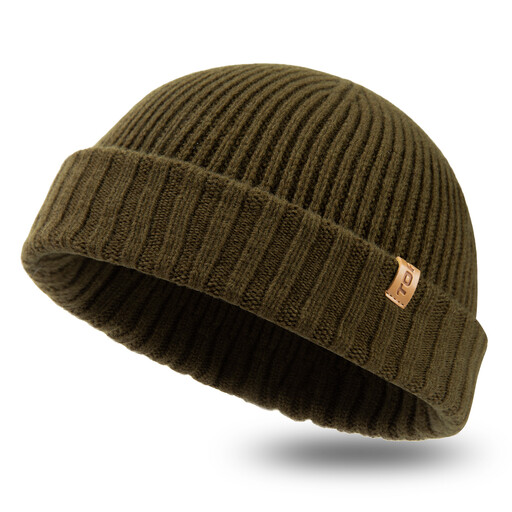
Why This Fits Their Persona: Suits shoppers prioritising a 100% merino wool beanie with a short fisherman silhouette for everyday wear, walking and outdoor trips.
The material is stated as 100% merino wool, and the two size ranges help reduce the risk of relying on a vague one-size description.
Cuffed or uncuffed styling; M/L and XL/XXL options; hand-wash care instructions.

Why This Fits Their Persona: A suitable format for skiing, hiking, snow running and other activities where extra insulation and larger head-size choices matter.
The product specifies both the 100% merino outer and polyester fleece lining, making its warmth-focused construction clear.
Fleece-lined interior; three wearing styles; M/L and XL/XXL sizing.
We have compiled a complete, real-time list of products that fully satisfy these strict selection criteria and UK safety regulations.
Merino wool and wool blends need gentler handling than many synthetic hats. Always follow the individual label, but the listed products generally specify hand washing only. Avoid bleach, ironing, tumble drying and dry cleaning where the instructions prohibit them. Reshape the hat while damp and leave it to drip dry away from direct heat. This helps reduce avoidable shrinkage, stretching and loss of shape.
Yes, an unlined knitted beanie can suit commuting and casual daily wear, particularly when you need moderate warmth without a bulky feel. A fleece-lined design may be more appropriate for long periods outdoors, windy locations or winter sports.
Not necessarily in every design. Fibre content is only one factor; thickness, knit density, fit and lining also affect warmth. A 100% merino wool fisherman beanie may be breathable and insulating, while a merino-cotton blend can feel lighter. A fleece-lined winter beanie adds a separate insulation layer.
It should sit securely without creating uncomfortable pressure around the forehead or ears. Measure your head and compare it with the stated centimetre or inch range. If you have a larger head size, check for XL/XXL availability rather than assuming an elastic watch cap will fit comfortably.