
24/7 Customer Support

Free returns

Same-day & Next-day Delivery

Quality Guaranteed

Unlock Your Welcome Offers: FREE Delivery | Up to 80% OFF | Free 30-day JoyPlus trial
Download the APP
A 100% Merino Wool Beanie can be a useful winter layer for commuting, dog walking and outdoor activities across the UK. However, product listings often use “wool”, “thermal” and “all-weather” language without making the construction clear. The result can be a hat that feels comfortable indoors but offers limited protection on a windy walk, or one that stretches quickly because the size was never checked properly.
This guide explains the specifications that matter, highlights common buying traps and matches practical options to different needs.
A product described as “Merino wool” may contain only a proportion of Merino fibre. Always check the fabric breakdown. For example, a Merino wool blend beanie may combine 30% Merino wool with 70% cotton, while another wool hat may use 80% wool and 20% nylon. These may be suitable for lighter everyday wear, but they are not the same as a 100% Merino wool winter hat.
The TOP-EX options in this guide specify 100% Merino wool for the outer or full knitted construction. Fleece-lined versions also state the lining separately, which is important: a hat with a 100% Merino wool outer and 100% polyester fleece lining is not made entirely from wool.
A double-layer knitted hat adds another layer of wool knit, whereas a fleece-lined merino wool beanie has a separate polyester microfleece interior. Both designs can feel warm, but they suit slightly different preferences.
Double-layer Merino wool offers a natural knitted construction and elastic fit. Fleece lining adds a soft, distinct inner layer that may feel more insulating during skiing, snowboarding or stationary outdoor use. Check the product description rather than relying on a photograph or the phrase “thermal”.
A stretchy beanie is not automatically one-size-fits-all. A hat that is too tight may feel uncomfortable over several hours, while a loose hat can shift during running or hiking. Check your head measurement before ordering, especially if you need a large-size beanie.
Merino wool also needs suitable care. The products featured here require hand washing, and some specify drying flat or drip drying. Machine washing, tumble drying, ironing and bleach can affect the shape and fibres.
Look for the exact percentage and whether it refers to the complete hat or only the outer shell. A 100% Merino wool beanie can provide a soft, naturally insulating layer for everyday winter wear. Merino knit is also commonly selected for moisture management, although a hat’s performance depends on its thickness, fit, lining and the conditions in which it is worn.
For colder use, compare:
A moisture-wicking wool hat may help manage dampness from light activity, but it should not be treated as waterproof protection.
The listed TOP-EX sizes generally cover:
Measure around the widest part of your head, above the eyebrows and ears. If you are between sizes, consider whether you prefer a close skull-cap fit or a more relaxed fisherman style.
A cuffed watch cap can be folded for a shorter, structured profile or worn with more coverage. A fisherman beanie typically sits higher on the head and works well with casual coats and jackets. Some fleece-lined designs offer three styling choices: skull cap, folded watch cap and fisherman beanie.
For a skiing hat or hiking hat, prioritise secure stretch and ear coverage. For commuting or office wear, a shorter fisherman shape may be easier to style.

Why This Fits Their Persona: A straightforward everyday option for shoppers wanting a black Merino beanie for commuting, casual wear and occasional outdoor use.
The listing clearly states 100% Merino wool and provides M/L and XL/XXL sizing rather than relying on a vague one-size description.
100% Merino wool construction; can be worn cuffed or as a short fisherman beanie; hand-wash care.
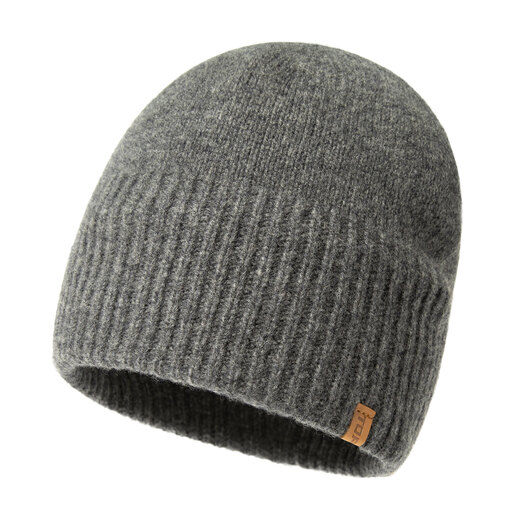
Why This Fits Their Persona: Suits shoppers who value a soft fleece interior, natural wool outer and flexible styling for urban winter wardrobes.
The materials are separated clearly: 100% fine Merino wool outer and 100% polyester fleece lining, so the construction is not ambiguous.
Microfleece lining; three stated wearing styles; M/L and XL/XXL options; grey colour.

Why This Fits Their Persona: A practical match for skiing, hiking, running in cold conditions and other activities where an additional insulating layer is useful.
The listing identifies both the wool outer and fleece lining, while offering a larger XL/XXL range for heads measuring approximately 61–64 cm.
Microfleece insulation; three styling options; black colour; designed for cold-weather outdoor activities.
Hand wash the beanie according to its care label, using a gentle detergent where appropriate. Avoid wringing, bleach, ironing and tumble drying unless the label specifically permits them. Reshape it while damp and allow it to dry naturally.
For hiking, hunting or sledding, combine the hat with suitable outerwear rather than treating it as a substitute for weatherproof clothing. During running or snow sports, a close but non-restrictive fit can reduce movement without creating excessive pressure.
We have compiled a complete, real-time list of products that fully satisfy these strict selection criteria and UK safety regulations.
It can be suitable for many everyday winter conditions, particularly when the hat provides adequate ear coverage and fits securely. For colder or windier commutes, a fleece-lined version offers an additional interior layer. It is not a waterproof garment, so use a hood or other weather protection during heavy rain.
The two constructions feel different. A double-layer hat uses two knitted layers, while a fleece-lined model adds a polyester microfleece interior. The fleece-lined design may appeal to shoppers seeking a thicker, soft-feeling layer, but warmth also depends on fit, coverage and activity level.
There is no fixed lifespan. Regular hand washing, natural drying and avoiding rough snagging can help preserve the shape and fibres. Stretch, pilling and wear may increase if the hat is washed incorrectly or worn very tightly. Checking the care instructions before purchase is as important as comparing colour, size and lining.