Choose mesh Wi-Fi if you can place a satellite before the worst dead zone, rather than expecting one router to reach reliably through every thick wall. If you can run a cable between nodes, prioritise a system that supports Ethernet backhaul; otherwise, the satellite still needs a usable wireless connection to the main node. A Wi-Fi 6 multi-node kit may meet the needs of audiobook downloads, while higher-capacity Wi-Fi 7 features are more relevant when the home also has demanding network uses.
Who this applies to
Households with a thick-wall dead zone
The connection works near the router, but audiobook downloads slow or stop in a distant room. Ofcom advises reducing walls and other obstacles in the Wi-Fi path, so the immediate question is where an intermediate node could receive a usable signal.
Homes with a practical Ethernet route
If you can cable a satellite to the main mesh unit, Ethernet backhaul avoids making that node-to-node connection cross the difficult wireless path. TP-Link describes wired backhaul between compatible Deco units as faster and more stable than their wireless connection.
Busy homes with a wider coverage problem
If the audiobook issue occurs alongside many active devices, streaming, gaming or faster broadband, higher-capacity mesh features may also matter. Node placement still determines whether the listening room gets a usable connection.
What to check before buying
Try to clear the path from your existing router first. If the listening room remains weak, plan where a satellite could connect, then decide whether cabling between nodes is practical.
| Concern | What to check | Who this matters to |
|---|
| Signal path around thick walls |
Look for a mains-powered intermediate node position that has a usable link to the main unit; consider how many nodes the layout needs. |
If an audiobook stalls in a room beyond thick walls, I need a satellite positioned before the weakest part of the signal path. Around 50% of consumers put that placement need first. |
| Connection between nodes |
Confirm Ethernet-backhaul support for the exact system and check its ports and the proposed cable route. |
Where I can run a cable, I would rather not depend on a wireless link between nodes across dense construction. Around 30% of consumers prioritise that wired connection. |
| Capacity suited to the household |
Compare the node count and stated capabilities with your broadband service and other active uses; do not treat a coverage figure as a wall-performance guarantee. |
If downloads are my main concern, I want adequate coverage without choosing extra capacity solely for that task. Around 20% of consumers make that balance their primary concern. |
Placement and buying pitfalls
-
Putting a satellite deep inside the dead zone
A satellite still needs a usable connection to the main node; the thick wall can remain a bottleneck if that connection is weak.
Start with an intermediate position that has mains power, then test an actual audiobook download in the listening room.
-
Treating advertised coverage as a result for your home
A stated coverage area does not account for your wall materials, floor plan and node positions.
Use coverage claims to shortlist node counts, then check the retailer’s return terms and test the intended room within the applicable return period.
-
Choosing Wi-Fi 7 solely for audiobook downloads
Higher-capacity features do not, by themselves, fix a poorly positioned node or a weak connection between nodes.
Consider those features when the same household also has demanding uses such as multiple active devices, streaming or gaming.
-
Assuming different mesh families work together
TP-Link states that Deco Mesh, OneMesh, EasyMesh and Omada Mesh cannot form one unified mesh network.
Check whether your existing router or extender works with the exact system you intend to buy.
Using an incompatible existing device may require replacing it to create the intended network.
Relevant brands for reference
TP-Link Deco
A line to consider when node-count choice and a documented wired-backhaul option matter for a difficult room layout.
- TP-Link specifies the Deco X50 three-pack as Wi-Fi 6 with optional Ethernet backhaul.
- The benefit of wired backhaul depends on a workable cable route; it does not establish coverage through a particular wall.
eero
A mesh line to consider when an intermediate wireless node is practical and the priority is whole-home coverage.
- The UK eero 6+ listing describes Wi-Fi 6 and support for internet service up to 1 Gbps.
- Its stated capabilities do not establish how well a wireless connection between nodes will cross your walls.
NETGEAR Orbi
A line to examine when the coverage problem accompanies more demanding whole-home network use.
- NETGEAR specifies the Orbi 770 two-pack as tri-band Wi-Fi 7 with Enhanced Backhaul and 2.5 Gig Ethernet.
- Those capabilities may exceed what audiobook downloads alone require, and stated coverage depends on the home’s layout and construction.
Joybuy mesh Wi-Fi choices
These three-unit Wi-Fi 7 systems offer nodes you could position between the main router and a weak listening room. Choose by the node placement and connections your home permits, not by Wi-Fi generation alone; confirm the exact backhaul setup if you intend to run Ethernet.
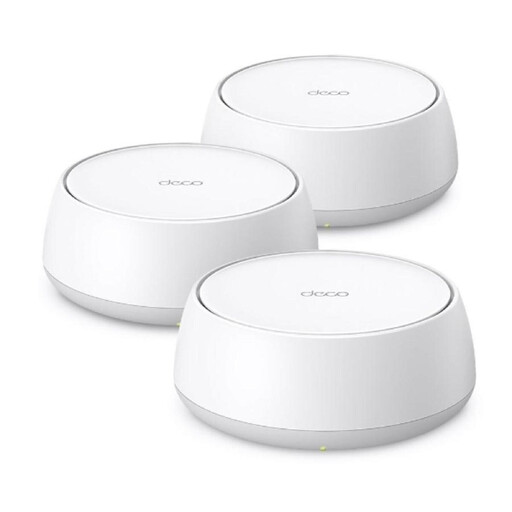 No image available
TP-Link Deco BE22 BE3600 Wi-Fi 7 (3-pack)
Consider this three-unit system if an intermediate node could give the listening room a better signal path.
Wi-Fi 7; BE3600. If you plan to cable the nodes, confirm the exact Ethernet-backhaul setup and your cable route before buying. Test a download in the target room after placement.
View on Joybuy
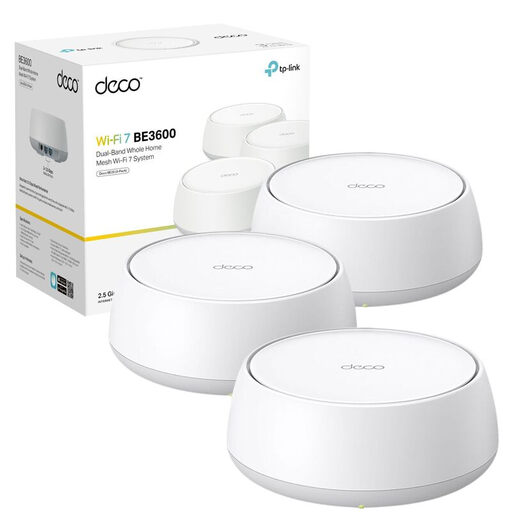 No image available
TP-Link Deco BE25 Wi-Fi 7 (3-pack)
This three-unit system is worth considering where you can place a satellite between the main unit and the weak room.
Wi-Fi 7. Check the exact Ethernet-backhaul arrangement if cabling is part of your plan, and test an audiobook download once the nodes are positioned.
View on Joybuy
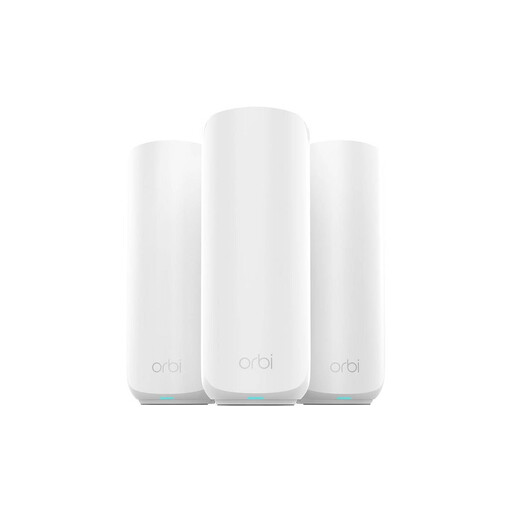 No image available
NETGEAR Orbi 370 RBE373 BE3600 (3-pack, white)
Consider this three-unit system if you can place a satellite before the worst dead zone rather than inside it.
Dual-band Wi-Fi 7; 2.5Gbps Ethernet. If a wired connection between nodes is important, confirm whether this exact model supports the backhaul arrangement you need.
View on Joybuy
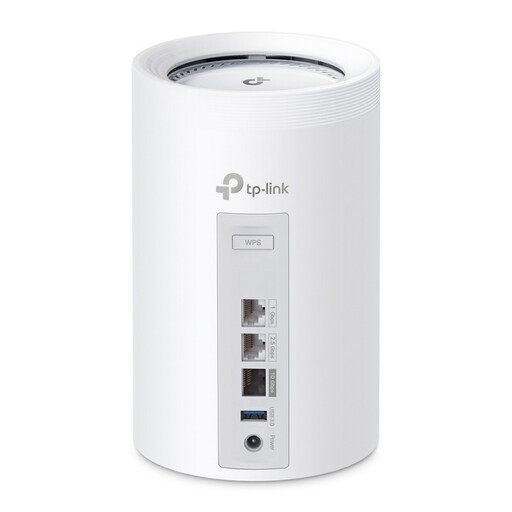 No image available
TP-Link Deco BE65 BE9300 tri-band Wi-Fi 7 (3-pack)
Consider its higher-capacity features if the weak listening room is part of a broader network problem involving other demanding uses.
Tri-band Wi-Fi 7; BE9300. Confirm Ethernet-backhaul support if you have a cable route, and test the actual download path: these specifications do not establish performance through your walls.
View on Joybuy
Frequently asked questions
Can mesh Wi-Fi help an audiobook download behind thick walls?
Yes, if a satellite can receive a usable connection from the main node and provide a better path to the listening room. Ofcom advises minimising walls and obstacles in the Wi-Fi path; placing a satellite deep inside the dead zone may leave the problem unchanged.
Is Ethernet backhaul worth using if I can run a cable?
It is worth prioritising for this thick-wall problem if the exact mesh system supports it and the cable route is practical. TP-Link says Ethernet backhaul between compatible Deco units is faster and more stable than a wireless connection between nodes; the final wireless path to the audiobook device still needs sensible placement.
Does a mesh kit replace my broadband connection?
No. Mesh distributes an existing internet connection around the home. TP-Link states that Deco needs an external internet source, such as a modem or a direct Ethernet wall connection.


