
24/7 Customer Support

Free returns

Same-day & Next-day Delivery

Quality Guaranteed

Unlock Your Welcome Offers: FREE Delivery | Up to 80% OFF | Free 30-day JoyPlus trial
Download the APP
Metal cutting dies for card making can turn plain card into layered borders, lettering, flowers and seasonal decorations. They are useful for handmade greetings cards, scrapbook layouts, wedding invitations and paper gifts, but product listings often leave out details that affect everyday usability.
Before buying, look beyond attractive sample images. The right die should suit your cutting machine, the paper you use and the type of projects you make regularly.
A die can look versatile in a product image but be too large for an A6 card, or too small to create a visible focal point. Listings may show several die-cuts together, making the individual pieces appear larger than they are.
Check the stated dimensions where available and compare them with your card blank, scrapbook page or album pocket. For lettering, also consider whether the characters will be large enough to read once cut from patterned paper.
Most paper craft cutting dies are designed for use with a compatible manual or electronic die-cutting system, but platforms, shims and sandwich combinations vary. A die that cuts effectively in one machine may require a different plate arrangement in another.
Read the machine instructions before use. Avoid forcing the rollers or using excessive pressure, as this can damage plates, the machine or the die. If a listing does not clearly explain compatibility, treat that as a point to verify before ordering.
Some products are intended to cut, some to emboss and others to work alongside clear stamps. A decorative outline does not necessarily mean the product performs all three functions.
Look carefully for wording such as metal cutting die, embossing stencil, clear stamp or die-cut template. Also check whether the listing contains the complete set shown in the image. Terms such as “set” and “many layered” can refer to multiple pieces, but the exact contents still need checking.
Carbon steel is commonly used for reusable paper craft cutting dies because it can provide a shaped cutting edge in a thin format. However, the material name alone does not confirm the cut quality or longevity of a particular product.
Inspect product images for clean outlines, securely joined sections and a design that is not excessively intricate for your chosen card. Very fine details may need precision paper or a few passes through the machine, while open shapes are generally simpler to release.
Layered flower cutting dies, alphabet dies and nesting frames each offer a different type of flexibility:
For wedding card embellishments or scrapbook pages, a set with several coordinated shapes may offer more practical uses than a single highly detailed motif.
Not every die is suitable for thick card, glitter paper, vellum or adhesive-backed sheets. Check the manufacturer’s guidance for your machine and begin with ordinary craft card. A thin release tool or poking tool can help remove small paper pieces, but sharp edges should be handled carefully.
Store dies flat, dry and separated from loose scraps. Cleaning out paper fibres after use can help keep the cutting edge and intricate openings clear.
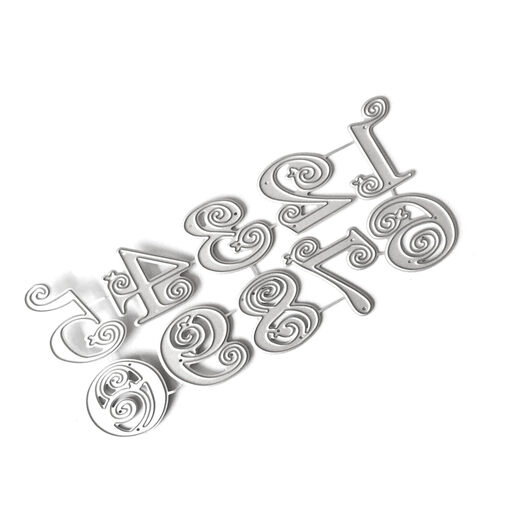
Why This Suits This User: A practical starting point for birthdays, milestone cards and scrapbook dates, with numbers that can be reused across different paper projects.
The product title identifies carbon steel and number templates, making the intended function clearer than a vague decorative listing.
Carbon steel construction; suitable for number-led cards, packaging and scrapbook embellishment.
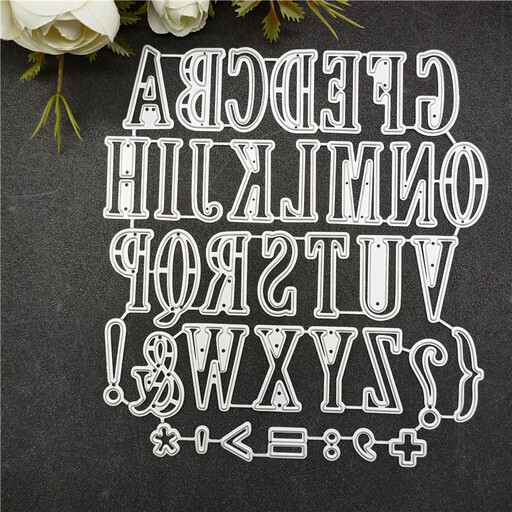
Why This Suits This User: Suitable for makers who want consistent capital lettering for personalised cards, albums, labels and decorative words.
The listing specifies 26 capital letters, helping shoppers confirm the core contents before purchase.
26-letter set; described as durable embossing stencils for paper crafts and card making.
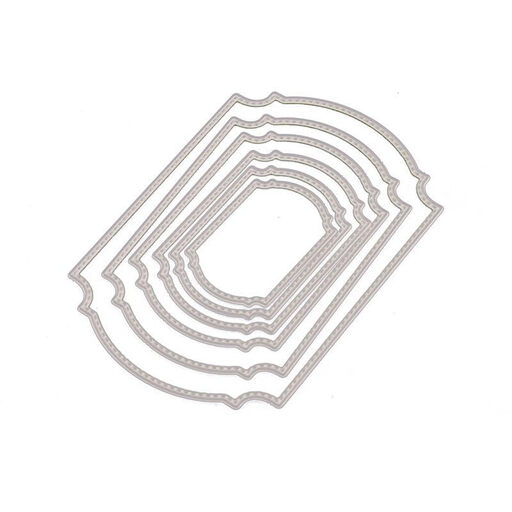
Why This Suits This User: A useful format for frequent scrapbookers and card makers creating mats, layered panels and irregular frames.
Six different sizes make the set more adaptable than a single fixed frame, while the stitched detail is specified in the product name.
Six nesting sizes; irregular rectangular shapes for layered paper designs.
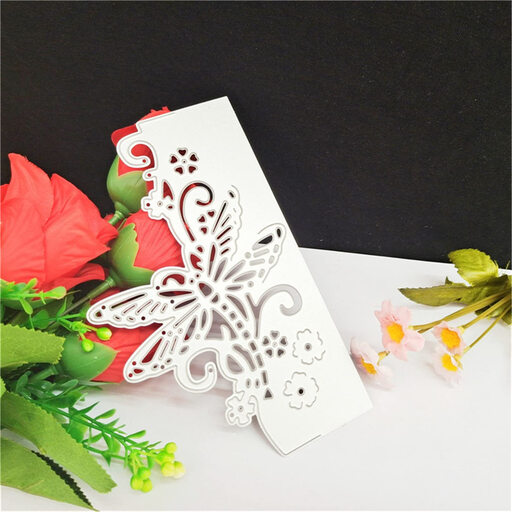
Why This Suits This User: Designed around Christmas paper projects, making it a focused option for seasonal cards, albums and handmade decorations.
Its seasonal purpose is stated directly, so shoppers can judge whether the design matches their intended projects rather than relying only on styled imagery.
Christmas-specific design; listed for paper craft punch templates, embossing and DIY album décor.
For celebratory cards, candle-themed die-cuts can suit birthday and congratulations designs. The Candles Die Cut for Card Making is listed with embossing stencils and wedding blessing card decoration.
If you prefer botanical details, consider layered flower petal leaves, lace frames or butterfly motifs. These can be combined with plain card to create DIY scrapbook decorations without requiring a large collection of separate embellishments. Border and background dies are also useful for repeating patterns around photographs or card fronts.
Before buying, confirm:
Product listings should also provide enough manufacturer and seller information for UK shoppers to make an informed purchase. Keep order records and check the retailer’s returns information if the product differs materially from its description.
We have compiled a complete, real-time list of products that fully satisfy these strict selection criteria and UK safety regulations.
Usually, they require a compatible die-cutting machine or press. Check the machine manufacturer’s instructions for the correct platform and plate arrangement. Do not assume that a die will work safely in a device that is not designed for metal cutting dies.
Their usable life depends on the material, design detail, paper type, pressure and storage. Cutting ordinary paper and card within the machine’s guidance, removing scraps carefully and keeping dies dry can help maintain their condition. No fixed lifespan applies to every die.
No. A cutting die has an edge intended to cut paper, while an embossing stencil or embossing folder creates a raised or indented pattern. Some products combine functions, but the listing should state this clearly. Always check the included pieces before ordering.