
24/7 Customer Support

Free returns

Same-day & Next-day Delivery

Quality Guaranteed

Unlock Your Welcome Offers: FREE Delivery | Up to 80% OFF | Free 30-day JoyPlus trial
Download the APP
Buying metal cutting dies for card making can feel straightforward until a set fails to fit your machine, produces incomplete cuts or contains designs that are too small for your intended project. Whether you create handmade cards in a spare room, run a school craft session or prepare wedding stationery in bulk, a careful buying process helps prevent wasted paper and unnecessary replacement costs.
This guide explains the practical details to check, highlights common purchasing traps and presents our top recommendations for different types of UK crafters.
Metal dies require a compatible manual or electronic die-cutting system. A listing may say “for card making” or “scrapbooking”, but that does not automatically confirm compatibility with your machine’s platform, cutting plates or roller clearance.
Before ordering, check:
If the product listing does not provide dimensions, contact the seller before purchasing rather than relying on the product photograph.
Product photos can make small dies appear substantial. This is particularly important for flower cutting dies, alphabet designs and detailed decorative borders. A die that is suitable for a small gift tag may not fill an A6 card front.
Look for the actual measurements of individual dies, not only the size of the packaging. Consider the finished project too: a layered flower needs enough room for several paper pieces, while a border die should match the width or height of the card panel.
Some listings combine stamps, stencils and cutting dies in their descriptions, while the selected option may contain only cutting dies. Other sets may show several decorative elements but include fewer pieces than expected.
Read the product title, variant selector and specification panel together. Check whether the purchase includes:
This simple check is especially useful when comparing scrapbooking cutting dies, paper craft dies and die-cutting templates.
Thin metal dies are usually placed over paper or cardstock and passed through a compatible roller machine. However, the correct plate combination varies between machines. Do not force a sandwich that feels too thick, as this can damage plates or the machine mechanism.
For workshops and classrooms, choose designs that are easy to position and remove. Simple shapes, open borders and larger motifs are generally more manageable when several people are working at once.
Many listings describe their products as carbon steel cutting dies. Carbon steel is a material description, not a guarantee of a particular cutting result. What matters in practical use is the die’s shape, cutting edge, thickness and ability to sit flat against the paper.
Inspect product images for:
Very intricate dies can create attractive patterns, but they may need a shim, release paper or a die brush depending on your machine and cardstock. Always follow the machine manufacturer’s instructions.
Match the die to the job rather than buying only by appearance. Border cutting dies suit card frames, photo albums and layered backgrounds. Layered floral designs are useful when you want dimension, while alphabet die sets help personalise birthdays, place cards and memory books.
For wedding stationery, compare the design with your card size and paper weight before buying multiple sets. A delicate motif can work well on lighter cardstock but may be harder to release cleanly from very thick card.

Why This Fits Their Persona: A four-piece format gives newcomers several designs to practise with before investing in a larger collection.
The piece count is stated in the product name, helping avoid confusion about an illustrated multi-design set.
Four metal dies; carbon steel construction is specified in the title; suitable for paper card projects.
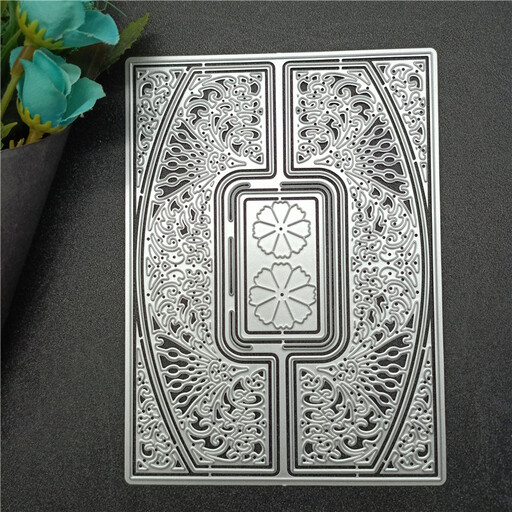
Why This Fits Their Persona: The framework-style floral design suits crafters creating coordinated card fronts, album pages and decorative paper layers.
Its product name identifies both the flower pattern and framework format, making the design purpose clearer than a generic image-only listing.
Flower framework motif; listed for embossing, paper die cuts and scrapbook machine use.

Why This Fits Their Persona: Suitable for frequent personalisation of birthday cards, classroom projects, labels, albums and workshop samples.
The listing specifies 26 capital letters and 10 numbers, reducing uncertainty when planning personalised batches.
26 capital letters; 10 numbers; designed for card making, scrapbooking and decorative words.
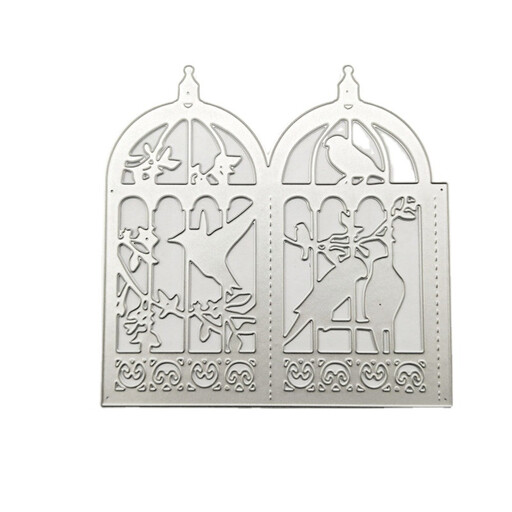
Why This Fits Their Persona: A wedding-themed design can help coordinate invitations, congratulations cards, scrapbook pages and keepsake albums.
The intended wedding application is stated directly, helping you assess relevance before buying a generic decorative set.
Wedding-themed format; combines cutting dies and stencil terminology for paper and card embellishment.
The dies are only one part of a practical workstation. Keep a selection of smooth cardstock, a sharp craft knife, spare cutting plates and a fine die brush nearby. For attaching small layers and embellishments, Bostik removable glue dots provide a pressure-sensitive, no-drying alternative to liquid glue. They are listed for scrapbooking, card making, collages and model making, and can be useful when positioning sequins, beads or small paper pieces.
For larger memory projects, a wedding memory book and coordinating paper embellishments can help bring separate die cuts into a consistent colour scheme. Store metal dies flat and dry, ideally in labelled pockets, so individual shapes are easier to find and less likely to become bent or misplaced.
We have compiled a complete, real-time list of products that fully satisfy these strict selection criteria and UK safety regulations.
No. Compatibility depends on the machine design, die thickness and cutting-plate arrangement. Check the manufacturer’s instructions and confirm that the machine accepts thin metal dies before ordering.
Most paper craft dies are used with paper or cardstock within the machine’s recommended thickness range. Start with medium-weight card and make a test cut. Very thick, laminated or heavily textured materials may require different settings or may not release cleanly.
Remove scraps carefully rather than pulling sharply on delicate sections. A die brush or release paper may help with detailed shapes, depending on the machine system. Store dies flat in labelled protective sleeves and wipe away paper fibres before storage.