
24/7 Customer Support

Free returns

Same-day & Next-day Delivery

Quality Guaranteed

Unlock Your Welcome Offers: FREE Delivery | Up to 80% OFF | Free 30-day JoyPlus trial
Download the APP
Creating personalised cards and scrapbook pages can be affordable and rewarding, but choosing the wrong tools often leads to wasted paper, uneven cuts and unused sets. Metal cutting dies for card making come in many shapes, sizes and combinations, so a product that looks attractive in a listing may not suit your die-cutting machine or the type of projects you make.
The following guide explains the main buying pitfalls, the specifications worth checking and a selection of card-making dies for different crafting needs.
Most metal die cuts need to be used with a compatible manual or electronic die-cutting machine. However, machines differ in their recommended cutting plates, platform arrangements and maximum working width.
A die may fit visually inside a listing image but still be unsuitable for your machine’s cutting area. Before ordering, check:
If the listing does not state dimensions, contact the seller before buying, particularly for large background frames or border cutting dies.
Product titles often combine terms such as embossing dies, paper die cuts and stencils. These terms can describe different functions. A cutting die normally has a raised cutting edge, while an embossing folder or embossing plate creates a raised or pressed pattern without necessarily cutting through the material.
Some designs may support both cutting and embossing when used with the correct accessories. Do not assume this from the word “embossing” alone. Review the product description and images to confirm whether you are buying:
Large bundles can appear economical, but repeated motifs may not add much value if your projects focus on a particular occasion. For example, a set of flower cutting dies may be useful for wedding cards and scrapbook album decorations, while Christmas card-making dies may have limited use outside the festive season.
Think about the cards you regularly create: birthdays, weddings, seasonal greetings or general-purpose designs. A smaller, more relevant set can be more practical than a large collection with little variety.
Look for clear wording about the die material. The supplied options include products described as metal cutting dies and a four-piece set specified as carbon steel embossing templates. Material information helps you understand what type of tool you are buying, although it does not by itself guarantee cutting performance.
Check that the cutting edge appears clearly defined and that the die is not merely a flat decorative stencil. For intricate paper-craft dies, fine internal details may require careful paper selection and the correct machine settings.
The size of a die determines whether it works as a focal element, border, background or embellishment. Large framework dies can create a complete card panel, whereas alphabet die sets and small leaves are more suitable for layering.
When dimensions are available, compare them with:
For nesting frames, check whether the set includes different sizes. Multiple sizes can help create layered mats and windows without buying several separate products.
Read the contents carefully. A listing may include only cutting dies, while another may combine clear stamps with metal dies. Some card-making kits include finished toppers or embellishments rather than reusable metal tools.
This distinction matters for budgeting. Alphabet die sets, border designs and themed metal die cuts are reusable tools, but they still require a machine, paper and accessories. Stamps may also need an ink pad, while layered flower designs may require several colours of card stock.
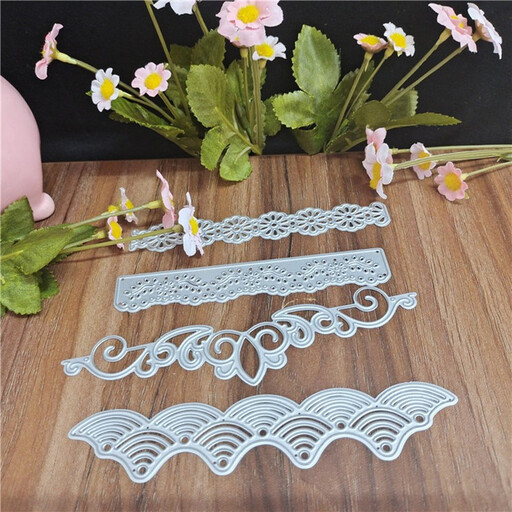
Why This Fits Their Persona: A four-piece set offers a straightforward starting point for occasional card makers who want to try reusable metal tools without committing to a large themed collection.
The listing identifies four pieces and specifies carbon steel, making the pack contents clearer than a listing that only uses broad terms such as “craft stencil”.
Four reusable metal templates; intended for DIY craft and paper card making.
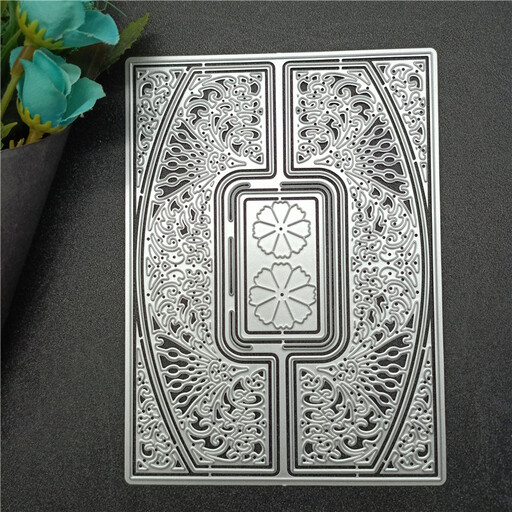
Why This Fits Their Persona: Suitable for crafters who prioritise a decorative framework design for layered cards, album pages and floral paper compositions.
Its product name clearly identifies a flower-pattern framework and card-making kit, helping buyers distinguish a structured background design from individual flower embellishments.
Flower framework format; described for embossing, card making and scrapbook machine use.
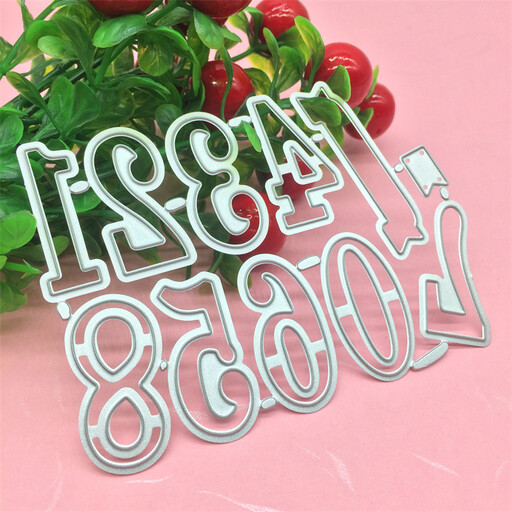
Why This Fits Their Persona: Frequent card makers and scrapbookers can use individual letters to personalise birthday cards, names, headings and scrapbook album decorations.
The listing specifies 26 capital letters and 10 numbers, so the character selection is stated rather than left to assumptions based on a product photograph.
26 capital-letter dies; includes 10 numbers for personalised messages and dates.
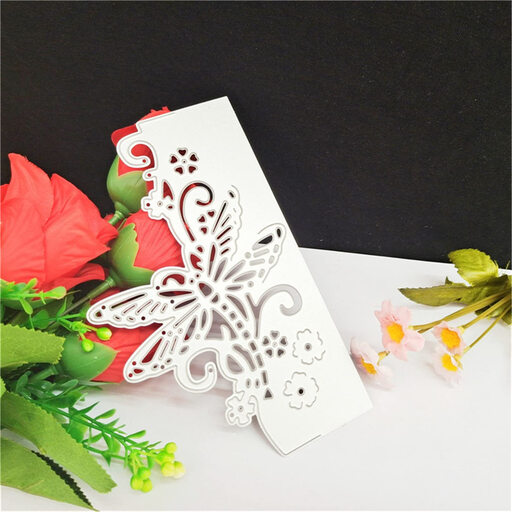
Why This Fits Their Persona: A practical match for people preparing multiple festive cards, gift tags or winter scrapbook pages with a consistent seasonal theme.
The Christmas theme is stated directly, reducing the risk of ordering a generic design when a seasonal motif is the main requirement.
Christmas-focused metal die cuts; suitable for card making, paper crafts and album decoration.
We have compiled a complete, real-time list of products that fully satisfy these strict selection criteria and UK safety regulations.
Yes, metal dies are generally designed as reusable craft tools. Their usable life depends on the material being cut, the machine setup, storage and handling. Cutting very thick materials or forcing a die through an unsuitable machine may cause damage.
Not necessarily. Confirm that your machine accepts thin metal dies and check its maximum cutting area. The required plates and pressure settings can also vary, so follow the machine manufacturer’s instructions.
Many are, particularly simple shapes, small flower cutting dies and alphabet die sets. Beginners should start with designs whose purpose and contents are clearly stated, then practise on standard paper before progressing to layered or highly detailed DIY paper crafts.