
24/7 Customer Support

Free returns

Same-day & Next-day Delivery

Quality Guaranteed

Unlock Your Welcome Offers: FREE Delivery | Up to 80% OFF | Free 30-day JoyPlus trial
Download the APP
Creating handmade cards can be satisfying, but choosing the wrong metal cutting dies for card making may leave you with incomplete cuts, wasted card stock and designs that do not suit your projects. Product listings often use broad phrases such as “universal”, “professional” or “high quality” without explaining the details that matter during everyday crafting.
Before buying, look beyond the picture. Check the die’s design, material description, dimensions, machine compatibility and intended paper weight. This guide explains the main pitfalls and highlights suitable options for card makers, scrapbookers and DIY paper craft enthusiasts.
Metal dies are generally used with a manual or electronic die-cutting machine, but compatibility can vary. A die may be too large for a machine’s platform, too intricate for a particular cutting sandwich or unsuitable for a machine that only accepts digital files.
Check:
A listing that says “for card making” does not automatically confirm compatibility with your specific machine.
Some listings describe products as embossing stencils, templates or die cuts. These terms can refer to different results. A cutting die separates a shape from paper, while an embossing folder or stencil creates a raised, pressed or patterned effect.
If you want a flower, alphabet or border to be cut out, look for wording such as metal cutting die, die-cut template or cutting mould. If you want texture on a card panel, check whether the product is designed for embossing. Some products combine cutting and embossing functions, but the listing should make this clear.
A detailed design can look attractive online but may be difficult to release from the die or remove from small internal sections. Very fine patterns can also be less practical for thick glitter card, layered projects or repeated production.
Consider whether you need:
A smaller collection that matches your usual projects may be more useful than a large set of unrelated patterns.
Many products in this category are described as metal, carbon steel or metal alloy dies. A metal cutting edge should sit securely within its outline and remain flat when handled. Look for clear material information rather than relying only on promotional wording.
For regular DIY paper crafts, consider whether the die is suitable for the materials you use most often, such as:
Do not assume a die will cut fabric, foam, chipboard or laminated material unless the listing specifically states this.
Measure the space available on your cards, album pages and machine platform. A large background die may create a complete panel, whereas a small flower or leaf cutting die may work as a layered embellishment.
Nesting dies are useful when you want several frames or mats in graduated sizes. A set with different-sized rectangles can help create consistent card borders and scrapbook layouts without measuring each layer by hand.
Intricate lace, foliage and border cutting dies may need a release tool, wax paper or a gentle tap to remove paper cleanly. Before purchasing, consider whether the design has many enclosed sections.
For beginners, open shapes and larger lettering are generally easier to handle. More detailed scrapbooking dies can be worthwhile for experienced crafters who are prepared to work slowly and use suitable plates and paper.

Why This Fits Their Persona: A four-piece set gives new crafters several templates to explore without immediately committing to a large themed collection. It is suitable for occasional card making and small scrapbook projects at home in the UK.
The product title identifies a four-piece quantity and carbon steel construction, making the set’s basic format clearer than an unspecified assortment. Check dimensions and machine compatibility before ordering.
Four metal templates; described as carbon steel; intended for paper and card-making crafts.
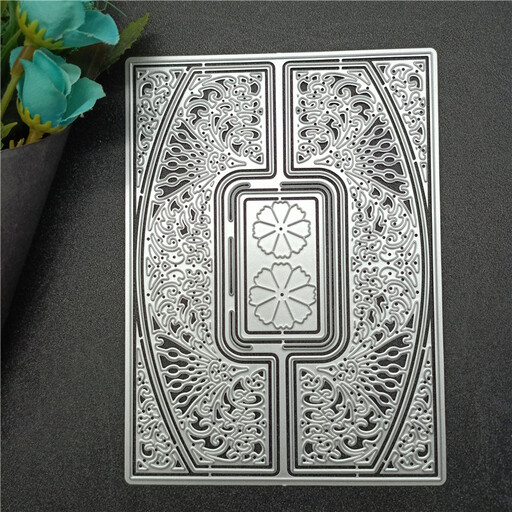
Why This Fits Their Persona: This flower-pattern framework is suited to crafters who prefer decorative card fronts and coordinated scrapbook backgrounds rather than isolated motifs.
The framework format helps clarify that this is a background-style design. Confirm the finished dimensions and whether your machine handles the pattern’s level of detail.
Flower framework design; supplied as a card-making kit; also positioned for scrapbook machine use.

Why This Fits Their Persona: Personalisation-focused makers can use capital letters and numbers for names, ages, initials and greetings across birthday cards, albums and gift tags.
The listing states 26 capital letters and 10 numbers, so buyers can assess the character coverage rather than guessing what is included.
26 capital-letter dies; includes 10 numbers; suitable for scrapbooking and personalised paper crafts.
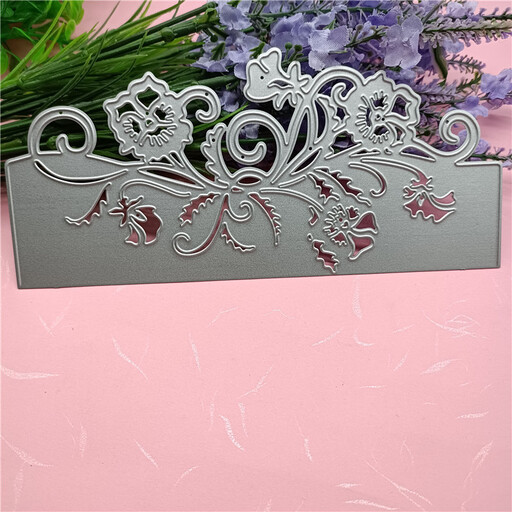
Why This Fits Their Persona: This option is aimed at makers preparing Christmas, wedding, birthday or blessing cards who want a themed sentiment or decorative focal point.
The named Christmas and congratulations themes make the intended use clearer than a generic decorative set. Check the wording shown in the product image before ordering.
Seasonal Christmas theme; includes congratulations die-cut wording; listed for wedding and birthday card decoration.
We have compiled a complete, real-time list of products that fully satisfy these strict selection criteria and UK safety regulations.
No. Many thin metal dies work with compatible manual machines, but platform width, plate thickness and pressure settings differ. Check your machine instructions and the product dimensions before buying.
Lifespan depends on the metal, design detail, materials used and frequency of cutting. Using suitable paper, avoiding materials outside the listing and storing dies flat can help maintain reliable results. Blunt or bent edges may produce incomplete cuts.
They can be economical for frequent crafters because one die may be reused across multiple cards, scrapbook pages and gift projects. However, remember to include the cost of a compatible machine, plates, card stock and storage when comparing the total spend.