
24/7 Customer Support

Free returns

Same-day & Next-day Delivery

Quality Guaranteed

Unlock Your Welcome Offers: FREE Delivery | Up to 80% OFF | Free 30-day JoyPlus trial
Download the APP
Handmade cards can look polished without requiring a large collection of tools. The right metal cutting dies for card making can create repeatable shapes, borders, letters and decorative layers for greetings cards, scrapbook pages and paper craft gifts. However, product listings often use similar wording, making it difficult to tell which die set will suit your machine, materials and working style.
Before buying, look beyond attractive sample images. A design may be too large for your card format, a set may include fewer pieces than expected, or a die may be listed alongside embossing templates without clearly explaining how each element is used. The following guide highlights the practical details worth checking before you add a card-making die set to your basket.
Metal die cuts are used with a compatible die-cutting and embossing machine, but machines vary in opening size, platform arrangement and pressure system. A die that works with one machine may not pass through another safely or produce the expected result.
Check the machine manufacturer’s guidance, including the recommended cutting plates, platform and maximum material width. If the listing does not state compatibility, compare the die’s dimensions with your machine rather than relying on the product photograph.
A cutting die normally has a raised cutting edge that separates a shape from paper or card. An embossing stencil or embossing folder creates a raised or recessed impression but may not cut through the material. Some listings combine both terms because a product can be used for cutting and embossing, while others include separate pieces for each function.
Read the product title and specifications carefully. If you want layered paper craft die cuts, confirm that the set is intended to cut. If your priority is texture, check whether embossing is supported by your machine and sandwich configuration.
A large number of small dies does not always provide more value. Tiny details can be fiddly to remove from the die, difficult to store and unsuitable for standard card sizes. Conversely, a smaller set with a frame, flower or sentiment may be more useful for repeated projects.
Look for designs that match your usual card dimensions and consider whether the shapes can be used with different paper colours, vellum, patterned card or layered constructions.
Many DIY craft dies are made from metal, with carbon steel commonly used for detailed cutting edges. Product listings may describe these as metal die cuts, metal cutting moulds or carbon steel embossing templates. The wording alone does not guarantee performance, so also check the die’s intended material thickness and your machine’s instructions.
For paper crafts, consider whether you mainly use lightweight paper, standard card, glitter card or thicker speciality sheets. Very intricate designs may require careful removal, especially when working with delicate paper.
Check the size of individual dies, not only the overall package. This is particularly important for:
Where dimensions are not clearly provided, use the product image as a design reference but avoid treating it as a precise scale guide.
Small dies can be easily misplaced in a busy craft room. Look for sets that can be kept in a labelled pouch, magnetic sheet or divided storage box. Keeping alphabet, border and floral pieces separated can reduce preparation time when making multiple cards.
Storage is especially useful for scrapbooking cutting dies, where a single collection may be used across photo albums, journal pages and handmade greetings cards.
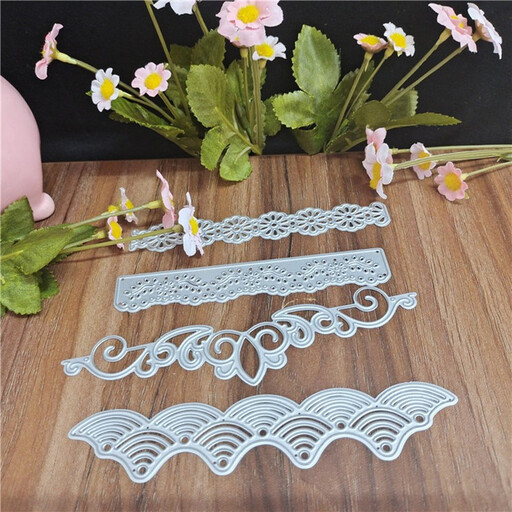
Why This Fits Their Persona: A four-piece format gives new crafters a straightforward starting point for card fronts and paper decorations without committing to a large themed collection.
The stated four-piece quantity makes the contents easier to assess than a listing that relies on a busy image or unclear bundle description.
The listing identifies carbon steel construction and a paper card-making use case.
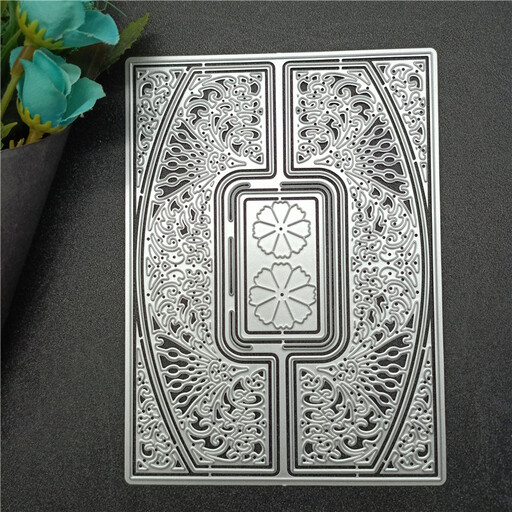
Why This Fits Their Persona: Crafters who prefer decorative floral layouts may find a framework-style design more suitable for coordinated card fronts and scrapbook album decorations.
The named flower framework indicates a defined decorative structure, helping buyers distinguish it from a mixed pack of unrelated small shapes.
The product is listed for embossing, paper die cuts and scrapbook-machine use, with a flower-pattern framework theme.
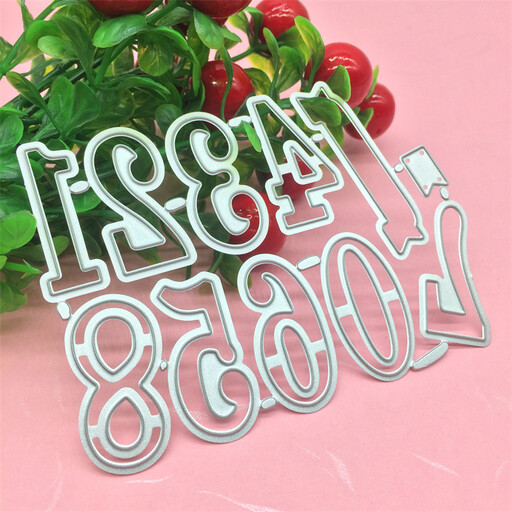
Why This Fits Their Persona: Regular card makers, scrapbookers and personalised-gift creators can use letter dies for names, initials, greetings and album headings.
The listing specifies 26 capital letters and 10 numbers, making the character range clearer for users planning personalised projects.
It includes capital letters and numbers for birthday cards, names, dates and decorative words.
We have compiled a complete, real-time list of products that fully satisfy these strict selection criteria and UK safety regulations.
They work with compatible manual or electronic die-cutting systems, but compatibility depends on the machine, platform and cutting sandwich. Check the machine instructions and the die dimensions before use. Do not force a die through a machine if the platform arrangement is unsuitable.
Lifespan depends on the frequency of use, material thickness, design detail and storage conditions. Using the recommended plates, avoiding unsuitable materials and keeping the dies clean can help maintain consistent results. Intricate designs may show wear differently from simple shapes.
That depends on your projects. Alphabet dies are practical for personalised cards, names and scrapbook headings, while border cutting dies can add a repeatable edge or frame to many card layouts. Buyers who make varied designs may prefer combining one functional set with one decorative set.