
24/7 Customer Support

Free returns

Same-day & Next-day Delivery

Quality Guaranteed

Unlock Your Welcome Offers: FREE Delivery | Up to 80% OFF | Free 30-day JoyPlus trial
Download the APP
Choosing metal cutting dies for card making can make handmade projects quicker and more consistent, but the product listings are not always easy to compare. Similar-looking templates may differ in size, design detail, machine compatibility and intended use.
For UK crafters, the main challenge is avoiding supplies that look versatile but do not suit the projects or equipment already at home. A carefully chosen die set can support birthday cards, wedding stationery, scrapbook album pages, personalised gifts and seasonal decorations without filling your craft storage with unused shapes.
A metal die usually needs a compatible manual die-cutting and embossing machine, plates and cutting mat. However, compatibility can vary according to the machine’s opening, pressure, sandwich arrangement and the die’s thickness.
Before ordering, check:
If dimensions are not shown, treat the product as a design purchase rather than assuming it will cover a standard A6 card.
Product photographs can make a design appear more substantial than it is. A border cutting die may create a narrow frame, while a background die may produce a full panel. Likewise, an alphabet cutting die may contain individual letters rather than a connected word.
Look for clear information about:
This is especially important when buying scrapbooking die cuts, embossing stencils or lace background dies, where the finished effect depends on the design’s level of detail.
Christmas cutting dies and snowflake cutting dies are useful for festive cards, tags and gift packaging, but they may remain unused for much of the year. If storage space or budget is limited, balance seasonal designs with reusable frames, letters, numbers, floral motifs or borders.
A versatile collection of paper craft cutting dies can support multiple occasions, while one or two themed sets add seasonal character without becoming the entire toolkit.
Metal dies are designed to create repeatable shapes through pressure from a compatible machine. Listings may describe products as metal, carbon steel or artistic metal templates, but the material wording alone does not tell you how finely the design will cut.
For delicate scrapbook album dies, lace motifs and intricate floral patterns, inspect the product image for narrow bridges and small openings. These details may require careful paper removal. For beginners, larger outlines, simple frames and bold letters are generally easier to handle.
The finished card panel, aperture or embellishment should match your planned project. A small die may be suitable for a sentiment or corner decoration, whereas a background die may be intended to cover a larger area.
Measure your card blanks, scrapbook page or photo album before purchasing. For personalised projects, consider combining:
Some products are described as suitable for die-cutting and embossing. Cutting removes the paper around a design; embossing presses a raised or recessed pattern into the material. These are different results, so check the listing and machine instructions rather than assuming every die performs both functions.
Use suitable paper or card weight recommended by your machine. Test an inexpensive sheet first, particularly with detailed designs, metallic card or textured scrapbook paper.
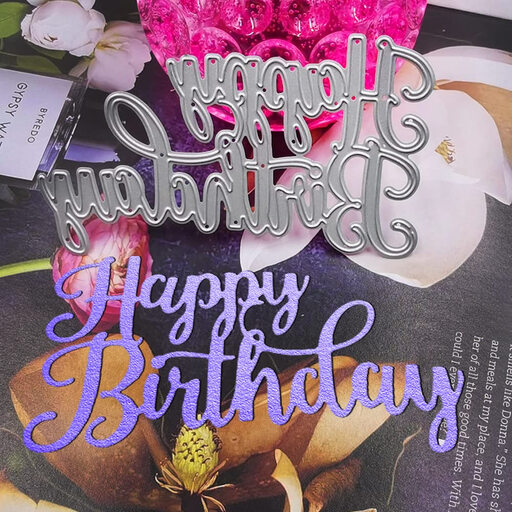
Why This Fits Their Persona: A letter-focused design can help new crafters personalise birthday cards, scrapbook pages and handmade gift tags without buying several occasion-specific sets.
Its stated letter and decorative-stencil format is more adaptable than a single festive motif. Check letter dimensions before ordering.
Metal die format; listed for scrapbooking, photo albums, card making and decorative stencils.
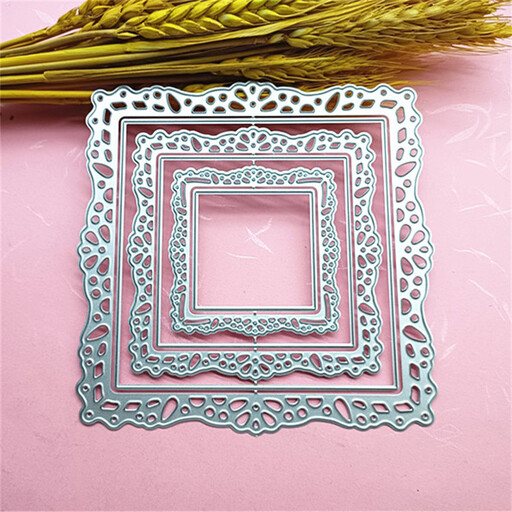
Why This Fits Their Persona: Suitable for crafters who want a structured background or layered panel for wedding stationery, formal greetings and decorative scrapbook layouts.
The product is identified as a square hollow lace background, making its intended role clearer than a generic decorative image. Confirm measurements and machine suitability.
Square background format; listed for card making, embossing, scrapbooking and machine templates.
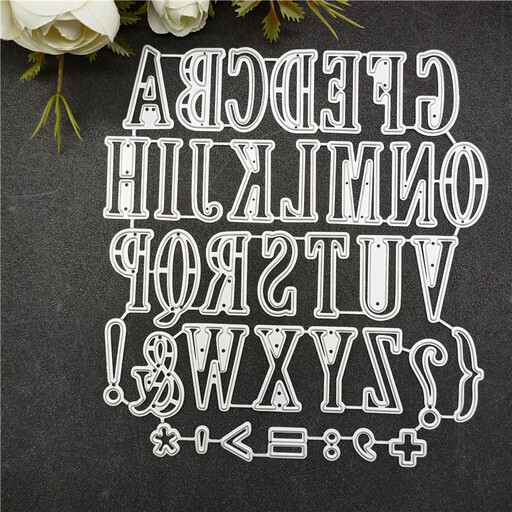
Why This Fits Their Persona: Regular card makers and scrapbookers can use a complete capital-letter set for names, initials, headings and repeated personalised projects.
The listing specifies 26 capital letters, so buyers can assess the set by its stated contents rather than an ambiguous selection of sample characters.
26 capital-letter dies; listed for card making, paper crafts, albums and decorative words.
We have compiled a complete, real-time list of products that fully satisfy these strict selection criteria and UK safety regulations.
Store metal dies flat or in magnetic folders so individual pieces do not become bent or misplaced. Keep them dry, particularly in humid rooms, and remove paper fragments after use. Do not force a sandwich through a machine; resistance may indicate an unsuitable combination of plates, material or die thickness.
For detailed designs, use a paper type that releases cleanly and avoid repeatedly cutting material outside the product’s stated purpose. There is no electricity cost associated with the die itself, although the machine requires manual operation and may need replacement cutting plates or mats over time.
No. Compatibility depends on the machine, plates, opening and die thickness. Check the machine instructions and product measurements before buying. If the listing does not provide dimensions, contact the seller or choose a clearly specified alternative.
Lifespan depends on material, design detail, frequency of use, paper type and storage. Clean, dry storage and avoiding unsuitable materials can help maintain cutting performance. Fine details may need more careful handling than large, simple shapes.
Some are listed for both cutting and embossing, but the result depends on the die design, machine settings and accessories. Read the product description carefully and test the die on spare paper before using it for an important wedding, birthday or Christmas card.