
24/7 Customer Support

Free returns

Same-day & Next-day Delivery

Quality Guaranteed

Unlock Your Welcome Offers: FREE Delivery | Up to 80% OFF | Free 30-day JoyPlus trial
Download the APP
Metal cutting dies for card making can turn plain card, patterned paper and scrapbook sheets into flowers, lettering, borders and layered decorations. However, a low price or attractive product image does not always tell you whether a die set will suit your machine, project size or crafting routine.
This guide explains the practical points to check before buying, followed by our top recommendations for different types of UK crafters.
Metal dies are used with manual or electronic die-cutting machines, but compatibility can vary. A die may be too large for the machine’s platform, or its cutting profile may not work effectively with the available plates and pressure settings.
Before ordering, check:
If dimensions are not clearly listed, contact the seller before purchase rather than relying on the product photograph.
Many listings contain only the metal templates. They may not include a machine, plates, paper, storage wallet or separate embossing accessories. Product titles can also use terms such as “kit”, “stencil” and “die cut” in a broad way.
For example, a set described as cutting dies should not automatically be treated as a complete card-making supplies bundle. Confirm the package contents and read the product details carefully. This is particularly important when buying several sets for handmade card selling, where missing accessories can delay production.
Very intricate paper craft dies can create attractive results, but small internal sections may be more difficult to release from heavyweight card. Fine patterns can also require careful alignment and slower handling.
For beginners, frame cutting dies, simple flowers and bold alphabet cutting dies are often easier to position and reuse. More detailed lace, foliage and Christmas cutting dies may be more suitable once you are comfortable adjusting pressure and removing paper safely.
Look for clear information about the construction of the die. Several products in this category are described as carbon steel cutting dies or metal die cuts. Carbon steel is a material specification, but it does not by itself confirm the thickness, edge finish or expected service life of a particular product.
Check whether the listing identifies:
Treat phrases such as “durable” as product wording rather than a guarantee. The way a die is stored, the paper used and the machine pressure applied can all affect its condition over time.
The dimensions of a die determine how useful it will be for your cards and scrapbook album decorations. A small design may suit gift tags and layered embellishments, while larger frames can create a focal panel for an A6 or square card.
Nesting dies are useful when you want several sizes of a similar shape. They can create a border, aperture, mat or layered background. Look for the number of pieces and whether the sizes are genuinely different rather than simply repeated variations.
Choose a design based on the projects you regularly make. Useful categories include:
A versatile set may be more economical than buying several single-purpose designs, but only if its shapes match your preferred card sizes and style.
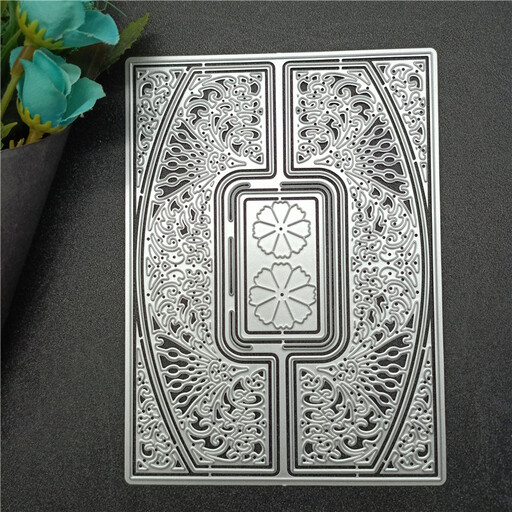
Why This Fits Their Persona: A flower framework can introduce beginners to decorative card panels and scrapbook layouts without requiring separate alphabet, border and sentiment designs.
The product is presented as a flower-pattern framework, making its decorative purpose clearer than a generic multi-design listing. Check the exact contents and dimensions before ordering.
Flower framework design; listed for paper die cuts, embossing and scrapbook machine use.
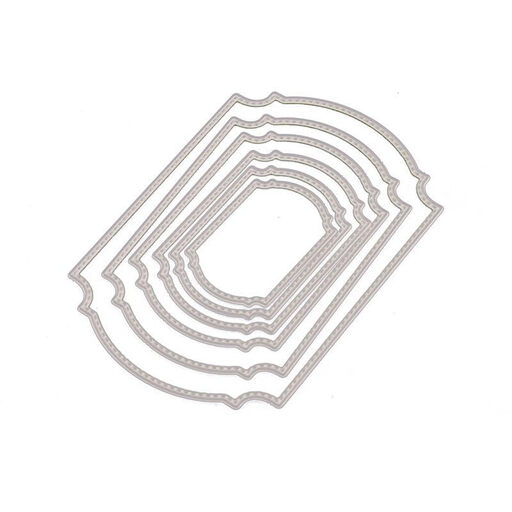
Why This Fits Their Persona: Crafters who value controlled layering can use different frame sizes to create mats, apertures and structured scrapbook compositions.
The listing specifies six different-sized nesting frames, helping buyers identify the set structure instead of guessing from a single product image.
Six-piece set; stitched irregular rectangular frame format for layered paper projects.
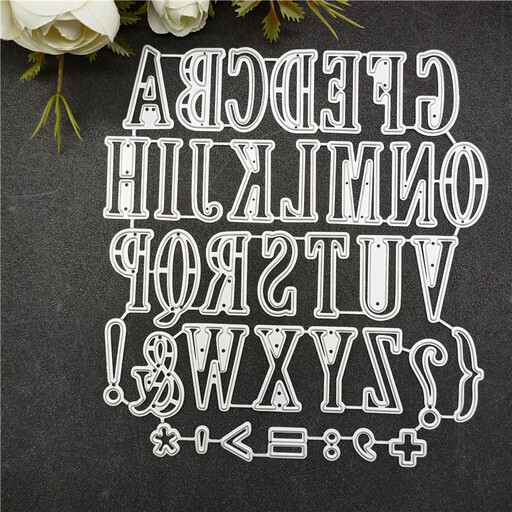
Why This Fits Their Persona: Handmade card sellers and frequent crafters can create names, initials, greetings and decorative words rather than purchasing separate sentiment dies.
The listing clearly identifies 26 capital letters. Buyers can still confirm letter size, spacing and machine compatibility before committing to repeated production.
Complete 26-letter capital alphabet; listed for card making, paper crafts and scrapbook albums.
Store metal die cuts flat or in a labelled magnetic folder so small pieces do not become lost. Remove paper carefully rather than bending the die. Brush away scraps after use and avoid forcing thick materials through a machine unless the listing confirms compatibility.
For regular projects, keep a small paper sample beside your machine. Test the die on the intended card stock before cutting a full batch. This helps identify pressure, alignment and release issues early, reducing wasted paper and adhesive.
No. Compatibility depends on the machine platform, die size, cutting plates and material thickness. Check the product dimensions and your machine’s instructions before ordering. If the listing does not provide enough detail, ask the seller for clarification.
Some can, but the result depends on the die design, card thickness and machine pressure. Highly detailed shapes may need more careful preparation than simple borders or frames. Always check the stated material guidance and begin with a test piece.
Some listings describe both cutting and embossing functions, but this may require a compatible embossing mat or plate. Confirm the machine setup and included accessories before assuming that a cutting die will produce a raised embossed finish.