
24/7 Customer Support

Free returns

Same-day & Next-day Delivery

Quality Guaranteed

Unlock Your Welcome Offers: FREE Delivery | Up to 80% OFF | Free 30-day JoyPlus trial
Download the APP
Choosing metal cutting dies for card making and scrapbooking can be more complicated than the product photos suggest. A delicate lace pattern may look impressive online but prove difficult to release from paper. A large-looking set may contain only a few useful shapes, while a stamp-and-die bundle may not match the stamp size shown in your project.
For UK card makers, scrapbookers and DIY crafters, the practical choice depends on machine compatibility, die dimensions, cutting detail and how often you expect to use each design. The following guide explains the common buying traps and highlights suitable options for different crafting needs.
Metal dies are not automatically compatible with every die-cutting or embossing machine. Compatibility can depend on the machine’s platform size, cutting sandwich, plate arrangement and whether it accepts thin metal dies.
Before ordering, check:
A die may physically fit on a cutting plate but still produce uneven results if the machine’s pressure is unsuitable.
A large collection of small paper die cuts is not necessarily more useful than a smaller set of versatile shapes. Count the actual cutting designs and consider whether they suit your projects. For example, frame cutting dies and stitched nesting dies can be reused across birthday cards, photo albums and scrapbook layouts, while a highly specific motif may be used less frequently.
Also check whether the listing includes storage pockets, stamps or embellishments. Product titles can combine several craft-related terms without meaning that every accessory is included.
Fine lace, narrow lettering and detailed leaves can place greater demands on both the die and the paper. Very intricate designs may need a clean cutting plate, suitable pressure and a release tool. Lightweight paper can tear when removing small pieces, while thick cardstock may require a different machine setting.
For regular use, prioritise designs that match your preferred cardstock and allow enough space around delicate sections. A die that is attractive but difficult to release can slow down batch-making for handmade card sellers.
The products in this guide are described as metal cutting dies. Metal construction is suitable for repeated paper-crafting use when paired with a compatible machine, but the cutting edge and design detail remain important. Look for a flat backing, clearly defined outlines and a shape that is easy to position on the paper.
Some dies are designed primarily for cutting, while others may also create a light embossed outline. Embossing dies and cutting dies are not always interchangeable, so read the product description rather than relying on the image alone.
Check the finished size of the cut design, not just the dimensions of the packaging. For photo albums and cards commonly used in the UK, a set of graduated rectangles can help create layered mats, borders and focal panels.
Stitched nesting dies are particularly practical because several sizes can be combined. However, confirm whether the stitching effect is cut into the paper or simply represented in the product photograph. For large scrapbook pages, compare the die size with your page format before purchasing.
Match the motif to your intended project:
Cardstock, patterned paper, vellum and adhesive sheets can all behave differently. Test an unfamiliar material with a small offcut first.
The following selections are matched to different crafting habits rather than ranked as universally suitable.
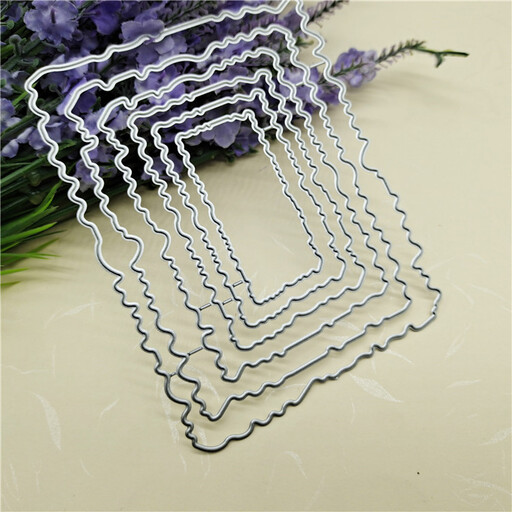
Why This Fits Their Persona: Rectangle frames are a straightforward starting point for new card makers building a collection of DIY card-making supplies.
Its defined frame purpose makes it easier to assess usefulness than a mixed set with unclear contents. Check the listed measurements before ordering.
Useful for borders, windows and layered panels; suitable for card making and scrapbooking projects.
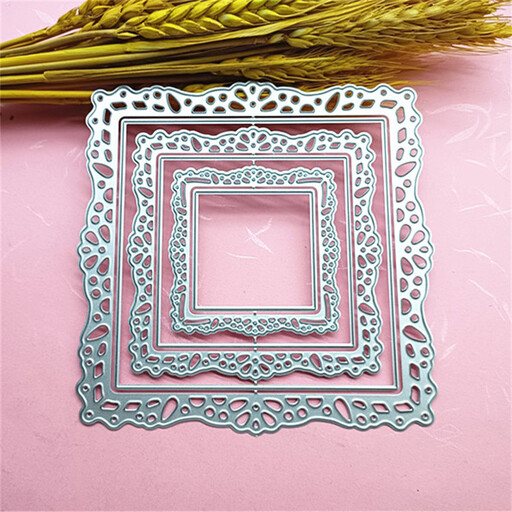
Why This Fits Their Persona: Detail-focused makers can use an open lace background to create a decorative panel for a more considered card or scrapbook page.
The design purpose is clear, while checking the machine requirements and paper weight helps avoid problems with intricate sections.
Square background format; lace-style cut-out pattern suited to decorative paper die cuts.
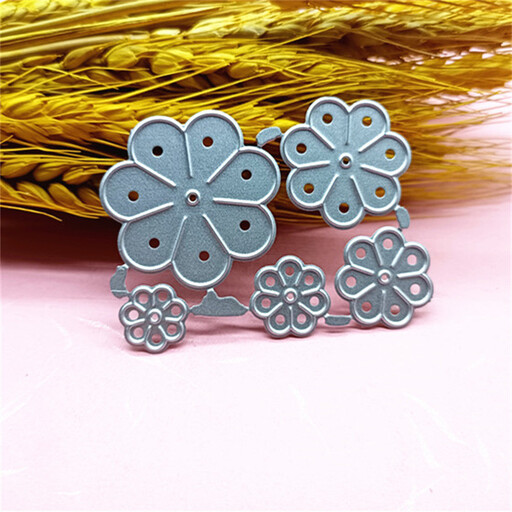
Why This Fits Their Persona: Frequent crafters and handmade card sellers can build dimensional floral arrangements by combining petal and leaf shapes.
A coordinated set reduces the need to buy separate flower and leaf cutting dies. Confirm the included shapes and sizes before purchasing.
Includes layered flower, petal and leaf elements; suited to decorative cards and scrapbook compositions.
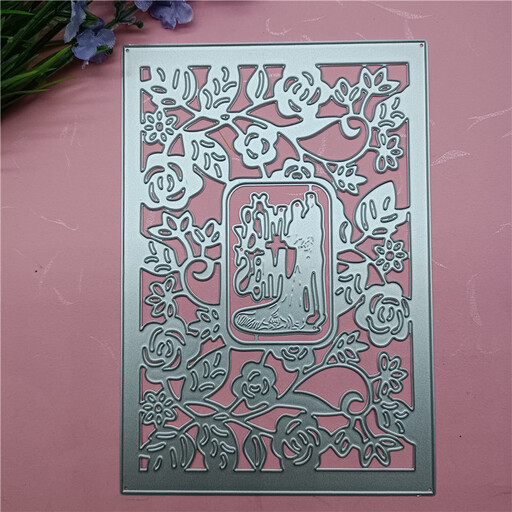
Why This Fits Their Persona: Crafters who want stamped images with a matching outline can combine the two elements for cards, albums and decorative paper projects.
A combined format helps avoid buying a separate outline die, but check that the stamp and die designs correspond and that both are included.
Combines clear stamps with metal cutting dies; suitable for DIY card-making and scrapbook decoration.
For greeting-card batches, Happy Birthday English Metal Cutting Dies provide a dedicated sentiment design. Floral alternatives include the Rose Flower, Flower and Little Flowers metal die sets, while the Branch Leaves set focuses on foliage. A Cross Metal Cutting Dies Set may suit religious craft projects and commemorative albums.
If you need a complete starting collection rather than individual scrapbook dies, the Bee and Bumble Kraft Scrapbooking Intro Set includes an 8 x 8-inch spiral-bound kraft scrapbook, 40 pages, wooden frames, stickers, patterned craft tape, tags, metallic gel pens, sentiments and a glue stick. It does not replace a die-cutting machine, but it can complement new paper craft projects.
We have compiled a complete, real-time list of products that fully satisfy these strict selection criteria and UK safety regulations.
There is no fixed lifespan for a craft cutting die. Frequency of use, paper thickness, machine pressure and storage conditions all affect performance. The die itself may remain usable for a long time, but worn plates can make a sound die appear ineffective.
No. Check the machine manufacturer’s compatibility guidance, platform size and required cutting sandwich. Thin metal dies may need a specific plate combination or shim.
Some cutting dies can create an embossed outline when used with the correct embossing accessories, but this is not universal. Confirm the product and machine instructions before applying pressure.
Light to medium cardstock and standard craft paper are common starting points. Intricate designs may release more cleanly from a suitable smooth cardstock, while very thick, fibrous or adhesive-backed materials may require machine-specific settings.