
24/7 全天候客户支持

免费退货

当日/次日达

品质保障

开启新人专享福利: 全场免邮 | 低至 2 折 | 免费试用 30 天 JoyPlus 会员
下载 Joybuy
For any UK craft enthusiast, there's nothing quite like the satisfaction of creating a perfectly crisp, intricate design for a handmade card or scrapbook page. But there's also nothing more frustrating than investing in new metal cutting dies, only to have them fail you. A die that chews up your cardstock, a beautiful design that gets stuck and tears or a tool that bends after just a few uses can quickly turn a relaxing hobby into a source of disappointment.
Many crafters find themselves wasting money on dies that look great online but fall short in practice. The most common pitfalls we see are:
This guide will help you understand the key features to look for, ensuring your next purchase of scrapbooking supplies enhances your creativity rather than hindering it.
To avoid the common traps, it pays to look beyond the design and consider the functional aspects of the die. These three parameters are crucial for performance and longevity.
The material of your die is the single most important factor for durability and cutting performance. While many listings simply state "metal," you should look for dies made from 100% carbon steel. Carbon steel is harder and holds a sharp edge for much longer than cheaper metal alloys. This means it can slice cleanly through paper and cardstock for thousands of cuts without dulling, preventing those frustrating fuzzy edges. Dies made from softer metals will dull quickly and are more susceptible to bending.
A die's performance is also determined by its physical construction. A thicker, more substantial die is inherently more resistant to warping under the pressure of a die-cutting machine. Furthermore, the etching depth—how deep the cutting blade on the die is—dictates its versatility. A die with a shallow edge may only cut through thin paper, while a well-made die with a deeper etch can handle thicker cardstock (up to 250gsm or more), felt or even thin craft foam. These are essential qualities for reliable paper craft tools.
Elaborate floral patterns, delicate lace border dies and intricate die cut templates are beautiful, but they can be impractical if they lack one key feature: release holes. These are small holes strategically placed within the die's design. They don't affect the final cut-out, but they allow you to use a piercing tool to gently push the paper out of the die without tearing it. For any complex design, the absence of release holes is a significant design flaw that can make the die almost unusable.
Based on these practical criteria, we've matched a few options from our collection to different types of crafters.

Why This Fits Their Persona: Perfect for someone who makes cards for birthdays and special occasions. This edger die adds a professional, decorative touch to a standard card blank without requiring complex layering or techniques. It's a versatile sentiment that can be used year-round.
The design is open and not overly intricate, which significantly reduces the risk of paper getting stuck. Its primary function as an edger means it's built for clean cuts along one side, avoiding the common issue of incomplete cuts in the centre of a design.
Provides a high-impact decorative edge with a single pass. The "Best Wishes" sentiment is suitable for a wide variety of occasions, offering excellent value.
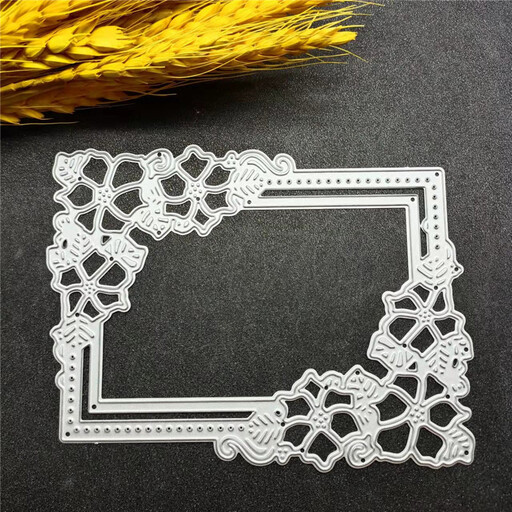
Why This Fits Their Persona: Scrapbookers need versatile elements for creating layouts. This die creates a beautiful frame for photos or journaling spots and the cut-out pieces can be used as separate embellishments. It's a multi-purpose tool for adding layers and texture to a 12x12 page.
The sturdy, symmetrical frame structure makes it highly resistant to warping, even with repeated use. The design incorporates large open spaces and release holes, ensuring the delicate floral sections can be removed without tearing.
Creates both a frame and multiple floral embellishments in one pass. Its size is ideal for creating focal points on scrapbook pages or larger cards.

Why This Fits Their Persona: For crafters who love to add custom names, dates and messages to their projects, a reliable set of alphabet die cuts is non-negotiable. This full set of capital letters and numbers provides the ultimate tool for personalisation on cards, scrapbook pages, and gift tags.
As individual, solid dies, they are extremely resistant to warping. The simple, clean font design ensures a perfect cut every time and avoids the "stuck paper" problem. The carbon steel construction ensures they will remain sharp even after cutting hundreds of letters.
A complete set of 26 letters and 10 numbers for endless customisation. The durable build is designed for heavy, repeated use, making it a long-lasting investment for any serious crafter.
We have compiled a complete, real-time list of products that fully satisfy these strict selection criteria and UK safety regulations.
While both are used in die-cutting machines, they serve different purposes. Metal cutting dies are sharp and designed to cut shapes out of paper. Embossing stencils (often called embossing folders) are typically plastic and have a raised and a recessed pattern. When paper is pressed between them, they create a raised, textured impression without cutting. Some thin metal dies, known as embossing stencils, can also be used to emboss a pattern by using a special rubber mat in your machine's "sandwich," which presses the design into the paper instead of cutting it.
Most thin metal dies are universally compatible with the major brands of manual die-cutting machines (such as Sizzix, Spellbinders or Cricut Cuttlebug). However, the key is using the correct "sandwich" of plates and shims for your specific machine. Always refer to your machine's manual for the right combination of plates for thin metal dies to ensure you get a clean cut without damaging the die or the machine.
Proper care will significantly extend the life of your dies. After use, use a small brush to clear out any paper fibres. For stubborn bits, a pokey tool or a piece of washi tape can help. To maintain a clean cut and help release paper from intricate dies, try running a piece of wax paper through with the die before cutting your cardstock. Store your dies flat, ideally on magnetic sheets in a folder, to prevent them from bending or getting lost.