
24/7 Customer Support

Free returns

Same-day & Next-day Delivery

Quality Guaranteed

Unlock Your Welcome Offers: FREE Delivery | Up to 80% OFF | Free 30-day JoyPlus trial
Download the APP
Choosing metal cutting dies for scrapbooking can seem straightforward until a die fails to fit your machine, tears delicate paper or produces a design that is too small for your project. Product listings may use terms such as “embossing stencil”, “craft knife mould” and “decorative template” interchangeably, even though these tools can serve different purposes.
A careful purchase starts with the way you craft, the machine you use and the finished size you need. The following guide explains the main buying pitfalls and highlights suitable options for albums, cards, invitations and other paper projects.
Metal dies usually require a compatible manual die-cutting and embossing machine, cutting plates and a suitable sandwich arrangement. A listing may show the die being used without clearly explaining whether it is compatible with your equipment. Before ordering, check the manufacturer’s instructions for your machine and compare the die’s thickness and format with the recommended platform.
If you use an electronic cutting machine, do not assume a metal die can be loaded into it. These products are generally intended for manual die-cutting systems unless the listing specifically states otherwise.
Some products cut paper, while others create a raised or impressed pattern. Certain designs may support both functions when used with the correct plates and pressure settings, but this should not be taken for granted.
A decorative border that looks suitable for cutting may only emboss a pattern. Likewise, a thin outline may leave a delicate cut that requires careful removal from the die. Read the product title and images closely, and consider whether you need a separate embossing mat or shim.
A design shown on a large card may be considerably smaller in reality. This is particularly important with alphabet cutting dies, small butterfly motifs and intricate lace border dies. Without dimensions, you may receive a pattern that does not span a card edge or fit around a photograph.
Measure the intended area of your scrapbook page, card front or invitation before buying. Also allow space for layering, adhesive and a border around the design.
Confirm that the product is a manual metal die-cut template if that is the system you own. Check whether your machine accepts thin dies, wafer-style dies or thicker embossing folders. The cutting plates must also be in usable condition: worn or warped plates can affect pressure and create uneven results.
For detailed paper craft dies, use the pressure setting recommended by your machine manufacturer. Excessive force can damage plates or make intricate designs harder to release.
Look for the actual length and width of each design, not only the photograph. For border cutting dies, measure whether the pattern runs horizontally, vertically or can be repeated along an edge. A nesting frame can be useful when you want several sizes for mats, apertures or layered embellishments.
Alphabet sets require an additional check: confirm whether the set includes capitals, numbers or punctuation, and whether the letters are separate dies. The alphabet set featured below lists 26 capital letters and 10 numbers, which may suit personalised titles, names and dates.
Fine floral or lace patterns can look effective on thin cardstock, but intricate cuts may be more difficult to weed from heavier card. Consider the paper commonly used in your projects, including scrapbook paper, standard card and textured stock.
Before starting a full wedding invitation batch, make a sample. This helps you check whether the design releases cleanly, whether the paper fibres tear and whether the finished motif is easy to position. Keep fingers away from exposed cutting edges and store dies in a sleeve or box to prevent damage and accidental contact.
The following options cover straightforward decorative patterns, lettering and borders. Product descriptions do not provide complete machine-compatibility or dimensional information, so check the individual listing before purchase.
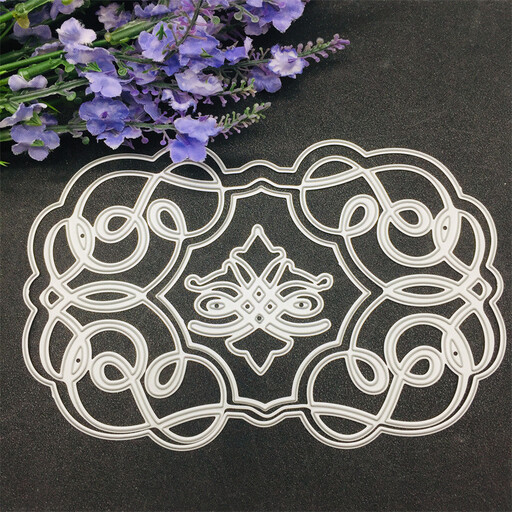
Why This Fits Their Persona: A practical starting point for UK crafters building a small collection for card borders, DIY scrapbooking, paper crafts and lace embossing.
Its stated uses identify border making, scrapbooking and embossing, helping you compare the intended application rather than relying only on decorative listing images.
Designed as an artistic metal template; suitable for card borders and lace-style embossing projects.
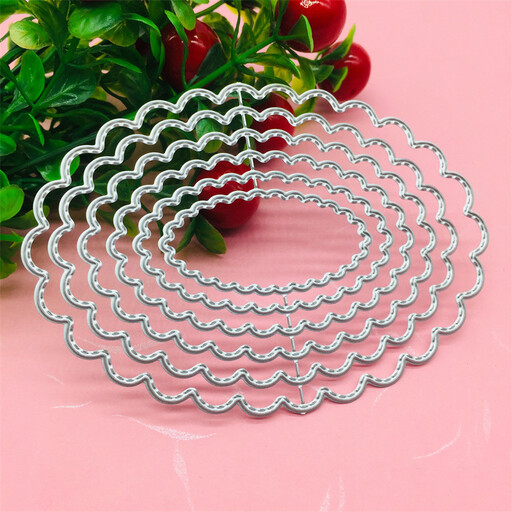
Why This Fits Their Persona: Suitable for crafters who value coordinated framing options for layered cards, photo albums, birthday projects and wedding stationery.
The nesting format gives a clearer indication of how different frame sizes may be used, reducing the risk of buying a single border that does not suit layered layouts.
Nesting lace border frame format; listed for card making, scrapbooking and embossing stencil use.

Why This Fits Their Persona: A focused choice for makers producing personalised scrapbook headings, names, greeting cards, album labels and repeated invitation designs.
The listed contents specify 26 capital letters and 10 numbers, so you can assess the character range before buying instead of assuming a complete lettering collection.
Includes 26 capital-letter dies and 10 number dies; suitable for scrapbook, card-making and paper-craft projects.
Metal dies do not have a running cost in the same way as an electronic cutting machine, but each project still uses paper, card, adhesive and replacement cutting plates over time. To reduce waste:
If you need a wider selection of card-making cutting dies, photo album embellishments, flower patterns, butterfly cutting dies or wedding invitation dies, compare designs by size, format and intended use rather than by image alone.
They are designed for repeated use, but lifespan depends on the metal construction, cutting pressure, paper thickness, storage and condition of the machine plates. Avoid forcing a die through an unsuitable sandwich, as this can bend the die or damage the plates.
Many are listed for both applications, but check the pattern size and the card thickness you plan to use. Borders, letters and nesting frames can be particularly useful for greeting cards, while delicate lace designs may need a test cut on your chosen stock.
The function varies by design and machine setup. Some products are listed as cutting dies, some as embossing stencils and some for both cutting and embossing. Check the product details and your machine’s instructions before purchase, especially when working with intricate paper craft dies.