
24/7 Customer Support

Free returns

Same-day & Next-day Delivery

Quality Guaranteed

Unlock Your Welcome Offers: FREE Delivery | Up to 80% OFF | Free 30-day JoyPlus trial
Download the APP
Making handmade cards can be economical and highly personal, but choosing the wrong metal cutting dies for card making can quickly lead to wasted paper, uneven cuts and a drawer full of designs you rarely use. Product listings often focus on attractive sample images while leaving out details that matter during everyday crafting.
Before buying die-cutting dies, check how they fit your machine, whether the design suits your paper stock and whether the set offers enough practical variety for your projects. The right choice can support birthday cards, wedding stationery, Christmas projects, scrapbook pages and DIY scrapbook decorations without unnecessary spending.
Metal dies generally need a compatible manual die-cutting machine and the correct cutting sandwich. A listing may describe a die as suitable for card making, but this does not automatically confirm compatibility with your particular machine, plates or platform.
Check:
If the product page does not provide compatibility information, compare the die dimensions with your machine’s instructions before ordering.
Intricate flower cutting dies, lace borders and fine lettering can look impressive in product photographs. However, very detailed designs may be harder to release from thin paper, textured cardstock or heavily fibred materials. Cardstock that is too thick can also produce incomplete cuts or place extra pressure on the machine.
For regular greetings-card work, select paper within your machine’s recommended thickness range. Designs with larger openings and fewer narrow sections are usually easier for beginners, while detailed craft cutting dies may be more suitable once you are comfortable adjusting pressure and using release tools.
A large pack is not automatically good value if it contains several similar motifs. Consider the projects you actually make. A small combination of frame, border, flower, alphabet or number dies may be more useful than a larger set with limited versatility.
Also check whether a listing includes cutting dies only or a combination of stamps and dies. For example, a product name may mention clear stamps and layered blossoms while specifying that the purchase contains only cutting dies. Read the included-items information carefully to avoid ordering the wrong format.
Many paper craft dies are described as carbon steel dies. Carbon steel is commonly used for thin craft dies because it can form a defined cutting edge while remaining suitable for repeated manual die-cutting. The material alone does not guarantee a particular lifespan, so also consider the complexity of the design and how often it will be used.
Inspect the product images for:
Store dies flat, dry and separated from moisture. Avoid forcing a die through paper that exceeds your machine’s recommended thickness.
Measure the die’s finished design rather than relying only on the photograph. A frame that looks suitable for an A6 card may be too small for an A5 front, while a border may be intended for a narrow edge rather than a full background.
Layered flower and blossom designs can create depth by cutting several shapes from contrasting papers. Before buying, decide whether you want:
Remember that layered embellishments can increase the finished card’s thickness. This may affect folding, envelope fit and postage requirements in the UK.
A successful cut depends on the die, paper, plates and pressure working together. For detailed embossing stencils, use a small test piece before cutting into premium cardstock. If the paper remains attached in tiny areas, rotate the die, clean the cutting surface and check whether your machine requires a different plate arrangement.
A piercing tool, die brush and release paper can help remove small pieces, but these accessories should be used carefully to avoid damaging delicate designs.

Why This Fits Their Persona: A four-piece set offers a straightforward starting point for occasional card makers who want to try paper crafts without selecting several separate designs.
The product title clearly identifies four metal dies and carbon steel embossing templates, helping distinguish the set from stamp-only listings.
Four-piece format; carbon steel construction is specified in the listing; suitable for DIY craft and paper card making.
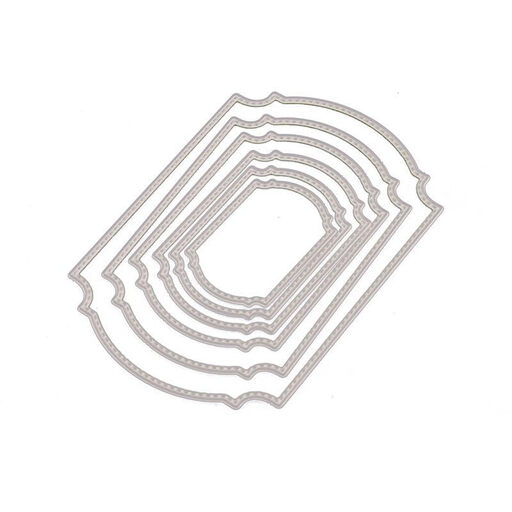
Why This Fits Their Persona: Suitable for makers who want controlled matting and layered layouts across greetings cards, scrapbook pages and photo albums.
The listing specifies six different-size nesting frame dies, reducing reliance on a single fixed frame size.
Six-piece set; stitched detailing; nesting format supports layered rectangular compositions.

Why This Fits Their Persona: Regular makers producing personalised birthday, wedding or greeting cards may benefit from a dedicated lettering and numbering set.
The listing states that the set contains 26 capital letters and 10 numbers, making the character coverage clear before purchase.
Alphabet and number dies in one set; suitable for names, ages, dates and decorative words on paper crafts.
Use a clean, level work surface and align the die and paper carefully before passing them through the machine. Place the cutting edge against the material as directed by the machine manufacturer. For a new design, test ordinary paper first so you can adjust alignment without wasting specialist cardstock.
Keep completed paper craft dies in labelled pockets or magnetic storage sheets. Do not bend thin dies to remove scraps. Instead, use a die brush or carefully lift waste from the back. Wipe away paper fibres and store the dies away from damp conditions, particularly in utility rooms or garages.
We have compiled a complete, real-time list of products that fully satisfy these strict selection criteria and UK safety regulations.
They can be suitable when used with a compatible manual die-cutting machine and cardstock within the machine’s stated thickness range. Always confirm the die size and machine compatibility before purchase.
A cutting die is designed to cut a shape from paper or card. An embossing stencil or embossing template is used to press a raised or recessed pattern into the material. Some products are designed for cutting, while others may support both functions, so read the individual listing carefully.
Lifespan depends on the die’s construction, design detail, paper thickness, pressure settings and frequency of use. Keeping dies clean, flat and dry, and avoiding materials outside the machine’s recommended range, can help maintain consistent results.