
24/7 全天候客户支持

免费退货

当日/次日达

品质保障

开启新人专享福利: 全场免邮 | 低至 2 折 | 免费试用 30 天 JoyPlus 会员
下载 Joybuy
For any paper craft enthusiast, there's nothing quite like the satisfaction of a perfectly crisp, clean cut. Metal cutting dies transform a simple piece of card into an intricate design, but the wrong die can turn a creative afternoon into a frustrating one. Many crafters in the UK have felt the disappointment of a purchase that didn't live up to its promise.
Before you add another die to your collection, it's worth knowing about the common pitfalls. Many seemingly good deals result in tools that are simply not fit for purpose, leading to wasted money and materials.
Navigating the world of paper craft supplies means looking past the attractive designs and focusing on a few key technical details. These are the non-negotiable factors that separate a reliable tool from a disappointing one.
The material of your die is the single most important factor for its longevity and performance. Look for dies made from 100% carbon steel. Unlike cheaper, mixed-metal alloys, carbon steel offers superior hardness and durability. This means it can hold a sharp, precise cutting edge for much longer, delivering clean results time and time again. A carbon steel die is less likely to bend under the pressure of a die-cutting machine, ensuring your investment lasts.
A quality die is more than just a flat piece of metal. It should have a noticeable thickness and a clearly defined, raised cutting edge. This is achieved through a process called chemical etching, which creates the sharp blade. When inspecting a die, check that the cutting lines are raised and feel sharp to the touch (be careful). This is what allows the die to cut through cardstock cleanly rather than crushing the paper fibres. This is especially important when creating detailed die cuts for scrapbooking or intricate lace patterns. Some dies also function as embossing stencils, where a less sharp, more rounded edge is used to create a raised impression instead of a cut.
Die-cutting machines in the UK typically accommodate standard paper sizes (like A5 or A4). Before purchasing any metal cutting dies, especially larger background or border designs, always check the product dimensions. Reputable sellers will list the exact measurements. Cross-reference this with the maximum width of your machine's cutting plates to avoid the frustration of a die that simply won't fit.
To help you choose with confidence, we've matched a few options to different crafting needs, focusing on designs that align with the quality markers discussed above.
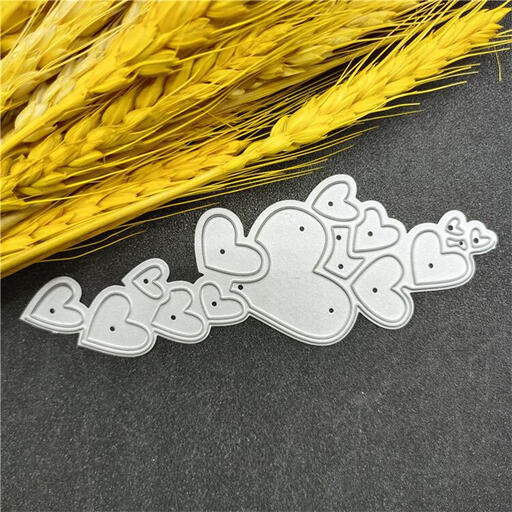
Why This Fits Their Persona: Perfect for someone who makes cards for birthdays, anniversaries and Valentine's Day. This versatile heart-themed die set provides multiple elements that can be used for a variety of celebratory occasions without needing a huge collection.
The designs are simple and robust, making them less prone to the warping that can affect more delicate, intricate dies. The clear outlines are designed for cutting, not just embossing.
Includes sentiment words like "Love" and "Happy Birthday", adding value and functionality for card making. The compact size ensures compatibility with most standard die-cutting machines.
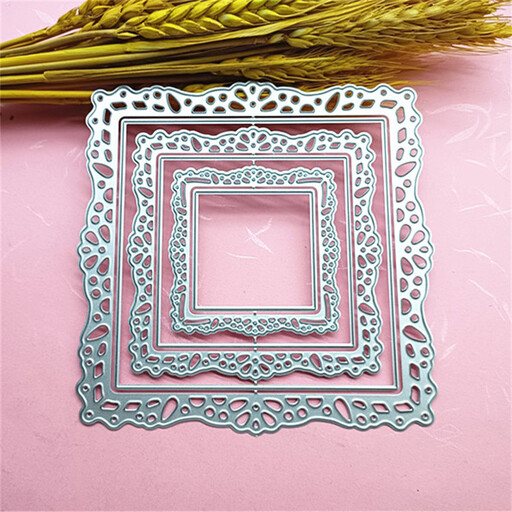
Why This Fits Their Persona: This is for the crafter focused on DIY album decor. A large, intricate background die like this creates stunning foundational layers for scrapbook pages or large-format cards, providing a high-impact look with a single pass.
The intricate lace pattern is a true test of a die's cutting edge. A well-made die like this will have sharp, well-etched lines to handle the detail without tearing the paper, avoiding the "almost-cut" flaw.
Creates a large, detailed background element quickly. The square shape is versatile for layering behind photos or creating feature panels on a scrapbook page.
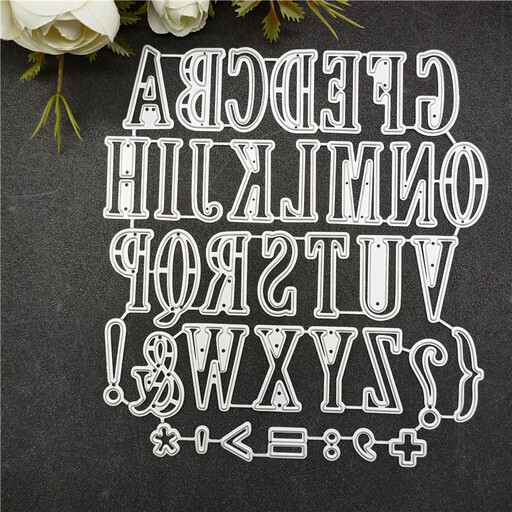
Why This Fits Their Persona: An alphabet die set is a foundational tool for any serious crafter. It allows for full personalisation of projects, from names on scrapbook pages to custom greetings on cards. This is for the user who wants maximum creative control.
A full set of 26 letters will see heavy use. A durable carbon steel construction is essential to prevent the individual letter dies from bending or dulling, ensuring the 'E' cuts just as well as the 'X' after dozens of uses.
Offers complete customisation for any project. The clean, classic font is highly versatile and suitable for a wide range of styles, from modern to traditional.
We have compiled a complete, real-time list of products that fully satisfy these strict selection criteria and UK safety regulations.
Warping is usually caused by uneven pressure or using a 'sandwich' (the stack of cutting plates) that is too tight. Always follow your die-cutting machine's instructions for the correct plate combination. To distribute wear, slightly alter the position of the die on the cutting plate for each pass. Storing your dies flat, ideally on magnetic sheets, also helps maintain their shape.
Yes, most thin metal dies can be used for both. To emboss instead of cut, you will need a silicone rubber mat as part of your machine's sandwich. This mat provides a soft cushion, allowing the die to press the shape into the cardstock without cutting through it. Check your machine's manual for the specific plate and mat combination required for embossing.
Thin metal dies, like the ones discussed here, are thin, chemically-etched carbon steel plates. They are excellent for intricate designs and work with most home die-cutting machines. Steel-rule dies are much thicker and heavier, with a sharp steel blade embedded in a dense foam base, similar to a biscuit cutter. They can cut through thicker materials like chipboard and fabric but are generally less intricate and require a compatible, robust machine.