
24/7 Customer Support

Free returns

Same-day & Next-day Delivery

Quality Guaranteed

Unlock Your Welcome Offers: FREE Delivery | Up to 80% OFF | Free 30-day JoyPlus trial
Download the APP
Finding the right metallic marker pens can feel like a challenge. Whether you're an artist adding shimmer to a masterpiece, a crafter personalising cards, a parent looking for engaging supplies for your children or a professional needing to mark industrial materials, the options are vast. The right pen needs to deliver consistent colour, work on your chosen surface and provide the finish you're looking for.
This guide is designed to cut through the clutter. We'll walk you through the key features to consider when choosing your next set of metallic markers and present some of our top recommendations to help you find a suitable match for your project.
Before you add a set to your basket, considering a few key factors will ensure you get the results you want.
The ink is the heart of the marker, and different types are suited for different tasks.
The tip determines the kind of line you can create.
Not all markers work on all surfaces. Always check the product description to confirm its intended use. Pens designed for paper may not adhere to glass, while industrial markers might be too harsh for delicate cardstock. For projects on dark surfaces, ensure the pen's ink is described as "opaque" for the best results.
Here are a few standout options, each suited to different needs and projects.
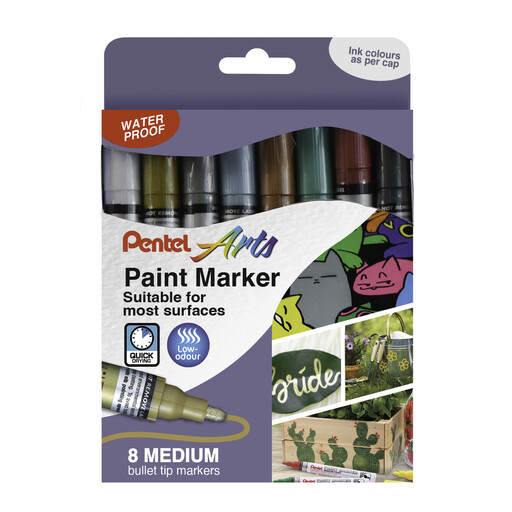
Why It Stands Out: This set is a workhorse, built for versatility and durability. Its pigment-based paint ink is designed to create permanent, opaque marks on a huge range of materials, from thick card to metal and plastic. The robust aluminium barrel and medium bullet tip make it a reliable tool for both creative and practical applications.
Pros:
Who is it for?: Crafters, hobbyists and industrial users who need a dependable and permanent metallic paint marker for a variety of surfaces.
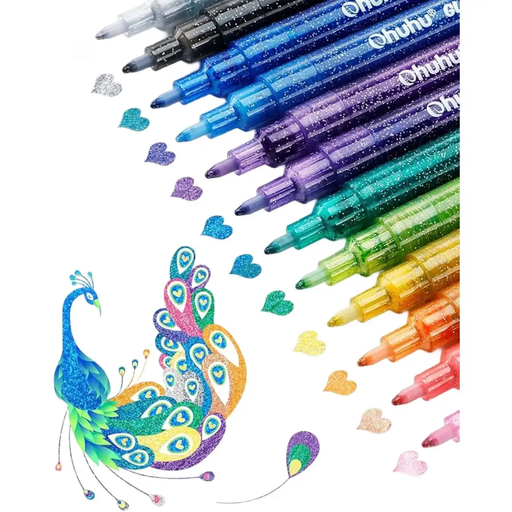
Why It Stands Out: For those focused on detailed artwork, this Ohuhu set delivers precision. The extra-fine tip allows for intricate lines and highlights, while the water-based metallic ink provides excellent coverage, especially on dark paper. According to the manufacturer, the ink is non-toxic and acid-free, certified to ASTM-4236 standards.
Pros:
Who is it for?: Artists, students and craft enthusiasts who need fine point metallic pens for detailed drawing, card making and scrapbooking.
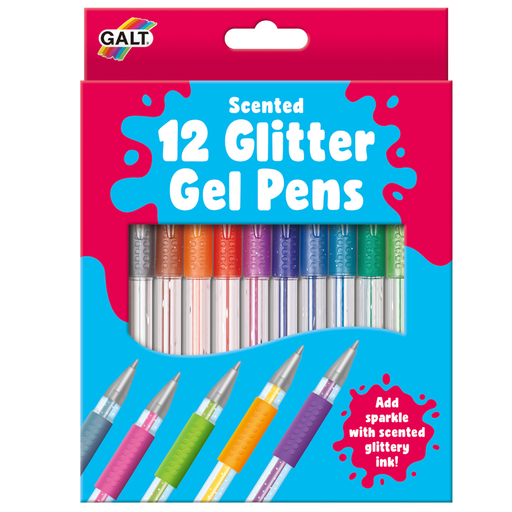
Why It Stands Out: This set is all about making art fun and accessible for younger creators. The combination of glitter, metallic sheen and scent adds a sensory dimension to drawing and writing. The pens are designed to be lightweight and easy for small hands to grip, making them a great introduction to the world of glitter gel pens for kids.
Pros:
Who is it for?: Parents and gift-givers looking for a safe, engaging and creative stationery set for children.
If these recommendations aren't quite what you're after, or if you're looking for a specific shade for a larger project, there are many other options to explore. For instance, if you need a classic metallic finish for furniture or decor, you might find what you need in our broader collection of gold craft paint and related supplies.
1. What is the difference between metallic and glitter pens? Metallic pens use very fine, reflective particles suspended in the ink to create a smooth, solid metallic sheen, similar to liquid metal. Glitter pens contain larger, more distinct particles of glitter that catch the light individually, resulting in a sparkly, more textured finish.
2. Can I use metallic marker pens on black paper? Yes, many metallic markers are perfect for use on dark surfaces. To ensure your design stands out, look for pens with high-opacity ink. Water-based and gel metallic pens for black paper are often formulated specifically for this purpose, providing vibrant, shimmering results that contrast beautifully with the dark background.
3. Are permanent metallic markers truly permanent?Permanent metallic markers, particularly those with paint-based ink, offer excellent adhesion and durability on non-porous surfaces like metal, plastic and glass under normal conditions. Their permanence means they resist water and fading. However, on any surface, the longevity of the mark can be affected by heavy abrasion, chemical exposure or prolonged, direct UV light.