Small casts in a noisy or echo-prone hall
If performers can speak close to a microphone, prioritise a directional dynamic model and repeatable positioning. Listen on headphones for room activity, plosives and changes in voice level as actors move.


For character voices in a busy or echo-prone community hall, start with a directional dynamic microphone that each performer can use close to their mouth: placement helps keep the voice prominent over room sound. A condenser makes more sense at a quiet, controlled recording position with the required interface and power; choose a boom-mounted shotgun when the microphone must stay out of shot and someone can keep it close and accurately aimed.
If performers can speak close to a microphone, prioritise a directional dynamic model and repeatable positioning. Listen on headphones for room activity, plosives and changes in voice level as actors move.
A USB/XLR dynamic microphone suits one close performer who wants a direct computer connection and headphone monitoring, with an XLR option for a different recording setup. Shure’s MV7+ is one example of this connection arrangement.
If you can keep the recording position quiet and performers consistently placed, a cardioid condenser is another option. An XLR condenser such as the RØDE NT1 Signature Series needs an interface that supplies 48 V phantom power for computer recording.
Decide how close the microphone can stay to each performer, then choose a connection and mounting arrangement that works for the session. Sound Devices advises keeping a speech microphone close to the mouth; directional pickup alone will not remove the sound of a busy hall.
| Concern | What to check when buying | Who this matters to |
|---|---|---|
| Voice against hall sound | Check the pickup pattern and whether a stand or other mounting position lets the performer stay close. Allow for a windscreen or pop filter. | If activity or echoes compete with a character’s lines, I need the voice to remain clear without recording from across the room. Around 36% of consumers put that voice-versus-room need first. |
| Computer connection and monitoring | Confirm the connection required by your device and whether you can listen through headphones while recording. | When I record one actor to a laptop, I want to hear problems during the take rather than discover them afterwards. For around 29% of consumers, a manageable computer setup is the primary need. |
| Controlled vocal capture | For an XLR condenser, check that the interface provides the required phantom power and that the microphone can remain consistently positioned. | If I can reserve a quiet corner for subtle or changing character voices, I can give more attention to the recording setup. That controlled-capture need comes first for around 21% of consumers. |
| Off-camera placement | Check mounting and power requirements, and whether a boom operator can keep the microphone aimed near the active performer. | For a filmed scene, I need dialogue recorded without a microphone entering the frame. Around 14% of consumers prioritise that off-camera requirement. |
A narrow pickup pattern does not make a distant voice close. Sound Devices emphasises minimising microphone distance to reduce reflected and unwanted sound.
Plan where actors will stand or move before choosing a handheld position, stand or operated boom. Keep the microphone near the person speaking and check the result on headphones.
Directional pickup and processing cannot replace a suitable recording position; sound from the room can still reach the microphone.
Make a short test recording in the hall. Listen for ventilation, nearby activity and echoes, then compare placements before recording the full scene.
RØDE states that the NT1 Signature Series cannot connect to a computer through an XLR cable alone. It needs an audio interface and 48 V phantom power.
Check the microphone’s connection, interface or recorder, power, cable, mounting and headphone requirements together before choosing the setup.
An interface is an additional item to arrange if you do not already have a suitable one.
Its SM58 and MV7+ illustrate two close-spoken dynamic microphone setups: conventional XLR and combined USB-C/XLR.
The e 835 is a conventional XLR dynamic microphone for speech and vocals.
The NT1 Signature Series represents a large-diaphragm cardioid condenser setup for a controlled recording position.
The AT897 short shotgun is relevant when filmed dialogue needs a microphone positioned outside the frame.
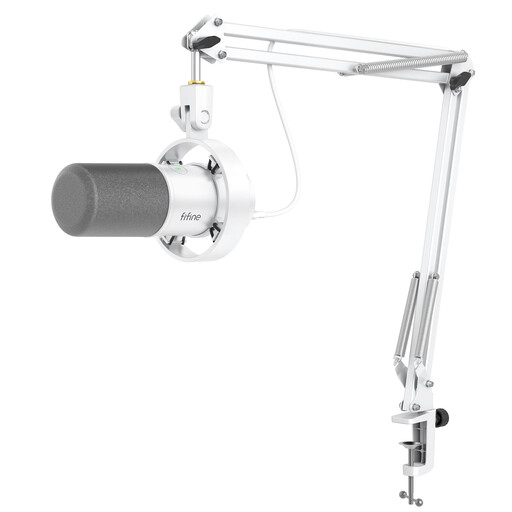
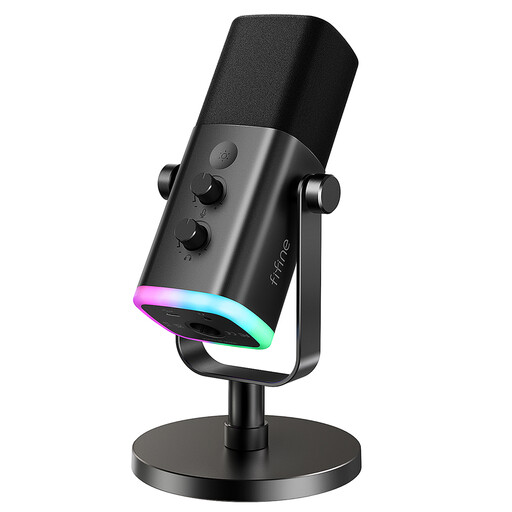
These two USB/XLR dynamic microphones suit a close-spoken, computer-based character-voice setup. Choose between their mounting arrangements according to where the performer will stand or sit, and test the chosen position in the hall before the session.
 No image available
Consider this kit when a boom arm would help position the microphone close to one performer at a time.
The product title identifies a dynamic microphone with USB and XLR connections and a headphone jack. If you plan to use XLR, check the cable and recording equipment you will need.
 No image available
Consider the desktop-stand arrangement for a seated performer who can maintain a close, consistent speaking position.
The product title lists USB and XLR connections, a headphone jack and a mute button. Check whether the stand places the microphone where you need it and what equipment your chosen connection requires.
Start with a close-spoken directional dynamic microphone if the hall is active or echo-prone and you can keep it near each performer. A condenser is worth considering when you can establish a quiet, consistent recording position and have the interface and power its connection requires.
No. Directional pickup reduces sensitivity to sound outside the microphone’s main pickup area, but it cannot remove all room sound. Sound Devices recommends keeping speech microphones close; test the position in the hall and listen through headphones before the main recording.
Not every XLR microphone can: RØDE says the NT1 Signature Series needs an audio interface rather than an XLR cable alone, and its condenser setup requires 48 V phantom power. A microphone with a USB connection offers a different route, provided that connection suits your computer.
Choose a boom-mounted shotgun when filming requires the microphone to stay outside the frame and an operator can keep it aimed near the active performer. The Audio-Technica AT897 is intended for video and broadcast recording, but its directional design does not make distant recording in a reverberant hall equivalent to close placement.