What matters when choosing?
Decide whether the guide can stay near a fixed microphone before choosing a connection or a wireless system. The routes below address different recording arrangements, not different solutions to hall reverberation.
Close-positioned dynamic microphone
Choose when: One guide can speak consistently near a stand-mounted microphone in a hall with audible room sound.
Allow for: The cited Shure MV7X and SM58 models need an XLR-compatible recording chain; neither makes distant speech free of reverberation.
USB-capable condenser
Choose when: The room can be kept quiet, the guide can stay close and direct computer recording would be useful; RØDE specifies USB and XLR connections for the NT1 5th Generation.
Allow for: A condenser's specifications do not remove reflected hall sound. Confirm the connections and accessories for the exact model chosen.
Wireless microphone system
Choose when: The guide needs to walk or keep both hands free beyond a practical fixed-microphone position.
Allow for: Transmitter, receiver and battery management, plus checks of the system's frequency and applicable Ofcom operating requirements.
| Concern |
What to check |
Who this matters to |
| Hall sound |
Check the pickup pattern and whether a stand or boom can keep the microphone close to the guide. |
If reflected speech or nearby activity distracts from a calm voice, I would prioritise a workable close position over supposed long reach; around 42% of consumers put hall-sound control first. |
| Recording connection |
Match USB or XLR output to the computer, recorder or interface you intend to use, and confirm the required accessories. |
When recording directly to a computer is the priority, I want a connection that fits the equipment already planned for the session; about 33% of consumers place setup simplicity first. |
| Freedom to move |
For wireless use, identify the exact frequency and check batteries, venue conditions and whether the intended operation needs an Ofcom licence. |
If I guide movement away from a stand, keeping the microphone near my voice matters more than using a fixed setup; roughly 25% of consumers prioritise mobility. |
Joybuy product choices
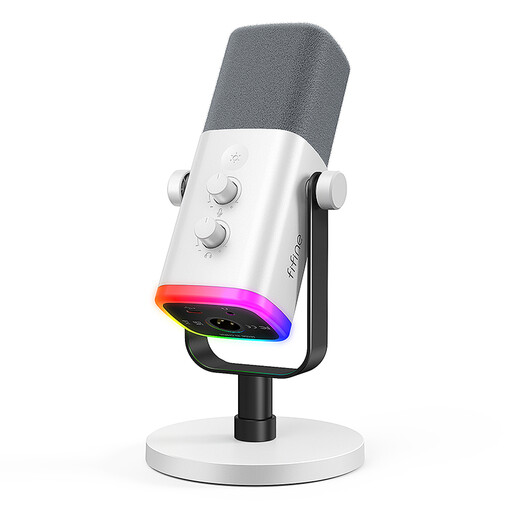
This wired dynamic microphone is a choice to consider when the guide can stay near a fixed recording position. Match its USB or XLR connection to the equipment you plan to use, and check the pickup pattern if your setup specifically calls for cardioid.
 No image available
FIFINE AM8W XLR/USB Dynamic Microphone, White
Consider this for a guide who can remain near a fixed microphone while recording.
Dynamic microphone with XLR and USB connections; White variant. Its product name specifies a gain knob, mute button and monitoring jack.
Confirm the exact pickup pattern before choosing it for a cardioid-specific setup, and test its position in the hall.
View on Joybuy
Frequently asked questions
Will a directional microphone remove echo from a community hall?
No. It can reduce sound arriving from some directions, but it cannot separate reflected speech that has already reached the microphone from the guide's voice. Shure recommends attention to microphone distance; keep the guide close, reduce avoidable noise and make a test recording in the room.
Can I keep the microphone several metres away from the guide?
That risks recording more room sound relative to the guide's voice. Shure explains that results at a distance depend on the room and background noise, so use an unobtrusive stand or boom to bring the microphone closer rather than choosing by a claimed pickup reach.
Do I need an audio interface for an XLR microphone?
You need a compatible XLR microphone input, whether on an audio interface, recorder or mixer. If you want to record straight to a computer instead, choose a microphone explicitly equipped for USB recording, such as the RØDE NT1 5th Generation, and check the connection and recording software before the event.
Are wireless microphones always licence-free in the UK?
No. Ofcom describes licence-exempt operation with applicable limits, while other intended wireless microphone use requires a programme-making and special-events licence before transmission. Check the exact system, frequency and operating conditions rather than relying on a general wireless label.
What if attendees can be identified in the recording?
Work out how the recording will be used and what information attendees need before recording them; microphone choice does not settle the privacy requirements. If consent is the lawful basis you use, the Information Commissioner's Office says it must be specific and informed. The appropriate steps also depend on who controls the recording and its intended use.


