Participants in a noisy home office
If household activity or keyboard sounds may reach your microphone, prioritise a call-focused microphone and check its stated approach to background-noise reduction.


For an occasional local history talk at your desk, a wired USB headset avoids Bluetooth pairing and charging; choose a wireless model if you need to move around or switch devices. In a distracting home office, consider microphone noise reduction for what others hear and active noise cancellation (ANC) for what you hear, then check the computer connection and fit.
If household activity or keyboard sounds may reach your microphone, prioritise a call-focused microphone and check its stated approach to background-noise reduction.
If you join a scheduled talk from your desk, a compatible wired headset avoids charging and Bluetooth pairing. Check the connector before choosing one.
Assess the wearing style and fit as well as features that reduce noise reaching you. Microphone noise reduction serves a different purpose from ANC.
Choose when: You will stay at your desk and want to avoid wireless pairing and charging.
Trade-off: A cable limits movement, and the USB connector must match your computer.
Choose when: You want to move around during the talk or use both a computer and phone.
Trade-off: Charging, pairing and selecting the right meeting audio device add setup steps.
Choose when: Background sound affects both your contributions and your ability to follow longer talks.
Trade-off: Microphone noise reduction and listener ANC are separate features; check both on the exact model.
| Concern | What to check | Who this matters to |
|---|---|---|
| Being heard clearly | Look for a call-focused microphone and a specific statement about outgoing noise reduction; ANC alone addresses listening. | If household noise may interrupt my contribution, I want other attendees to understand my question without repeated attempts. Around 45% of consumers put outgoing speech clarity first. |
| Joining without connection trouble | Match USB ports or the supplied receiver to your computer, then test the selected microphone and speaker before the talk. | When a live talk starts at a set time, I need my headset to connect without sorting out pairing or the wrong audio device. For around 33% of consumers, straightforward setup is the main concern. |
| Comfort and listening | Consider on-ear versus over-ear fit, and check whether ANC is useful in your room; assess fit during the applicable return period. | For a longer talk, I need to follow the speaker without an uncomfortable fit becoming a distraction. Sustained listening and comfort come first for around 22% of consumers. |
ANC reduces noise reaching the wearer; it does not, by itself, establish how well the microphone handles background sound sent to the group.
Check the microphone features separately, then decide whether you also need ANC for listening.
USB-A, USB-C and meeting-platform variants can differ. The wrong connection or audio-device selection may complicate joining the talk.
Check the exact variant, included receiver or adapter, computer ports and meeting software; test microphone and speaker selection beforehand.
An adapter or different receiver may be needed if the included connection method does not suit your computer.
Ear pressure and cushion shape feel different from person to person, even when a headset has a stated weight or cushioned design.
Compare wearing styles and assess fit promptly under the retailer's applicable return terms.
Government guidance distinguishes electrical-product marking routes for Great Britain and Northern Ireland.
Check the seller's product information for the marking and documentation applicable to your delivery location.
Logitech positions its Zone Vibe 100 wireless headset for home working and video meetings.
Poly's Voyager Focus 2 line is relevant when microphone noise reduction and listener ANC are both on the checklist.
Jabra's Evolve2 65 Flex line has distinct connection and meeting-platform variants.
These choices include a desk-based wired headset, wireless call headsets and over-ear headphones for listeners considering noise reduction. Match the connection and microphone arrangement to the talk before choosing.
 No image available
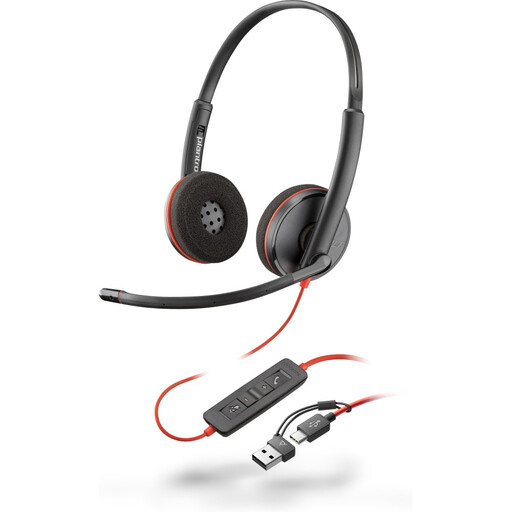
A wired option for joining a talk at your desk without Bluetooth pairing or headset charging.
The product name specifies a USB-C headset and USB-C/A adapter. Check that the supplied connection suits your computer, and test its microphone in the meeting software.
 No image available
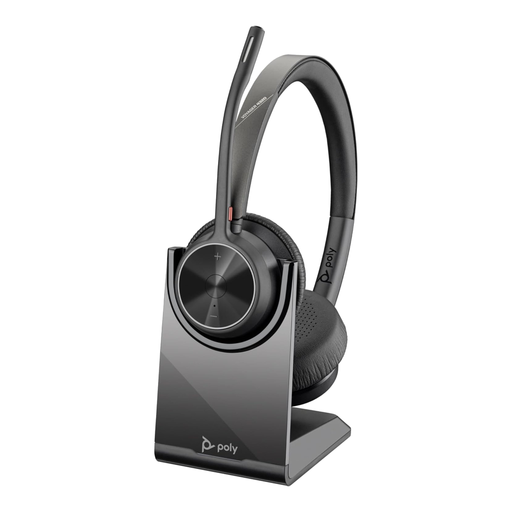
Consider this call-focused wireless option if you want to move away from your desk during the talk.
The product name identifies Bluetooth, USB Type-A and a charging stand. Confirm the included computer receiver or adapter and test the intended microphone connection.
 No image available
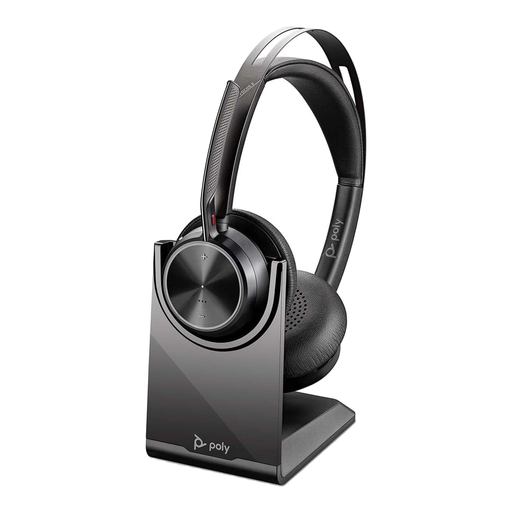
Consider this model when both your outgoing speech and your ability to follow a talk in a distracting room matter.
HP describes microphone noise reduction and listener ANC as separate features of the Voyager Focus 2 line. Confirm the features and included dongle, adapter and charging accessories on this exact 2-M variant.
 No image available
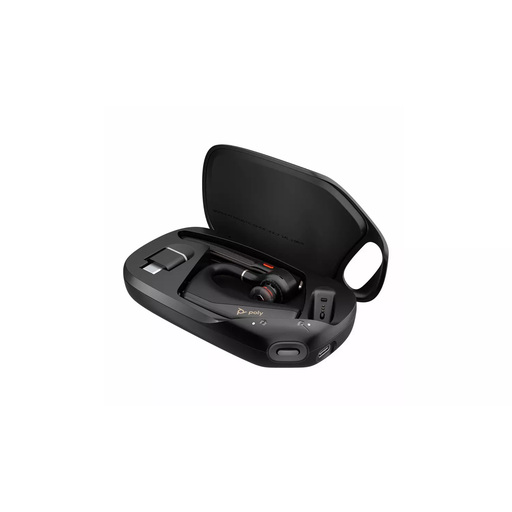
This Bluetooth call headset is an option if you prefer a single-ear wearing style to a dual-ear headset.
Check how this variant connects to your computer and whether its microphone works with the software used for the talk.
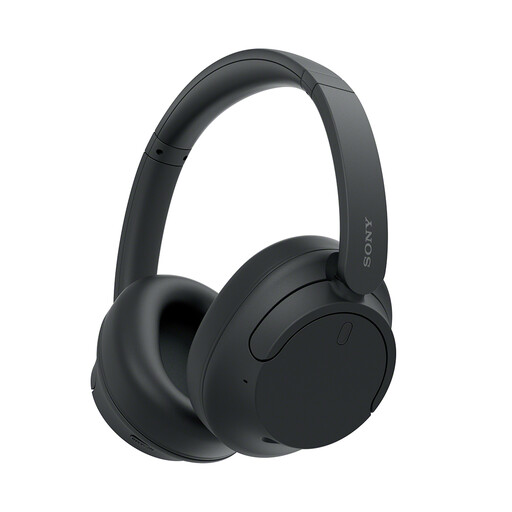 No image available
Consider these if over-ear listening is a priority, but assess their call setup separately from their noise-cancelling description.
There is no boom microphone in the product name. Check microphone pickup, meeting-platform controls and whether a wired connection carries microphone audio before relying on them for the talk.
Not if your main concern is how clearly others hear you: check microphone noise reduction for that purpose. ANC addresses noise reaching you while you listen; HP describes the two functions separately for its Voyager Focus 2 line.
Choose a compatible wired USB headset if you will stay at your desk and want to avoid charging and pairing. Bluetooth is worth considering if movement or switching devices matters, provided you check the computer connection and selected meeting audio device before the event.
For qualifying distance purchases, GOV.UK says consumers can notify the trader that they wish to cancel within 14 days of receiving the item. Check the applicable cancellation conditions and retailer instructions promptly; remedies for faulty or misdescribed goods are separate from a change-of-mind return.
Check which electrical-product marking route applies to the delivery location and the specific headset. Department for Business and Trade guidance dated March 2026 distinguishes Great Britain from Northern Ireland, so ask the seller for clear product and conformity information rather than assuming the routes are identical.