Choose by where you can place the microphone: a close stand-mounted microphone suits an actor who stays near one mark, a closely aimed boom can keep the microphone out of frame, and a wearable wireless setup allows more movement. Shure’s placement guidance cautions that directionality cannot separate speech from room reflections, so distance from the actor remains crucial. Check recording-device connections and power requirements before buying, as well as the operating arrangement for any wireless system.
Who each setup suits
Recordists working from a fixed mark
If the actor can stay near a stand-mounted microphone, you can prioritise close voice capture without needing to conceal the microphone from a camera. Shure’s microphone-placement guidance explains why that distance matters in a reflective room.
Crews filming the monologue
If the microphone must stay outside the shot, a boom operator can aim it towards the actor as they move within a limited area. The boom still needs a position close enough to capture speech ahead of hall reflections.
Groups recording a moving performer
If the actor cannot remain near a stand, a body-worn microphone may keep the voice closer throughout the performance. Shure’s theatre guidance makes placement and clothing noise important checks; wireless systems also need compatible equipment and an appropriate UK frequency arrangement.
What matters when choosing
For a community-hall monologue, decide which constraint changes microphone placement most: room reflections, camera framing, the actor’s movement or a deliberately visible setup.
Close stand-mounted condenser
Choose when: The actor can work from a consistent mark and a visible microphone can sit close to the voice.
Accept: An XLR condenser needs a compatible powered recording input, and its cardioid pattern cannot remove hall reverberation.
Boom-mounted shotgun
Choose when: The microphone must remain out of shot and an operator can keep it close and aimed at the actor.
Accept: A boom needs room around the frame and active aiming; forward directivity does not make distant speech free of room reflections.
Wireless lavalier and bodypack
Choose when: The actor needs to move away from a fixed mark while wearing a discreet microphone.
Accept: Clothing placement, batteries, transmitter compatibility and wireless-frequency planning become part of the recording setup.
Close dynamic vocal microphone
Choose when: A handheld or stand-mounted microphone can remain visible and the actor can speak close to it.
Accept: Moving away from the microphone brings more room sound into the recording, as Shure’s SM58 placement guidance notes.
| Concern |
What to check |
Who this matters to |
| Speech against hall reflections |
Check whether a stand or boom can keep the microphone close and correctly oriented towards the actor. |
If words become blurred in a reflective hall, I need the microphone near the voice rather than relying on its pickup pattern alone. Around 33% of consumers put direct-voice capture first. |
| Camera framing |
Check boom clearance and whether an operator can maintain close, accurate aim outside the shot. |
When filming, I need to keep the microphone out of frame without moving it so far away that the room dominates. For around 27% of consumers, unobtrusive framing is the primary concern. |
| Performer movement |
Check attachment, transmitter compatibility and the exact UK wireless-frequency arrangement. |
If the actor crosses the performance area, I cannot depend on a microphone fixed at one mark. Freedom of movement comes first for around 20% of consumers. |
| Visible, straightforward use |
Check the cable and stand arrangement, and whether the actor can maintain a close speaking position. |
For a deliberately visible spoken-word setup, I want a microphone that can be handled or left on a stand close to the actor. Around 20% of consumers prioritise this approach. |
Mistakes to avoid in a reflective hall
-
Putting a directional microphone far from the actor
Shure explains that a microphone cannot separate direct speech from reflected speech once both reach it. A narrower pickup pattern is not a substitute for close placement.
Plan the actor’s mark or boom position, then test the intended distance in the hall before settling on a setup.
-
Assuming an XLR condenser is a complete recording setup
Audio-Technica says the AT2020 requires power through its XLR connection and that its XLR cable is sold separately.
Trace the connection from microphone to recorder or interface and check its microphone-power capability and the accessories included with the model.
The setup may also call for a separate XLR cable, suitable recording input, stand and monitoring headphones.
-
Choosing wireless without testing it at the venue
Ofcom notes that licence-exempt wireless-microphone ranges share spectrum with other low-power equipment and can experience interference.
Check the system’s exact UK operating band and applicable requirements, then test reception where the performance will take place.
Allow rehearsal time for reception checks and battery changes; a recording that needs more dependable spectrum may require a different frequency arrangement.
-
Overlooking lavalier contact with clothing
Shure’s theatre guidance notes that fabric rubbing against a lavalier microphone or cable can create contact noise.
Test the microphone with the intended costume and movement, secure the cable and keep fabric clear of the capsule.
Suitable attachment materials and extra fitting time may be needed.
Brands relevant to these recording setups
RØDE
The NT1 Signature Series is relevant to a fixed, stand-mounted spoken-word position.
- RØDE describes it as a cardioid XLR condenser supplied with a shock mount, pop filter and XLR cable.
- It needs a compatible recording chain and close placement; its pickup pattern does not remove hall reverberation.
Audio-Technica
The AT2020 offers an XLR cardioid-condenser route for an actor recording from a fixed position.
- Audio-Technica describes its cardioid pattern as helping isolate the intended source.
- The AT2020 needs power through XLR, and Audio-Technica says its XLR cable is sold separately.
Sennheiser
The MKE 600 is relevant when dialogue needs to be captured from a closely positioned boom outside the camera frame.
- Sennheiser specifies a supercardioid/lobar pickup pattern, a switchable low-cut filter and phantom-or-battery operation.
- It still needs accurate aiming and close placement in a reverberant hall.
Shure
Shure’s SM58 represents visible close vocal use; its WL183, WL184 and WL185 lavaliers represent a separate bodypack-compatible route.
- Shure describes the SM58 as a cardioid dynamic vocal microphone with a built-in pop filter, while its theatre guidance addresses discreet lavalier placement.
- An SM58 needs the performer to stay close; lavaliers require careful attachment and a compatible transmitter, with wireless operation needing frequency planning.
Joybuy wireless USB-C microphone options
These wireless options connect through USB-C for recording to a compatible device. For a hall monologue, check how each microphone attaches, whether it can stay close to the actor during movement and whether its wireless operation suits the venue; neither should be assumed to work like a bodypack lavalier.
 No image available
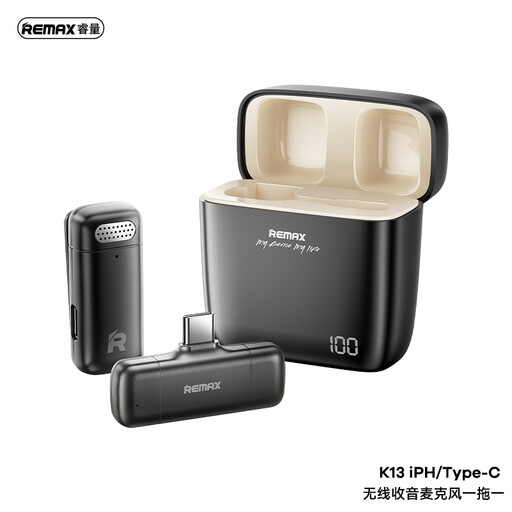
REMAX K13 1-to-1 USB-C Wireless Microphone, Black
Consider this for recording a monologue to a compatible USB-C device when a wireless link would suit the performance layout.
Check how the microphone attaches and how close it can remain to the actor. Confirm compatibility with your recording device and the wireless operating arrangement before use in the hall.
View on Joybuy
 No image available
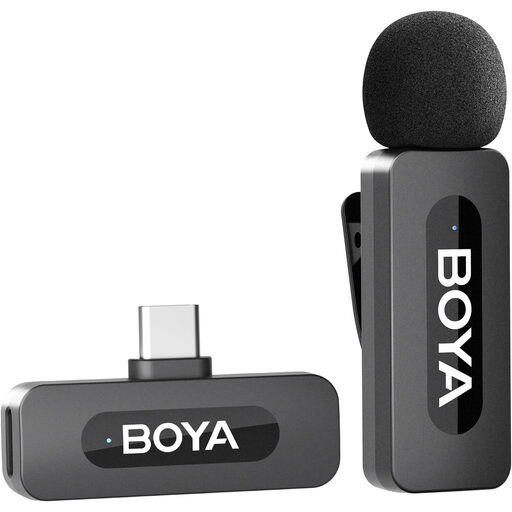
BOYA BY-V10 V2.0 USB-C Wireless Microphone (1 TX + 1 RX)
Consider this one-transmitter, one-receiver option if you plan to record the actor using a compatible USB-C phone.
Check the attachment method and test whether the microphone can remain close as the actor moves. Confirm phone compatibility and the wireless operating arrangement for the venue.
View on Joybuy
Questions before recording
Will a directional microphone remove echo from a community hall?
No. Shure explains that a microphone cannot separate direct speech from reflected speech simply by using a directional pickup pattern. Keep it close to the actor and test the intended position in the hall.
Does an XLR condenser microphone need phantom power?
Check the exact model and recording input: condenser microphones need appropriate powering, and Audio-Technica says the AT2020 requires power through its XLR connection. Confirm that your recorder, mixer or interface can supply what the microphone requires.
Can I use a wireless lavalier microphone in the UK?
You can choose a wireless system whose frequency arrangement meets the applicable UK requirements. Ofcom lists licence-exempt wireless-microphone ranges, but notes that shared use can cause interference; check the exact band and conditions for your equipment before recording.
Can I record and publish an actor’s monologue without permission?
Do not assume that owning the recording equipment gives you permission to record or release the performance. UK Intellectual Property Office guidance explains that performers’ rights can restrict recording and uploading live performances; agree the intended recording and distribution with the relevant rights holders beforehand.


