Solo smartphone diarists
If you narrate mainly to a phone, a compact clip-on system may make short diary recordings easier to set up and carry. Check the receiver connector and recording app before choosing one.


For a presenter moving around a community hall, start with a clip-on wireless microphone worn close to the speaker; choose a two-transmitter kit if a companion will also speak. A direct-to-phone setup keeps solo diaries simple, while onboard recording is worth considering for takes that cannot be repeated. Noise-control features do not replace a test recording in the hall.
If you narrate mainly to a phone, a compact clip-on system may make short diary recordings easier to set up and carry. Check the receiver connector and recording app before choosing one.
If you and a companion both speak, a kit with two transmitters lets each person wear a microphone instead of passing one between you.
If a conversation or event cannot be repeated, consider a system that saves an onboard audio file as well as sending sound to the phone or camera.
Decide whether speech or the hall's atmosphere should dominate the recording, then check how many people will speak and what device will capture the audio. A compact stereo phone microphone is an option when room sound is intentional and the narrator can stay near the phone; a worn microphone is the more relevant starting point for a moving speaker.
| Concern | Buying checks | Who this matters to |
|---|---|---|
| Speech against hall ambience | Check whether the microphone can sit close to the narrator. If considering directional pickup, confirm the exact model's pattern and how it must be aimed. | I want my narration to remain prominent while people and activities are audible elsewhere in the hall. Around 36% of consumers put speech clarity first. |
| Two voices | Confirm that the exact bundle has two transmitters and a receiver compatible with the recording device. | When my companion joins the diary, I do not want us to pass one microphone back and forth; for around 29% of consumers, recording two speakers is the primary need. |
| Phone-friendly portability | Match the receiver to the phone's USB-C or Lightning port, and check whether the intended app accepts its audio input. | I record short entries while travelling and want a small kit that works with my phone. A simple phone setup comes first for around 21% of consumers. |
| A non-repeatable take | Check whether the exact model records onboard, how its files are retrieved and whether you can monitor the recording. | If the moment happens only once, I want an independent audio file in case the main recording is compromised. Retake protection is the leading concern for around 14% of consumers. |
Noise-control features do not establish that a microphone will remove reverberation or distant voices. A microphone placed far from the narrator still picks up more of the room.
Wear a clip-on microphone close to the speaker where practical, and listen to a test recorded in the hall.
RØDE sells separate USB-C and Lightning versions of the Wireless Micro, while the Shure MV88 USB-C is a USB-C microphone. The connector and recording-app requirements depend on the exact product.
Check your phone port, case clearance, microphone variant and app requirements before ordering.
DJI's Mic Mini operating-time measurements use specified close-range, interference-free conditions with noise cancellation off. Runtime during a hall recording may differ.
Charge each component, take the charging case if the kit includes one, and test the setup before the session.
Ofcom notes that the licence-exempt 2.4 GHz range can be affected by other low-power equipment.
Test the wireless link while moving around the hall. For an important take, consider a suitable wired or onboard-recording backup.
RØDE offers both a direct-to-phone Wireless Micro and a Wireless PRO system aimed at recordings needing more control.
DJI's Mic Mini is a compact wireless option for recording a presenter and companion with a two-transmitter bundle.
Shure's MV88 USB-C is a compact stereo microphone for a compatible phone or computer, rather than a worn wireless microphone.
These options focus on wireless kits for spoken travel diaries: three bundles for two speakers and two USB-C kits for a solo narrator. Check the exact phone connection and make a recording in the hall before relying on any noise-control feature.
 No image available
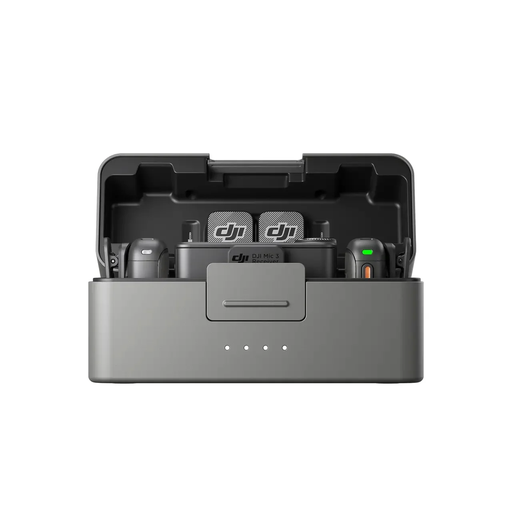
Consider this kit when both a presenter and companion need microphones. It is listed with two transmitters, one receiver and a charging case; check compatibility with your phone and recording app.
 No image available
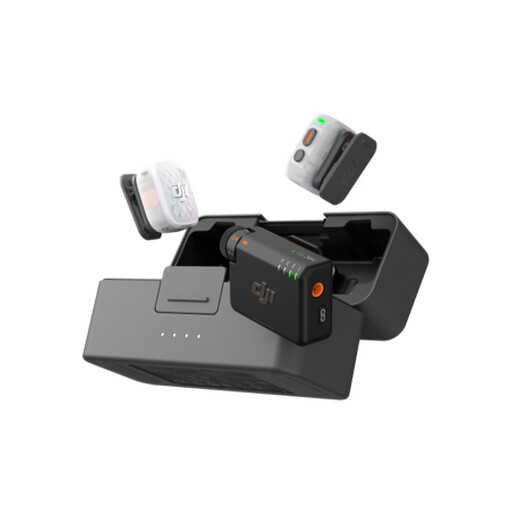
This two-transmitter bundle is relevant if a companion may join the diary. It includes a receiver and charging case; confirm how the receiver connects to your intended phone or camera.
 No image available
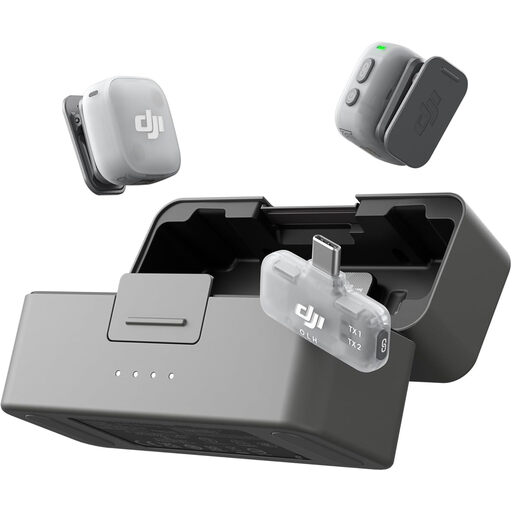
For a diary with two speakers, this kit lists two transmitters, a mobile receiver and a charging case. Confirm the connection and recording-app workflow for your phone; if an independent backup file matters, check for onboard recording on this exact model.
 No image available
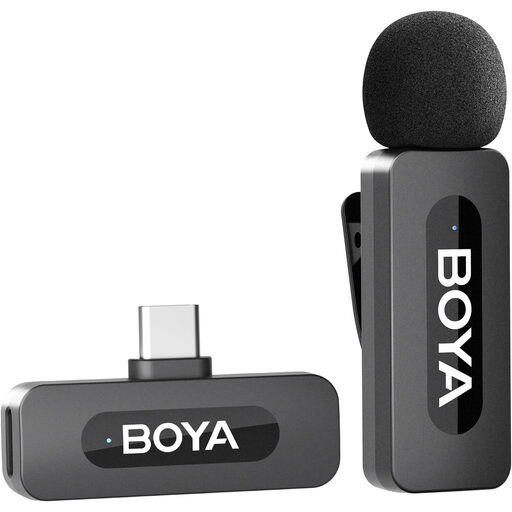
This one-transmitter kit is a solo-recording option for a compatible USB-C phone. Its product name states a 9-hour battery-life claim; check the operating conditions, mounting method and app compatibility before relying on it for a session.
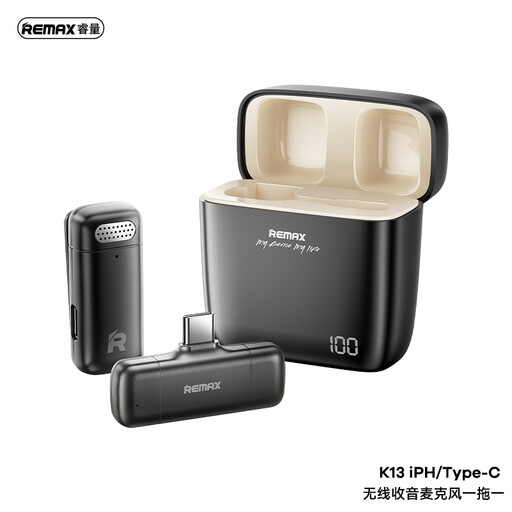 No image available
This 1-to-1 USB-C kit is relevant to a solo diary rather than a two-speaker setup. Check how securely its microphone can be placed near the narrator and whether the receiver works with your device and recording app.
Do not rely on it to remove hall echo. DJI describes noise-cancellation features for the Mic Mini, but that does not establish how they will handle a particular room. Place the microphone close to the speaker and listen to a test made in the hall.
Choose two transmitters if two people may speak during the same segment and each needs to wear a microphone. For a solo diary, one may be sufficient; check the exact bundle rather than assuming every wireless kit includes two.
Ofcom says the 2400–2483.5 MHz range can be used without a licence where the applicable exemption requirements are met. That does not protect the recording from interference, so check the chosen equipment's operating requirements and test it at the venue.
Ask the hall organiser about venue rules and seek appropriate permission before recording identifiable people. The Information Commissioner's Office distinguishes purely personal or household activity from organisational processing; if an organisation collects identifiable recordings, it must identify an applicable lawful basis and be clear about how the recordings will be used. Your purpose and plans for sharing the diary matter.
Confirm that the receiver and recording app work together, charge the kit and make a short test while the hall is in use. If you will move while speaking, include a walk-and-talk check of microphone placement and the wireless link.