
24/7 Customer Support

Free returns

Same-day & Next-day Delivery

Quality Guaranteed

Unlock Your Welcome Offers: FREE Delivery | Up to 80% OFF | Free 30-day JoyPlus trial
Download the APP
Running out of storage on your phone again? Finding that your new drone's 4K video footage is choppy? Or perhaps you're tired of long loading screens on your handheld gaming console. A tiny microSD card can solve these problems, but navigating the sea of technical jargon—UHS-I, V30, A2, microSD Express—can be confusing.
As the Joybuy Product Recommendation Officer, my role is to help you cut through the jargon. This guide provides clear, practical advice to help you choose a microSD card that fits your device, your needs and your budget, ensuring you get the performance you pay for.
Before you add a card to your basket, consider these key factors. Getting it right means you won't overspend on features you don't need or be disappointed by poor performance.
Capacity is the first thing most people look at, and it's easy to think bigger is always better. However, the right capacity depends entirely on how you'll use it.
A card's speed is crucial for smooth performance. A slow card can cause lag when running apps, dropped frames in video and long game-loading times. Here are the key speed ratings to look for:
Always check your device's specifications before buying. Most modern smartphones, drones and consoles support the microSDXC standard, which covers all cards from 64GB to 2TB. However, older devices may only support microSDHC (up to 32GB).
Furthermore, to get the maximum speed from a card, your device must support its speed class. For example, a new microSD Express card will work in a standard UHS-I slot, but its speed will be limited to that of the older interface.
Here are a few standout options that cater to different needs, from high-performance content creation to everyday storage expansion.
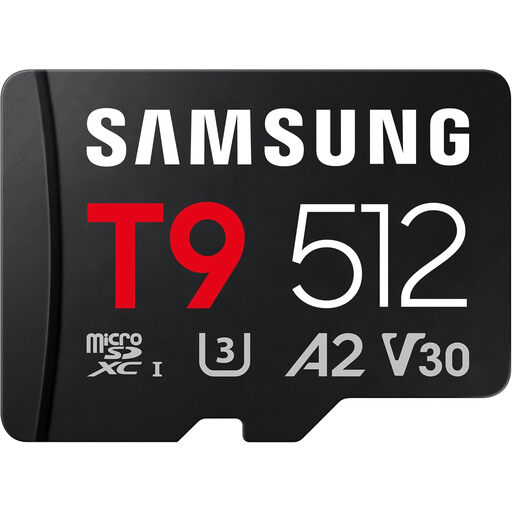
Why It Stands Out The Samsung T9 is a high-performance UHS-I card that delivers impressive speed and reliability for demanding tasks. It combines fast transfer rates with the crucial V30 and A2 ratings, making it a versatile workhorse for creators and gamers who need a fast memory card that won't let them down.
Pros
Who is it for? This is an excellent choice for content creators using a microSD card for a drone or action camera, as well as gamers looking for a responsive gaming microSD card for current-generation consoles.
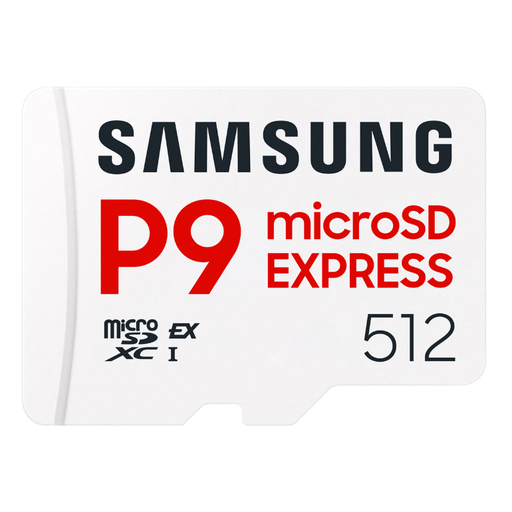
Why It Stands Out The Samsung P9 represents the future of removable storage. As a microSD Express card, it leverages PCIe technology to deliver speeds that are several times faster than traditional UHS-I cards. It’s built for next-generation devices that demand SSD-like performance in a tiny form factor.
Pros
Who is it for? This card is for tech enthusiasts and gamers with next-generation hardware, such as the upcoming Nintendo Switch 2, who want to future-proof their setup and experience the absolute fastest loading speeds possible.
View the Samsung P9 Express 512GB
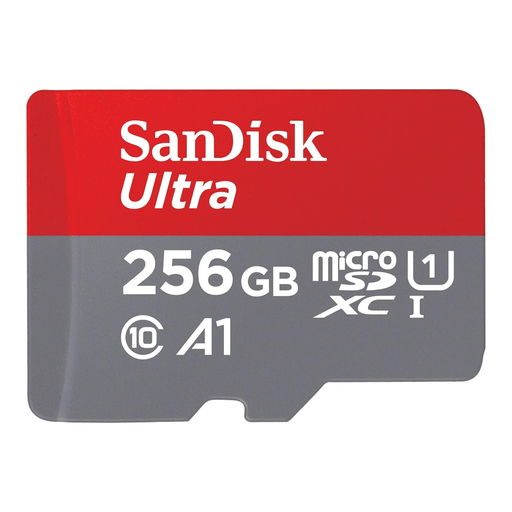
Why It Stands Out The SanDisk Ultra is a dependable and cost-effective solution for expanding storage on everyday devices. Its A1 rating makes it particularly well-suited for Android users who want to free up internal memory without sacrificing app performance. The included SD adapter adds a layer of versatility.
Pros
Who is it for? Ideal for Android smartphone and tablet users looking for a simple storage upgrade. It's also a reliable choice for casual photographers and anyone needing a versatile, all-purpose card.
If these recommendations don't quite match what you're looking for, or if you need a card with a different capacity or specific features for photography, we have a wider selection available.
Explore our full range of memory cards for cameras and more
The main difference is storage capacity. microSDHC (High Capacity) cards range from 4GB to 32GB. microSDXC (Extended Capacity) cards range from 64GB all the way up to 2TB. Most modern devices, including smartphones and gaming consoles, require microSDXC cards to support larger storage sizes. Always check your device's manual for compatibility.
The Nintendo Switch, Switch Lite and Switch OLED models all support microSDXC cards. To ensure fast game loading times, it is advisable to choose a UHS-I memory card with a high read speed (90MB/s or faster). A gaming microSD card with an A1 or A2 rating can also help with the performance of games stored on the card.
For most users, a V90 card is overkill. A card with a V30 rating is perfectly capable of recording high-quality 4K UHD video on most consumer devices, including drones, action cameras and mirrorless cameras. V60 and V90 cards are generally reserved for professional cinema cameras that record at extremely high, uncompressed bitrates.