
24/7 Customer Support

Free returns

Same-day & Next-day Delivery

Quality Guaranteed

Unlock Your Welcome Offers: FREE Delivery | Up to 80% OFF | Free 30-day JoyPlus trial
Download the APP
As a Joybuy Product Recommendation Officer, my role is to help you navigate the ever-changing world of tech. With file sizes for games, 4K video and high-resolution photos growing larger, the demand for faster, more capable storage has never been greater. If you're a content creator, a dedicated gamer or a drone pilot, you've likely felt the bottleneck of slow transfer speeds or run out of space at a critical moment.
The arrival of the microSD Express card marks a significant leap forward in portable storage. This guide will walk you through what this new technology offers, help you decide if it's the right choice for your needs and highlight some of our top recommendations for 2026.
Choosing the right memory card goes beyond just picking the largest capacity. Here are a few key points to consider, especially when looking at the latest high-speed options.
The core innovation of the microSD Express format is its use of a PCIe NVMe interface, the same technology found in high-speed solid-state drives (SSDs). This allows for theoretical speeds far exceeding the traditional UHS-I and even UHS-II standards.
To achieve these top speeds, you need a host device—like a camera, laptop or console—that has a microSD Express slot.
One of the most practical features of the new standard is that every UHS-I backward compatible card is designed to work in your existing gear. A microSD Express card will function perfectly in a standard microSD slot, but it will operate at UHS-I speeds.
This makes it a future-proof investment. You can purchase a card today for your current drone or camera and be ready for the performance boost when you upgrade to a device that supports the Express standard, such as a next-generation console requiring a Nintendo Switch 2 memory card.
With video resolutions pushing into 5K and 8K, storage capacity is a major consideration. A single hour of 8K video can consume hundreds of gigabytes. For videographers, a 512GB microSD card is quickly becoming the new standard for a day's shoot. Likewise, modern game files can easily exceed 100GB, making ample storage essential for gamers who want to keep multiple titles installed. When choosing, balance your current needs with what you anticipate needing in the near future.
Here are a few standout options that cater to different needs, from those embracing the cutting edge to those seeking proven performance for today's devices.
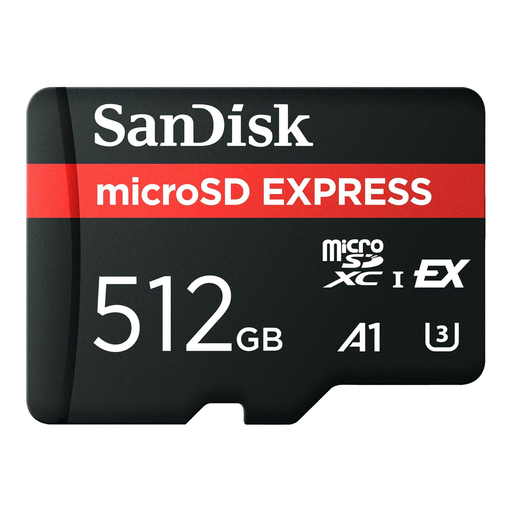
Why It Stands Out: The SanDisk Express card is built for the future of content creation and gaming. By leveraging the PCIe NVMe interface, it delivers performance that rivals portable SSDs, making it ideal for workflows involving massive files. According to SanDisk, its read speeds are up to 4.4 times faster than their fastest UHS-I cards. It also features SanDisk’s ThermAdapt technology, which helps manage heat during sustained, intensive tasks like recording an 8K video microSD card might handle.
Pros:
Who is it for? This card is aimed at early adopters and professionals who cannot afford to wait. This includes videographers shooting in 5K or 8K, drone operators capturing high-bitrate footage and gamers seeking the fastest possible load times on next-generation consoles.
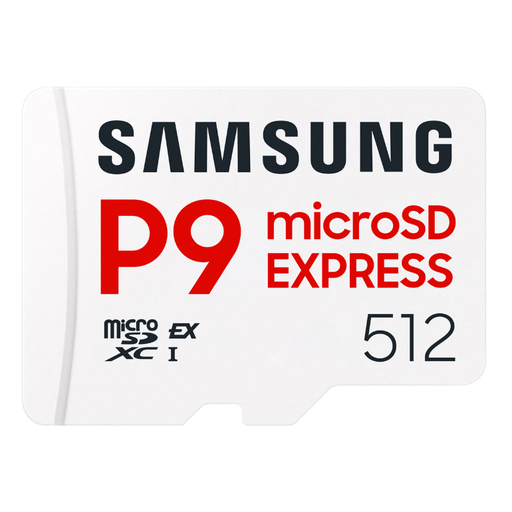
Why It Stands Out: The Samsung P9 Express is engineered with a strong focus on gaming and reliability. It boasts impressive sequential read speeds of up to 800 MB/s in a compatible device, aiming to minimise game installation and loading screens. Its Dynamic Thermal Guard technology actively manages temperature to ensure steady performance during long gaming sessions. The card's 6-proof protection (against water, temperature, X-rays, magnets, drops and wearout) provides peace of mind for use in any environment.
Pros:
Who is it for? This is an excellent choice for serious gamers looking for a top-tier Nintendo Switch 2 memory card or for expanding their PC gaming handheld. It's also a great fit for content creators who need a durable, high speed memory card for drone or action camera use.
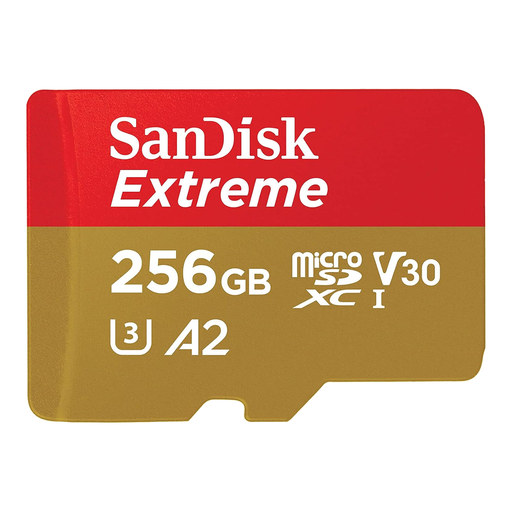
Why It Stands Out: While not an Express card, the SanDisk Extreme remains a powerful and relevant choice for the vast majority of current devices. It offers excellent performance for capturing 4K UHD video, thanks to its UHS Speed Class 3 (U3) and Video Speed Class 30 (V30) ratings. With read speeds up to 190MB/s and write speeds up to 130MB/s, it is a fast microSD for 4K video and high-resolution burst photography. Its A2 rating also ensures smooth app performance on Android devices.
Pros:
Who is it for? This card is perfect for users who need a dependable, high-performance card for their existing action cameras, drones and smartphones. If your workflow is primarily focused on 4K video and you don't yet own a microSD Express-compatible device, this card offers a fantastic balance of speed, reliability and value.
The world of memory cards is vast, with options tailored to every device and budget. If these recommendations aren't quite what you're looking for, you can explore our full range of high performance memory cards to find the perfect match for your needs.
1. Do I need a microSD Express card for my device? You only need a microSD Express card to achieve the maximum advertised speeds if your device (camera, console etc.) has a compatible microSD Express slot. However, these cards are fully backward compatible and will work as standard UHS-I cards in older devices, making them a solid future-proof purchase.
2. Can I use a microSD Express card in a Nintendo Switch 2? Yes. Both the SanDisk Express and Samsung P9 Express are designed with next-generation consoles in mind and are noted for their compatibility with devices like the Nintendo Switch 2, where they can help significantly reduce game load times.
3. Is a microSD Express card worth it for 4K video? For recording most 4K video, a high-quality UHS-I card with a V30 rating (like the SanDisk Extreme) is sufficient. The primary benefit of a microSD Express card for 4K workflows is the dramatic reduction in transfer time when moving large files from the card to your computer. For more demanding formats like high-bitrate 4K RAW or future 8K video, an Express card will become increasingly necessary.