What matters when choosing?
Check the fit of the dish you actually use, then decide whether straightforward reheating controls are enough or whether you will regularly use additional cooking modes.
| Concern |
What to check |
Who this matters to |
| Serving-dish fit |
Measure your widest microwave-safe dish and compare it with the turntable diameter or flatbed cavity dimensions. Allow room for a turntable dish to rotate. |
I want to warm enough stew for the family in the dish I normally use, without finding that it cannot turn inside the microwave. Around 42% of consumers would put serving-dish fit first. |
| Heating control |
Look for usable manual power settings and controls that make it easy to pause and stir. Treat inverter technology as a feature to assess, not a substitute for checking the food. |
With thick stew, I am most concerned about an unevenly heated serving and want to stir it before checking that it is hot throughout. Roughly 33% of consumers would make heating control their primary concern. |
| Extra cooking modes |
Choose grill or convection functions only if you expect to use them as well as the microwave mode. |
I want one appliance to reheat meals and handle other cooking jobs, so the extra modes would see regular use. Around 25% of consumers would prioritise that versatility. |
Brands to consider
These brands have models relevant to different ways of reheating a family meal; compare the particular model rather than assuming every microwave from a brand has the same features.
Panasonic
Panasonic offers distinct solo options for households considering a flatbed cavity or inverter power control.
- Panasonic Store UK lists the NN-SF464MBPQ as a 27L flatbed model; Panasonic UK lists the NN-SD37QSBPQ as a 29L inverter model.
- These are different features on different models. Check your dish against the chosen model's cavity, and continue to stir and check thick food when reheating.
Kenwood
Kenwood has a 25L solo option for straightforward reheating and a separate 25L combination option for additional cooking tasks.
- The product information lists the K25MB26 solo model at 900W with a 288mm turntable, while the K25CM26 adds grill and fan-assisted oven functions.
- The combination functions matter chiefly if your household will use them beyond reheating.
Sharp
Sharp is relevant if you want to compare manual power settings on a 25L solo microwave.
- Sharp Consumer UK lists the YC-MS252AU with 900W microwave power and 11 power levels.
- Check that your serving dish fits the model's 288mm turntable; a greater number of settings does not replace stirring and checking the stew.
Joybuy product choices
These choices include solo microwaves for households mainly reheating meals and combination models for those who will also use other cooking functions. Compare each model with your usual serving dish before deciding.
 No image available
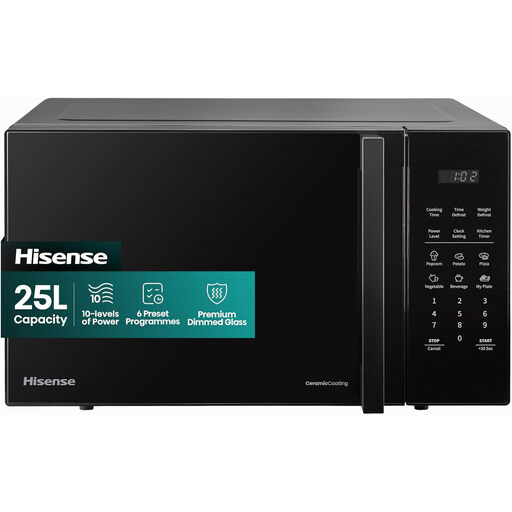
Hisense H25MOBS7HUK 25L solo microwave
Consider this solo model if your priority is reheating and your usual dish fits and rotates inside it.
The product title specifies 25L capacity, 900W microwave power and auto defrost. Check your dish against the turntable dimensions before buying.
View on Joybuy
 No image available
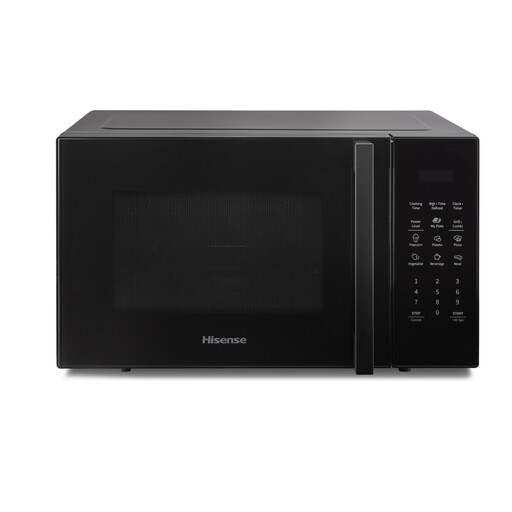
Hisense H29MOBS9HGUK 29L microwave with grill
Consider this model if you want to reheat family meals and expect to use a grill as well.
The product title specifies 29L capacity and 900W microwave power. A larger litre figure does not establish that your dish will fit, so check its dimensions against the turntable and cavity.
View on Joybuy
 No image available
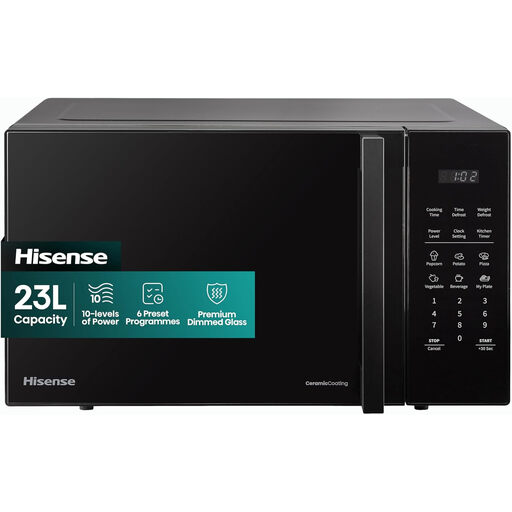
Hisense H23MOBS5HUK 23L solo microwave
This solo model is worth considering if you use a serving bowl that fits its cavity rather than needing room for a larger dish.
The product title specifies 23L capacity, 800W microwave power and auto defrost. Check dish fit and confirm the control layout before buying.
View on Joybuy
 No image available
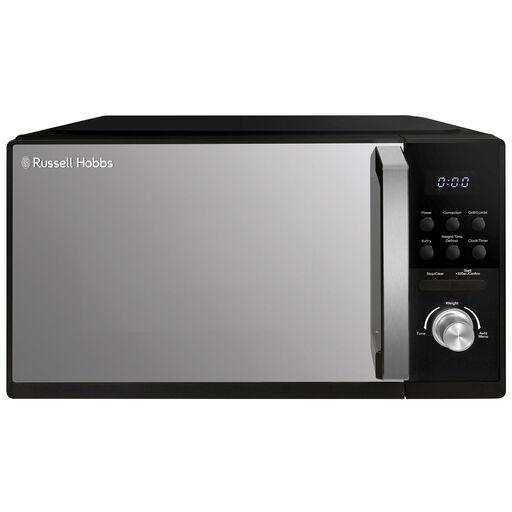
Russell Hobbs RHMAF2508B 25L 4-in-1 combination microwave
Consider a combination model if your household will use cooking functions beyond reheating stew.
The product title identifies this as a 25L, 4-in-1 combination microwave. Check which modes you would actually use and whether your serving dish fits before choosing it over a solo model.
View on Joybuy
 No image available
Samsung MC28A5125AK/EU 28L combination microwave
This combination model is relevant if you want convection cooking as well as microwave reheating.
The product title specifies 28L capacity, 900W microwave power and convection cooking. Check cookware fit and the installation instructions; the additional mode is unnecessary if reheating stew is your only intended use.
View on Joybuy
Frequently asked questions
How should I reheat beef stew for a family meal?
Use a microwave-safe dish, heat the stew in stages, stir it thoroughly and check that it is steaming hot throughout before serving. Follow the container and microwave instructions when covering the dish. NHS guidance on reheating baby food also emphasises stirring and checking that food is steaming hot all the way through; take particular care to let food cool appropriately before serving young children.
Is a 25L microwave big enough for a family-size serving dish?
It can be if your dish fits and, on a turntable model, rotates freely. For a concrete comparison, The product information lists a 288mm turntable for the 25L Kenwood K25MB26; measure your own dish rather than relying on the litre figure. A flatbed may be worth considering for an awkwardly shaped dish.
Do I need an inverter microwave to reheat stew?
No: a solo microwave with suitable space and controls can handle the task when you stir and check the stew. Panasonic describes more controlled power as a feature of its NN-SD37QSBPQ inverter model, but that manufacturer claim does not mean stirring or checking for hot spots can be skipped.
Which containers can I use for microwave reheating?
Choose a container clearly marked microwave-safe and follow both its instructions and the microwave's instructions. Electrical Safety First cautions against unsuitable materials, including foam trays and plastic containers not designed for microwave use; do not put metal in microwave mode unless the appliance instructions expressly allow the item.
Should I plug a countertop microwave into an extension lead?
Use an appropriate mains socket rather than an extension lead. Electrical Safety First warns that powering a microwave through an extension lead can create an overload risk, particularly alongside other high-power appliances; follow the microwave's installation instructions.


