Solo reheaters with limited worktop space
If you usually heat one bowl or plate, the serving dish and the space available on your worktop matter more than capacity alone. Check both the turntable and the appliance’s external dimensions.


For one serving of bread pudding, start with a countertop solo microwave whose turntable fits your usual dish and whose controls let you heat in short stages. A compact 17–20L model may be enough; consider a roomier model if you also use wider dinner plates, and check the worktop space it needs. Whatever the features, stir or reposition the pudding where practical and check that the centre is hot before eating.
If you usually heat one bowl or plate, the serving dish and the space available on your worktop matter more than capacity alone. Check both the turntable and the appliance’s external dimensions.
If the microwave will also hold dinner plates and defrost food, you may value more cavity room and straightforward cleaning as well as controls for one dessert portion.
If you regularly heat dense foods, extra power settings or an automatic programme may appeal. Check the size of the particular model and what its programme is intended to heat; you will still need to check the food.
Start with the dish you actually use, then check the controls and worktop dimensions. Extra capacity or programmes are more relevant if the microwave will serve other meals too.
| Concern | What to check | Who this matters to |
|---|---|---|
| Dish fit and worktop space | Compare your dish with the turntable diameter and cavity dimensions, allowing it to rotate freely. Check external dimensions and the manufacturer’s placement instructions. | If I mainly heat one bowl, I need it to fit without giving up too much counter space. Around 40% of consumers would put dish fit and footprint first. |
| Controlled reheating | Look for clear time controls and more than one power level. For automatic programmes, check the manual’s food and container instructions. | With a dense portion, I want to heat it in stages rather than leave a cool centre or overly hot edges. Controlled reheating would be the main concern for around 30% of consumers. |
| Other meals and cleaning | Check whether your usual dinner plate fits, which defrost functions are offered and how the interior should be cleaned. | If I also reheat leftovers and defrost food, room for those dishes matters more than keeping the appliance as small as possible. Around 20% of consumers would prioritise that everyday versatility. |
| Fitted-kitchen installation | For a built-in model, check the exact cabinet aperture, ventilation and installation instructions. | If I am planning a fitted kitchen, the microwave needs to suit the cabinetry rather than sit on the worktop. Integration would come first for around 10% of consumers. |
A compact cavity may hold one portion but still prevent your usual bowl or plate from rotating freely.
Measure the widest microwave-safe dish you use and compare it with the turntable diameter and cavity dimensions before buying.
Dense pudding can have hot and cool spots. Inverter or sensor features do not remove the need to check the portion before eating.
Heat in short stages, stir or reposition where practical, let the food stand briefly and check that the centre is hot.
Grill and convection functions are relevant if you want to brown or bake food, but basic reheating does not require them.
Begin with a solo microwave unless other dishes give you a reason to choose additional cooking modes or a larger cavity.
A larger appliance can also take up more worktop or cabinet space.
An unsuitable container or an overloaded electrical connection creates an avoidable safety risk.
Use microwave-safe dishes, follow the appliance manual’s rules on metal and packaging, and check that the intended socket and connection suit the appliance. Electrical Safety First advises care when using high-power appliances with extension leads.
These examples illustrate different microwave formats; a brand’s inclusion does not establish that every model has the same features.
Panasonic’s cited solo models range from a compact reheating option to a larger inverter and sensor-equipped appliance.
Samsung’s cited MS23K3513AK is a 23L countertop solo microwave for reheating and defrosting.
Bosch is relevant here if the purchase is part of a planned fitted-kitchen installation.
These countertop solo microwaves cover compact 20L choices and roomier options for people who also reheat other dishes. Check your serving dish against each model’s stated turntable size where one is given; capacity alone cannot confirm a fit.
 No image available
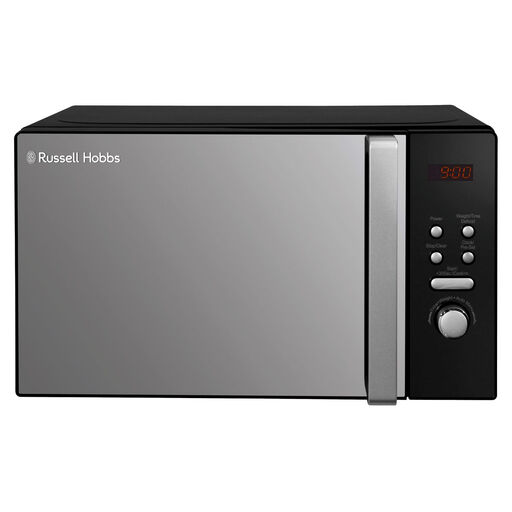
Consider this for one-portion reheating if your usual dish fits and the appliance suits your worktop.
The listed variant has 800W output and five power levels. Heat dense pudding in stages and check the centre before eating.
 No image available
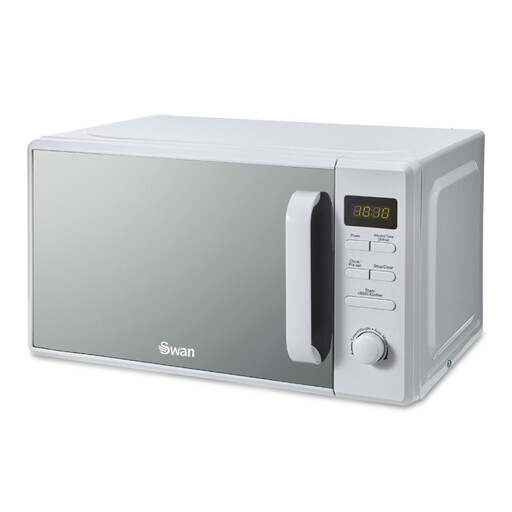
Consider this if you want a 20L microwave with adjustable settings for a single serving and other routine reheating.
The listed variant has 800W output, five power levels and a 95-minute timer. Check that your own dish can rotate freely.
 No image available
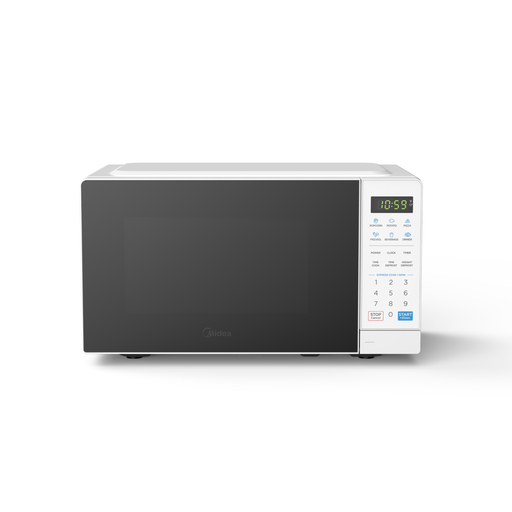
Consider this if you want a 20L solo model with inverter technology, while checking dish fit before choosing it for your usual portion.
The listed variant has 700W output and a 245mm turntable. Inverter operation does not remove the need to heat in stages and check the centre.
 No image available
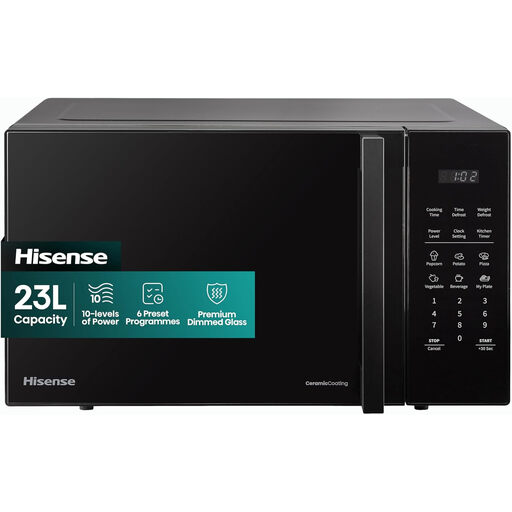
Consider this if the microwave must also accommodate other meals and you have space for a 23L appliance.
The listed variant has 800W output and a defrost function. Check its external dimensions and your dish fit; extra capacity does not ensure even reheating.
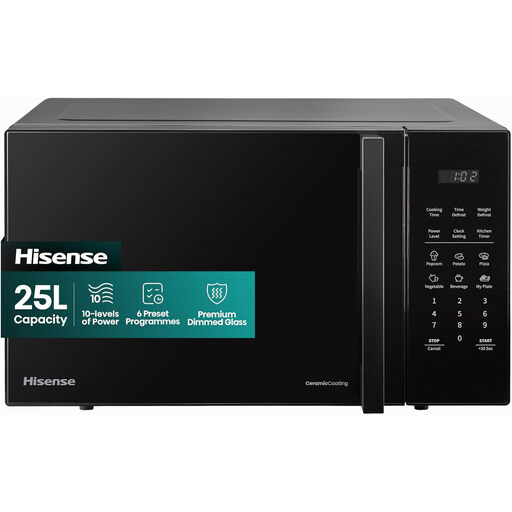 No image available
Consider this larger model if you also use dishes beyond a single dessert portion and can accommodate its footprint.
The listed variant has 900W output and a defrost function. Check the intended dish and worktop space; use suitable settings and check the pudding’s centre.
Yes, if reheating is the main task and your usual dish fits. Solo microwaves provide straightforward heating; compare the dish with the turntable and cavity rather than relying on the capacity in litres.
Use a microwave-safe dish and heat the portion in short stages, stirring or repositioning it where practical. Let it stand briefly, then check that the centre is hot before eating; an automatic programme is not a substitute for that check.
Not for reheating alone. Consider grill or convection functions if you also plan to use them for browning or baking; otherwise, focus on dish fit, usable controls and the space the microwave occupies.
A larger cavity is worth considering if you regularly use wider dinner plates or reheat other meals. Check both the turntable and external dimensions, because more litres do not by themselves establish dish fit or more even heating.