Small-kitchen casserole reheaters
If you mainly reheat a casserole dish but have little worktop room, measure both the appliance space and the dish, including its handles. The turntable diameter matters alongside the microwave’s outside dimensions.


Start with a 20-litre countertop solo microwave if your usual casserole dish can rotate inside it and the appliance fits your worktop with the required ventilation space. Consider a larger solo model if the dish will not fit; a built-in model needs a suitable cabinet niche, while combination cooking functions are useful only if you also want to grill or cook with convection heat. Whichever you choose, check that reheated chicken casserole is steaming hot throughout, particularly in the middle.
If you mainly reheat a casserole dish but have little worktop room, measure both the appliance space and the dish, including its handles. The turntable diameter matters alongside the microwave’s outside dimensions.
If your casserole has thick or uneven portions, look for controls that let you adjust reheating. Stir where practical and check the middle before serving, regardless of the heating programme.
If keeping the worktop clear matters most, a built-in microwave is an option only when the cabinet niche and installation requirements suit the model.
For consumers choosing a microwave mainly to reheat chicken casserole in a small kitchen, establish whether the dish and appliance fit before deciding which controls or additional cooking modes matter.
Choose when: Reheating is the main job and your dish fits a compact model.
Trade-off: A small footprint does not guarantee room for a wide casserole dish, and a solo model does not grill or brown food.
Choose when: Your usual dish needs a larger turntable and you have room for the appliance.
Trade-off: The 29-litre Panasonic example takes more worktop width and depth than the compact 20-litre examples.
Choose when: You have a compatible cabinet niche and want to keep the worktop clear.
Trade-off: Cabinet fit and installation requirements must be settled before purchase.
Choose when: You regularly want grill or convection-oven functions as well as microwave reheating.
Trade-off: Those extra modes are unnecessary for straightforward casserole reheating; check the model’s footprint and cleaning requirements.
| Concern | What to check | Who this matters to |
|---|---|---|
| Thorough reheating | Look for manual time and power controls. An automatic programme does not replace checking the food. | When reheating a thick chicken casserole, I need the middle to be steaming hot, not just the surface. Around 39% of consumers put thorough reheating first. |
| Appliance and dish fit | Measure the worktop and required ventilation space, then compare your dish’s handle-to-handle size with the turntable and cavity. | I have limited worktop room, but my usual dish must still rotate freely. For around 38% of consumers, physical fit is the primary concern. |
| Everyday controls | Compare the timer, power selection and any quick-start function; consider grill or convection modes only if you will use them. | If I mainly warm leftovers, I want controls I can use without sorting through cooking modes I rarely need. Straightforward operation comes first for around 23% of consumers. |
Two 20-litre microwaves can have different footprints and turntable diameters. A dish that fits inside may still be unable to rotate because of its handles.
Measure the dish including its handles, check the turntable and cavity, and compare the appliance’s outside dimensions and required clearances with your worktop.
A thick casserole may heat unevenly, so a selected programme or power setting does not tell you whether its centre is hot enough.
Follow the food and appliance instructions, stir or reposition the dish where practical, and check that the casserole is steaming hot throughout before eating.
Grill and convection functions serve different cooking tasks, but ordinary casserole reheating does not require them.
Choose a solo microwave if reheating and defrosting are your regular tasks; consider a combination model if you also intend to roast, crisp or brown food.
Obstructed vents, metal cookware and sealed containers introduce avoidable appliance and burn risks.
Follow the model’s ventilation instructions, use a microwave-safe dish and cover, and do not heat a sealed container or use the appliance with a damaged door.
Its cited solo models illustrate the choice between a compact worktop footprint and a larger turntable.
The MOC20240G is a compact solo option with reheating controls.
The BFL523MS0B represents the built-in route for a kitchen with a suitable cabinet niche.
These Joybuy solo microwaves include 20-litre countertop options and larger 23- and 25-litre options. Compare each appliance with your available worktop and your usual casserole dish; neither capacity nor wattage alone establishes fit or thorough reheating.
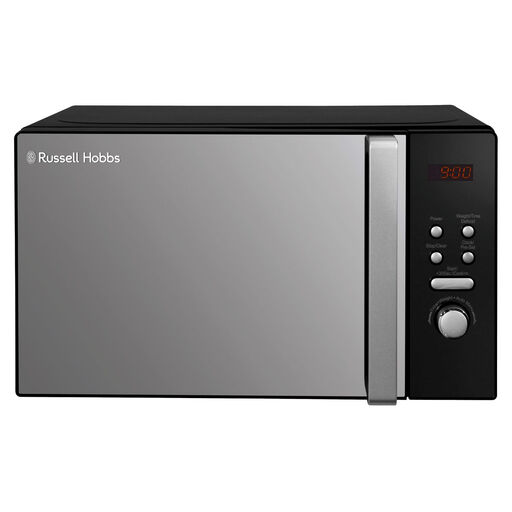 No image available
Consider this countertop model if you want a solo microwave for everyday reheating and can accommodate your casserole dish. Its stated output is 800 W and its title lists five power levels. Check dish rotation and the required ventilation space before buying.
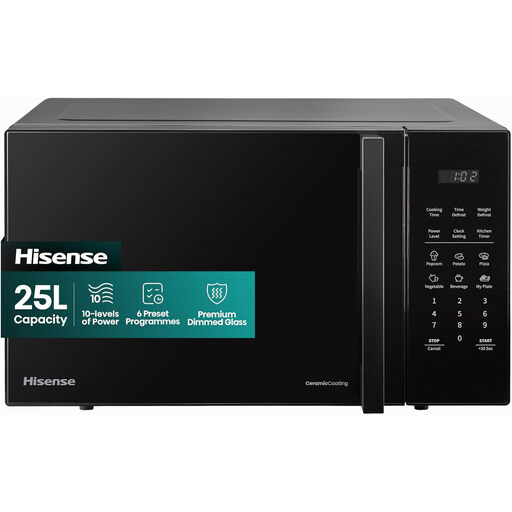 No image available
Consider this model if your dish calls for more room and your worktop can take a larger appliance. Its stated output is 900 W, and the title lists auto defrost. Measure the dish and check the turntable, outside dimensions and required clearances rather than assuming the 25-litre capacity settles the fit.
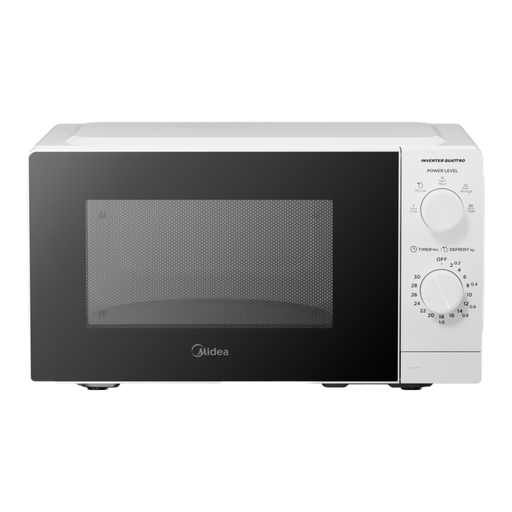 No image available
This is a 20-litre option to consider for manual casserole reheating where worktop space is limited. The title states 700 W and MET Inverter Technology; it does not establish how evenly a particular casserole will heat. Confirm the turntable and cavity measurements against your dish.
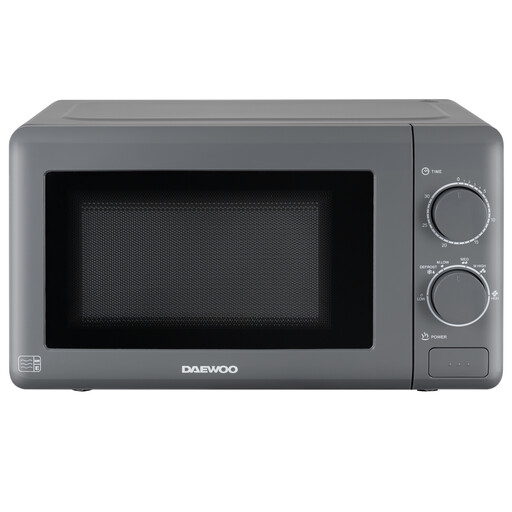 No image available
Consider this model if you prefer manual controls for a 20-litre countertop microwave. The title states 800 W and a defrost function. Check the exact power-setting controls and whether your casserole dish fits and rotates before buying.
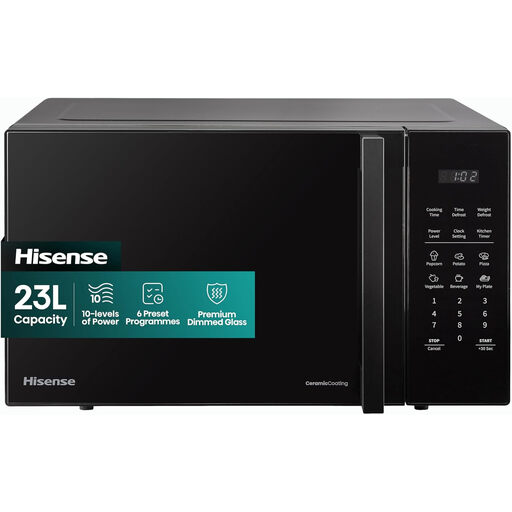 No image available
Consider this 23-litre option if your dish needs more room than a compact model can provide and the appliance fits your worktop. The title states 800 W and auto defrost. Confirm the control type if that affects your choice, and check that the dish can rotate freely.
It can be, provided your usual dish fits and rotates freely and the appliance fits the available worktop. The cited compact Panasonic and Beko models have different turntable diameters—255 mm and 245 mm respectively—so measure the dish including its handles rather than relying on capacity alone.
Check that it is steaming hot throughout, including in the middle. Stir where practical to address uneven heating, follow the food and appliance instructions, and check thick pieces of chicken before eating rather than judging by the surface alone.
Do not microwave a sealed container or use a metal dish. Use microwave-safe cookware and a suitable cover, follow its venting instructions, and take care when lifting the cover because escaping steam can burn.
No: a solo microwave handles straightforward reheating without grill or convection functions. Consider a combination model if roasting, crisping or browning food is also a regular task, and check its size against your kitchen space.
Yes, if you have a cabinet niche compatible with the particular model and can meet its installation requirements. The product information describes the Bosch BFL523MS0B as designed for a 38 cm niche; check the full cabinet measurements before choosing it over a freestanding model.