Guests doing simple reheating
If the main jobs are warming custard, leftovers and ready meals, look for straightforward solo controls and enough room for your usual bowl. Extra cooking modes need not drive the choice.


For reheating custard and ordinary leftovers in a holiday cottage, start with a solo microwave rather than adding a grill by default. A compact model with adjustable power, room for the intended bowl and controls guests can understand addresses the main task; consider a grill for browning or a larger cavity for regularly used larger dishes. Follow the custard pack or recipe for portion-specific timing and check that reheated food is thoroughly hot in the centre.
If the main jobs are warming custard, leftovers and ready meals, look for straightforward solo controls and enough room for your usual bowl. Extra cooking modes need not drive the choice.
When different guests will use the appliance, legible controls and uncomplicated power and time settings matter. Check the exact model for an interior light and a removable turntable if those features will make everyday use and cleaning easier.
If the cottage regularly uses larger dishes or needs to brown food as well as reheat it, compare cavity and turntable sizes or consider a grill model. Those needs are separate from warming a portion of custard.
Start with controllable reheating, then check whether the bowl and microwave fit the kitchen. Let guest preferences and any wider cooking plans determine which other features matter.
| Concern | What to check | Who this matters to |
|---|---|---|
| Controllable reheating | Look for selectable power levels and time controls that allow short intervals; follow the custard pack or recipe. | When I warm a small portion, I want to adjust the heating and check it before continuing. Around 36% of consumers put that control first. |
| Counter and bowl fit | Measure the worktop and intended microwave-safe bowl; check exterior dimensions, turntable diameter and the model's ventilation instructions. | My kitchen has limited counter space, but the serving bowl still needs to rotate freely. For around 29% of consumers, fit is the primary concern. |
| Guest-friendly operation | Compare dial and touch controls, and check for an interior light and removable turntable if you need them. | Different guests will use this microwave, so I want controls they can follow and a cavity that is practical to clean after spills. Around 21% of consumers place guest-friendly operation first. |
| Wider cooking needs | Consider a grill for recurring browning or crisping, or a larger cavity when your usual dishes require it. | We prepare more than desserts and leftovers, so I need the appliance to accommodate other meals. Wider cooking capability comes first for around 14% of consumers. |
A grill addresses browning and crisping, not the basic custard-reheating task. Its additional controls may go unused in a kitchen set up mainly for simple meals.
Compare solo microwaves first; consider a grill when guests will also use it regularly for browned or crisped food.
Cavity capacity does not tell you whether the intended serving bowl can turn or whether the appliance fits the available counter space.
Measure the bowl and worktop, then check the turntable, exterior dimensions and ventilation requirements for the exact model.
Microwave output alone cannot determine the right time for different portions, starting temperatures and containers.
Follow the pack or recipe, heat in intervals that let you check and stir the custard, and make sure it is thoroughly hot in the centre.
Sharp YC-MS01U-B and YC-MS01U-S have different model suffixes; a similarly named listing should not be treated as an identical replacement.
Check the full model number, specifications and current listing details before choosing a seller's product.
Panasonic has documented compact solo, compact grill and larger solo models relevant to different holiday-cottage cooking needs.
Sharp is relevant if you prefer a compact manual solo microwave with physical dials.
The RHM2027B is a reference point for a freestanding 20L solo microwave with dial controls.
Samsung's MS23T5018AE is relevant if you want to compare a 23L solo model with touch controls against simpler dial-operated choices.
These solo microwaves suit a cottage kitchen focused on reheating custard and everyday food. The 20L choices provide compact options, while the 23L model is worth considering if you also use larger dishes; measure the intended bowl and worktop before deciding.
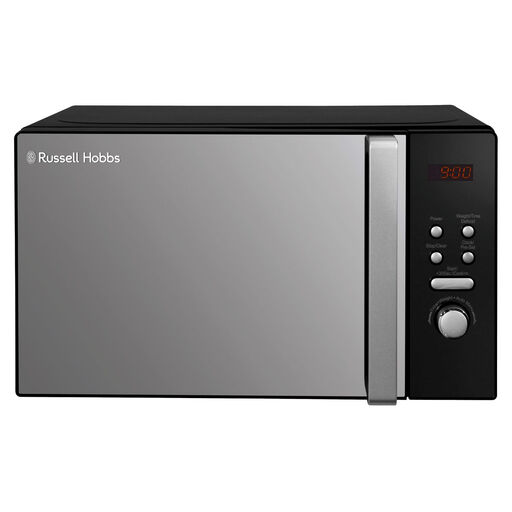 No image available
A compact solo choice for custard and everyday reheating when you prefer digital controls. The stated output is 800W with five power levels; check that your usual bowl fits and rotates.
 No image available
Consider this model for straightforward dial-operated reheating. Its stated output is 700W, with six power levels and a defrost function; use the custard instructions rather than transferring timings from an 800W model.
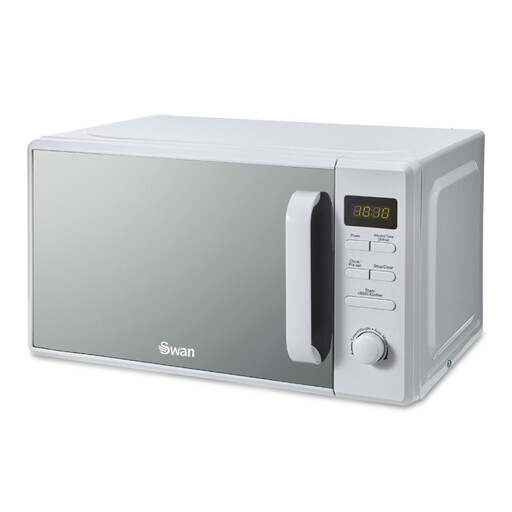 No image available
This solo model suits basic reheating if you prefer a digital microwave. Its stated output is 800W, with five power levels and a 95-minute timer; check whether its controls offer the short intervals you want for custard.
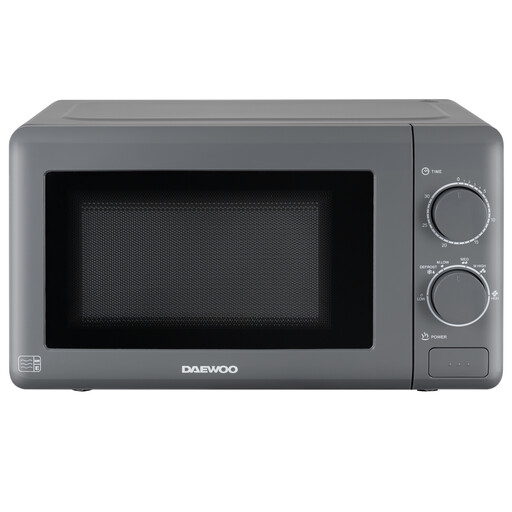 No image available
A dial-operated solo option for simple cottage reheating, with a stated 800W output and defrost function. Check the exact number of power settings before choosing it, and confirm that the serving bowl can rotate.
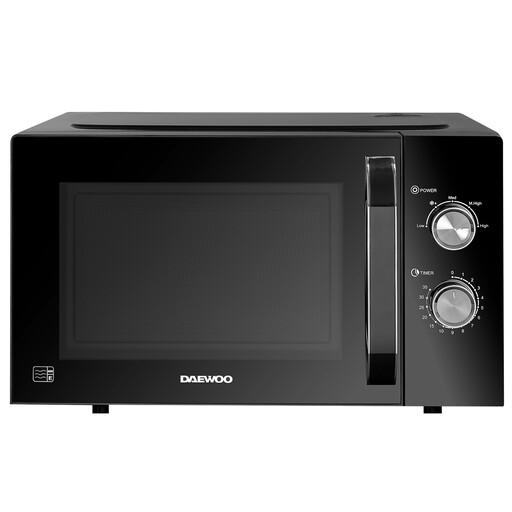 No image available
Consider the 23L cavity if the cottage regularly uses dishes beyond individual dessert bowls, but check their fit and the available counter space. This manual-control model has a stated 800W output, five power settings, auto defrost and a glass turntable.
Yes, if reheating custard, leftovers and ready meals is its main job. Choose a grill model when the cottage also needs to brown or crisp food.
Do not choose by output wattage alone: adjustable power and usable time controls matter when reheating custard. Follow the pack or recipe for the portion you are making rather than assuming that a higher-output microwave has one suitable timing; consider larger models for the dishes the cottage actually uses.
Measure the widest part of your microwave-safe bowl and compare it with the exact model's cavity and turntable dimensions, allowing room for the bowl to rotate freely. Check the microwave's exterior dimensions against the available worktop too.
Make sure reheated food is thoroughly hot in the centre, in line with Food Standards Agency reheating guidance. Use the custard pack or recipe for instructions suited to that product and portion; microwave wattage does not provide a universal heating time.
Check the exact model's exterior dimensions, cord arrangement, ventilation instructions and cleaning guidance before positioning it. Keep the cavity and removable turntable clean between guests, and do not assume that another model's clearance requirements apply.