Space-limited leftover reheaters
If you usually heat one bowl or plate, compare the appliance’s external dimensions and placement instructions with your available worktop. Capacity in litres alone will not tell you whether it fits.


For reheating bowls of red lentil dhal in a small kitchen, start by checking whether a 17–20L solo microwave, your usual dish and the required ventilation space will all fit. Choose controls you are comfortable using for heating in stages: manual dials keep operation straightforward, while a digital timer or reheat setting may suit frequent leftovers. Neither removes the need to stir thick dhal and check that it is hot throughout.
If you usually heat one bowl or plate, compare the appliance’s external dimensions and placement instructions with your available worktop. Capacity in litres alone will not tell you whether it fits.
If you regularly reheat portions of thick dhal, adjustable power and a convenient timer may help you heat in stages. You will still need to pause, stir and check the food throughout.
If straightforward time and power adjustments matter more to you than presets, consider physical dials. Check how easily you can remove the turntable for cleaning after splashes.
Measure the worktop and your usual dhal container before comparing controls. A compact cavity is useful only if the appliance can be placed as instructed and the dish can rotate freely.
| Concern | What to check | Who this matters to |
|---|---|---|
| Worktop and dish fit | Compare external dimensions and required clearances with the available space; measure your usual dish against the turntable and cavity. | If my counter is crowded, I need room for both the microwave and the bowl I actually use. Roughly 42% of consumers put worktop and dish fit first. |
| Controllable reheating | Look for usable power settings and a timer; treat a reheat preset as a convenience, not a substitute for stirring. | When reheating thick leftovers regularly, I want to pause and adjust the heating rather than rely on one uninterrupted cycle. Around 33% of consumers prioritise reheating control. |
| Simple use and cleaning | Choose between dials and digital controls, and check whether the turntable can be removed for cleaning. | If this appliance is mainly for leftovers, I want controls I can set easily and parts I can clean after splashes. About 25% of consumers make simple use and upkeep their primary concern. |
Capacity describes the cavity, not the space the appliance occupies. Even a model described as compact needs room for its exterior, door access and ventilation.
Measure the intended position and your usual bowl or plate, then compare both with the exact model’s dimensions and placement instructions.
Thick food can heat unevenly; a preset does not establish that the centre and base are hot throughout.
Use microwave-safe cookware, pause to stir the dhal thoroughly, then continue heating and check it before serving.
Electrical Safety First warns about overloaded extension leads and obstructed microwave ventilation. Saving worktop space should not come at the expense of the appliance’s placement instructions.
Plan for a suitable wall socket and the model’s required clearances, and keep its vents unobstructed.
A wide bowl, lid or handle may prevent the turntable from rotating even when a stated dinner plate fits.
Measure the widest part of your dhal container and check it against the turntable and cavity shape.
Panasonic’s NN-ST23QMBPQ is a 20L solo microwave to consider where a measured worktop can accommodate it.
The RHMM701 is a 17L manual microwave for consumers who prefer dial controls.
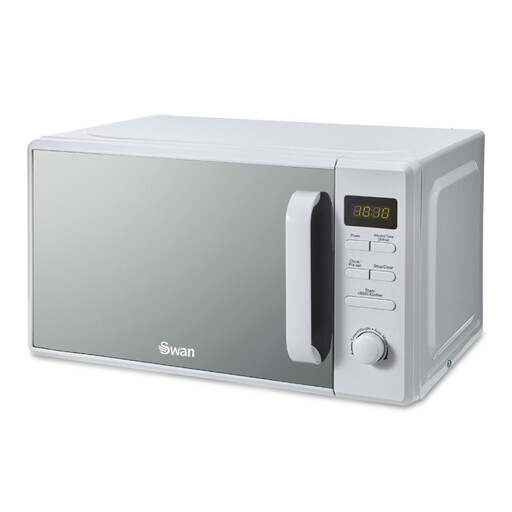
Swan offers 20L digital microwaves with reheat controls for consumers who prefer a preset alongside adjustable power.
These countertop solo microwaves offer 20L and 23L options for reheating leftovers. Compare each model’s actual dimensions, dish space and controls against your kitchen rather than treating capacity or a compact description as a fit guarantee.
 No image available
Consider this model if you prefer digital controls for reheating regular portions of dhal. Its product name specifies a 95-minute timer and five power levels; check its external dimensions, placement instructions and the fit of your usual bowl before ordering.
 No image available
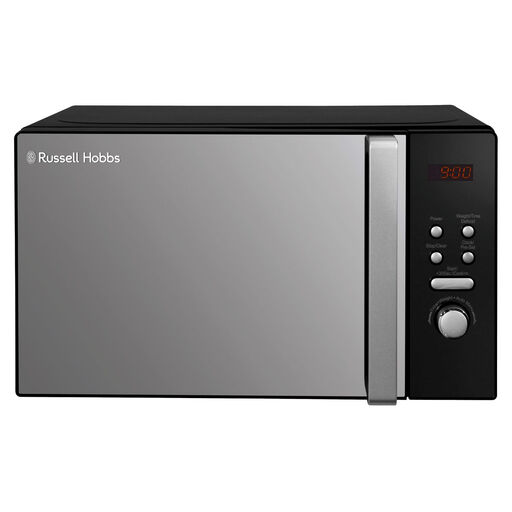
For staged reheating, this model’s named five power levels give you settings to consider alongside its 20L capacity. Check that your bowl fits and allow for the model-specific placement clearances when measuring the worktop.
 No image available
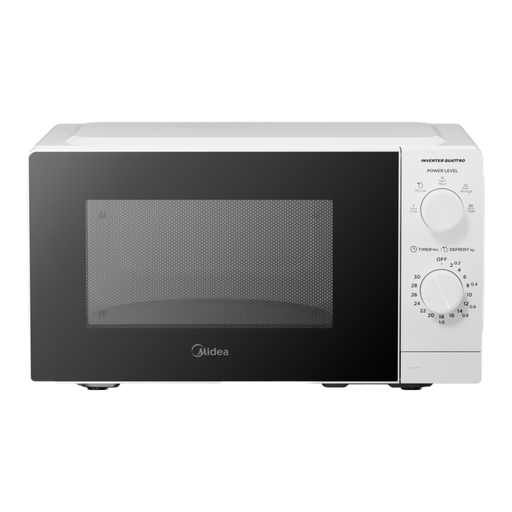
This 20L model is another option for reheating a bowl of dhal where worktop fit is the deciding constraint. Confirm its actual controls and turntable diameter for this variant, as well as its placement requirements and suitability for a UK socket.
 No image available
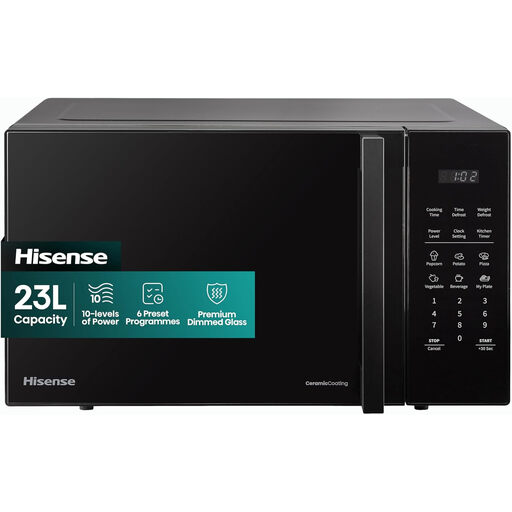
Consider the 23L capacity if your usual serving dish calls for more room, provided the appliance fits your counter. The product name also specifies auto defrost; confirm the actual control interface, placement clearances and suitability for a UK socket before buying.
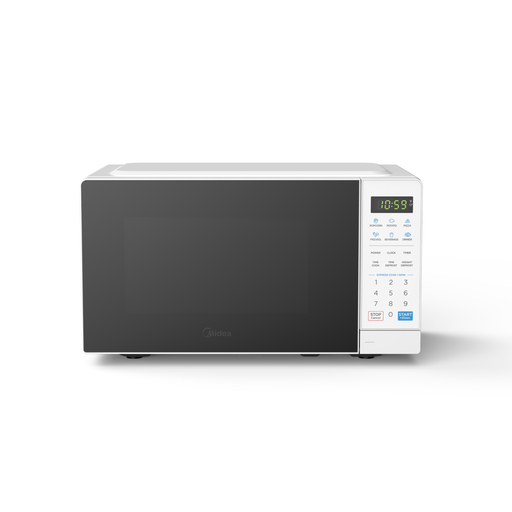 No image available
This 20L option names a 245 mm turntable, which you can compare with your usual dhal bowl. Measure the worktop and check placement clearances, turntable removability and suitability for a UK socket before deciding whether it meets your needs.
A compact solo microwave is a sensible starting point, but its external size and your dish matter more than the litre figure alone. Panasonic suggests microwaves under 25L for one or two people; measure the intended position, allow for the model’s required clearances and check that your bowl can rotate freely.
Wattage alone should not decide this purchase. Manufacturer-listed compact solo models include 700W and 800W options with adjustable power; compare their fit and controls, then heat dhal in stages and stir rather than assuming a higher stated output will heat it evenly.
Use microwave-safe cookware, heat in stages, stir thoroughly and check that the dhal is steaming hot throughout before serving. NHS advice on reheating baby food likewise emphasises stirring and checking it throughout; that guidance is not a dhal-specific cooking-time instruction.
Make sure the chosen position meets the model’s placement instructions, leaves its vents clear and gives access to a suitable wall socket. Electrical Safety First advises using a UK three-pin fused plug and warns against extension leads for microwave ovens; check the appliance’s intended market and plug before purchase.