Single-bowl reheaters short on space
If you mainly warm one bowl of soup, the microwave still has to fit your worktop and leave room for its door and required ventilation. Check those dimensions before comparing extra functions.


For reheating vegetable soup in a small kitchen, check the microwave’s external dimensions and required ventilation space before choosing a capacity, then make sure your usual bowl fits the turntable. A 17L manual model can suit one bowl and straightforward controls; the cited 20L examples offer more cavity space, though their worktop dimensions differ. Whichever you choose, stir the soup during heating and check that it is piping hot throughout.
If you mainly warm one bowl of soup, the microwave still has to fit your worktop and leave room for its door and required ventilation. Check those dimensions before comparing extra functions.
A manual timer and power control may suit you better than a touch panel. Both 17L and 20L manual models are relevant, but their outside dimensions and turntables vary.
Quick-start or automatic programmes may appeal if you reheat leftovers often. You still need to stir soup during heating and check that it is hot throughout.
Start with the available worktop space, then check your bowl against the turntable. Once both fit, choose the controls you would actually use.
| Concern | What to check | Who this matters to |
|---|---|---|
| Worktop fit | Compare the full width, depth and height with your space, allowing for door use and the ventilation specified in the model’s instructions. | I have limited worktop depth and cannot choose by litre capacity alone. Around 31% of consumers put the appliance’s physical fit first. |
| Bowl and plate fit | Compare your usual bowl’s base with the stated turntable diameter; check that it can rotate freely. | My microwave may fit the counter, but I need my soup bowl to fit inside it. For around 25% of consumers, dish fit is the primary concern. |
| Controls | Decide whether you prefer setting time and power with dials or using quick-start and automatic programmes. | I want a reheating routine that feels straightforward, whether that means dials or a useful preset. Control style comes first for around 25% of consumers. |
| Even reheating | Allow room in a microwave-safe bowl, stir during heating and check that the soup is piping hot throughout. | When reheating leftovers, I care most about avoiding cold spots and dealing with splashes. Around 19% of consumers make even reheating and clean-up their main concern. |
A litre rating does not tell you whether the microwave fits your counter or whether its turntable takes your usual bowl. The cited 17L and 20L models differ in both external dimensions and turntable size.
Measure the available space and your bowl, then check the exact model’s door-opening and ventilation requirements.
Soup can heat unevenly, so a wattage rating or reheat programme does not establish that the whole portion is hot.
Use a microwave-safe bowl with room at the top, pause to stir and check that the soup is piping hot throughout before serving.
Automatic programmes may be useful for a regular routine, while dials offer a direct way to set time and power for a single bowl.
Look at the controls on the exact model and choose the method you would use most often.
These model examples show why dimensions, turntables and controls are more useful to compare than brand names alone.
Panasonic has compact 20L solo models with touch controls and automatic programmes.
Sharp’s YC-MS01U is a 20L manual-control option for people who prefer setting time and power directly.
The manual RHMM723 offers a 17L option to consider when one bowl is the usual load.
These solo microwaves offer manual and programme-led options for soup reheating. Compare each model’s worktop requirements and controls with your space and routine; the 23L option also needs particular attention to its outside dimensions.
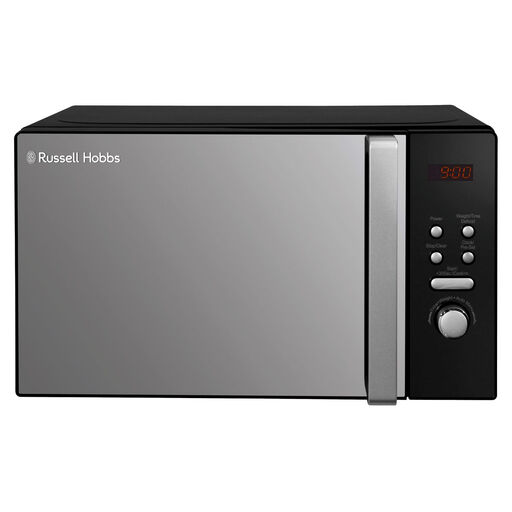 No image available
Consider this model if you want to compare programmed controls with a straightforward soup-reheating routine. Its product name specifies 800W output and five power levels; check that your bowl and the required ventilation space fit before buying.
 No image available
A manual option if you prefer to set reheating time and power directly. The product name specifies 700W output, six power levels and a defrost function; check your bowl and counter space against this exact model.
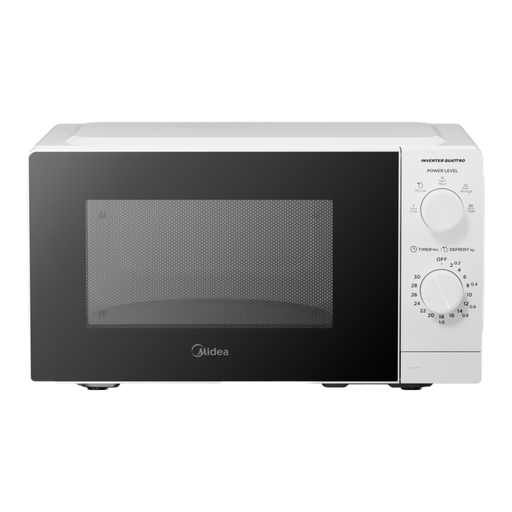 No image available
This manual 700W model is relevant if you want to set a simple reheating routine yourself. Confirm its turntable diameter against your usual soup bowl and follow the model’s ventilation instructions when planning its position.
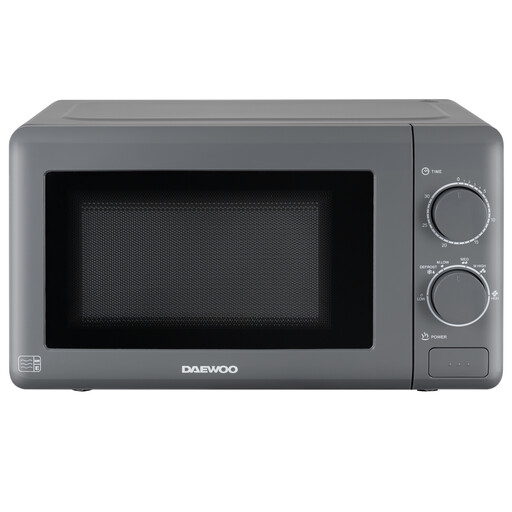 No image available
A dial-control option for single-bowl reheating, with 800W output stated in its product name. Confirm the power-setting count for this exact variant, as its product information differs, and check that your bowl fits.
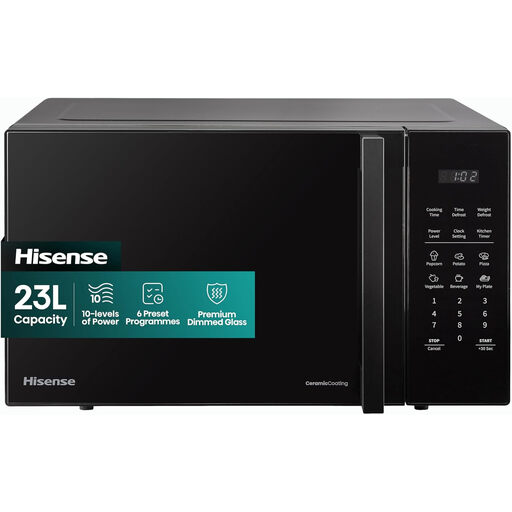 No image available
Consider the 23L capacity if your usual bowl or plate calls for more room, but measure your worktop before choosing it for a small kitchen. The product name specifies 800W output; confirm the controls for this exact variant before buying.
A 17L microwave can suit one bowl if that bowl fits and rotates freely. Russell Hobbs specifies a 24.5cm turntable for the RHMM723; measure your bowl rather than relying on capacity alone.
No: the cited 700W and 800W models are both options for soup reheating. Adjust heating to the portion and the microwave’s instructions, and check that the soup is hot throughout rather than relying on the power rating.
Pause to stir it halfway through heating, then check that it is piping hot throughout before serving. Guy’s and St Thomas’ NHS Foundation Trust advises stirring during microwave cooking and avoiding reheating cooked food more than once in its food-safety guidance for people undergoing chemotherapy.
Allow the ventilation space specified in the exact model’s installation instructions, as well as room to open its door. Measure the microwave’s external width, depth and height; do not assume a freestanding model can go into an enclosed gap.
Check how the retailer accepts a like-for-like old appliance before ordering. GOV.UK states that UK electrical-product distributors must offer in-store take-back of waste of the same type, including when the replacement is bought online or by mail order; ask the retailer separately about home collection.