Consumers warming several portions
If you use a large bowl or batch containers, check the usable cavity, turntable and worktop dimensions before settling on a capacity rating.


If warming compote is the main job, start with a freestanding solo microwave that fits your actual microwave-safe bowl or containers. Choose a combi model for additional cooking modes you will use, or a built-in model if an integrated installation is the priority. Power settings or a reheat programme can help you manage warming, but you still need to stir and check the compote.
If you use a large bowl or batch containers, check the usable cavity, turntable and worktop dimensions before settling on a capacity rating.
Adjustable power or a reheat programme may suit your routine, provided you are willing to stir the compote and check it as it warms.
If you also intend to bake, grill or roast, consider whether those uses justify a combi appliance or an integrated installation.
For compote warming, establish whether the container fits before comparing controls or additional cooking modes. Which? describes solo microwaves as machines for heating and defrosting, while combi models add oven-style functions.
Choose when: Warming and defrosting are the regular tasks, and you have suitable worktop space.
Trade-off: A solo model does not add baking, roasting or grilling functions.
Choose when: You will use convection or grilling as well as reheating.
Trade-off: Those additional modes are not needed for compote warming alone. Samsung says its MC28A5135CK can stop its turntable to accommodate larger square dishes, but that does not establish fit for your own container.
Choose when: An integrated kitchen installation is more important to you than flexible worktop placement.
Trade-off: Check the chosen model’s cabinet aperture, ventilation and installation requirements.
| Concern | What to check | Who this matters to |
|---|---|---|
| Container fit and capacity | Compare your bowl, including handles, with cavity dimensions, turntable diameter and door clearance. Check the appliance footprint too. | If I warm a batch in one bowl, it needs room to rotate without catching on the cavity. Around 46% of consumers put container fit first. |
| Controllable warming | Compare selectable power levels and reheat controls; use the model’s instructions when adapting timings from a different wattage. | For a thick compote or smaller portion, I want to adjust warming rather than rely on maximum power. Controllable reheating comes first for around 36% of consumers. |
| Simple, space-conscious reheating | Decide whether you will use oven-style modes, and compare the outside dimensions with your available space. | If I mainly reheat food, I would rather make room for a straightforward appliance than add cooking modes I will not use. Around 18% of consumers prioritise that simpler setup. |
A capacity rating does not tell you whether a bowl’s handles, height or shape will clear the cavity and rotate on the turntable.
Measure the container you intend to use and compare it with the model’s cavity and turntable dimensions before ordering.
Grill and convection modes serve different cooking tasks; they are not required simply to warm compote.
Start with a solo model if reheating and defrosting are your main uses. Consider a combi model if you also plan to use its oven-style functions.
An automatic programme or rated output does not tell you how a particular bowl of thick compote has warmed throughout.
Use a microwave-safe container, supervise warming, and stir and check the compote.
Electrical Safety First advises using items clearly marked microwave-safe and warns against using an extension lead with other high-power appliances.
Follow the microwave manufacturer’s instructions for cookware and connection, and use a suitable wall socket rather than an overloaded extension lead.
Relevant if you are comparing larger solo microwaves with adjustable power, alongside combi and flatbed formats.
Relevant if you are comparing a solo model with a combi format that offers more flexibility for dish shape.
Relevant when you are deciding between freestanding and integrated kitchen formats.
These solo microwaves are choices for warming compote. Compare each one with the bowl you plan to use; a litre rating alone cannot confirm that it fits.
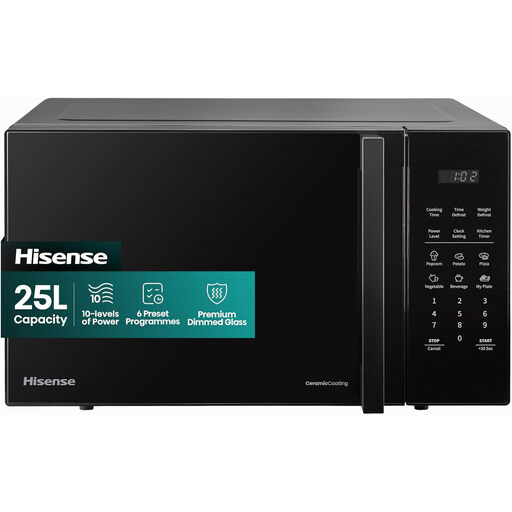 No image available
For a batch bowl, confirm that it clears the cavity and can rotate before choosing this model.
The product name identifies digital controls and an auto-defrost function; neither establishes how your compote will warm.
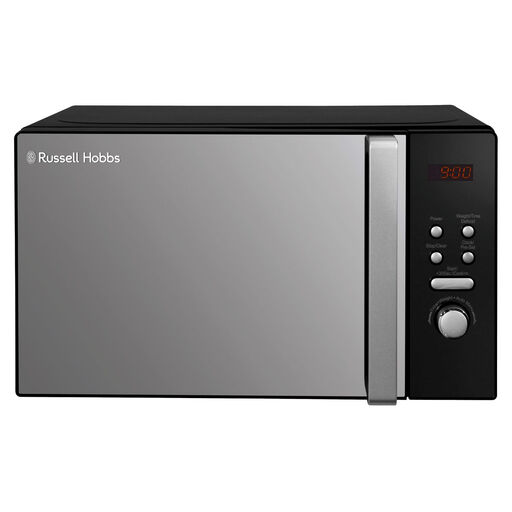 No image available
If you use a smaller compote bowl, check its dimensions against the cavity and turntable before choosing this model.
The product name states five power levels, giving you settings to choose from while you supervise warming.
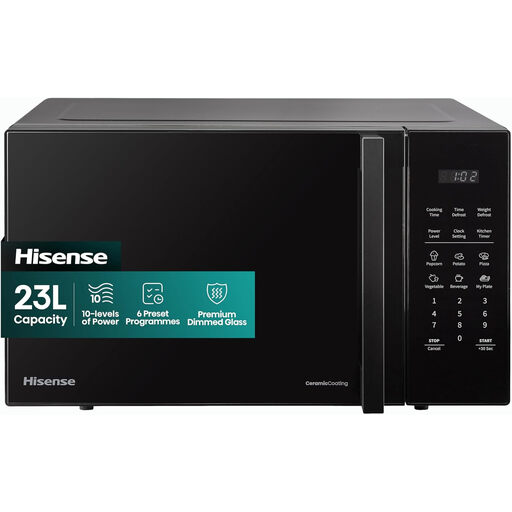 No image available
For regular bowl warming, check the vessel’s width and height against the usable space rather than relying on the capacity rating.
Use a clearly marked microwave-safe container, and stir and check the compote as it warms.
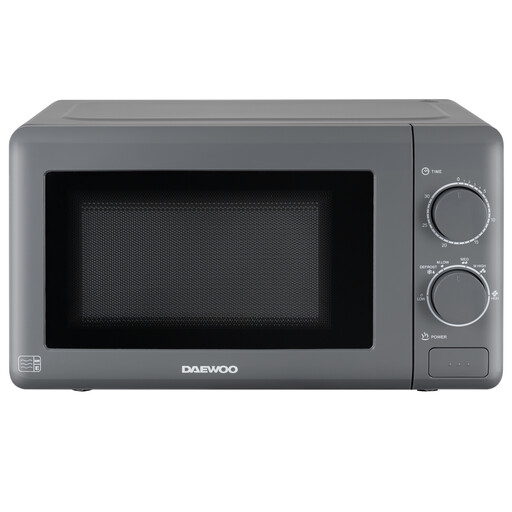 No image available
This manual model may suit you if you prefer to set and supervise each warming interval.
Check the turntable and cavity dimensions against your bowl, and confirm the power-setting count before choosing it.
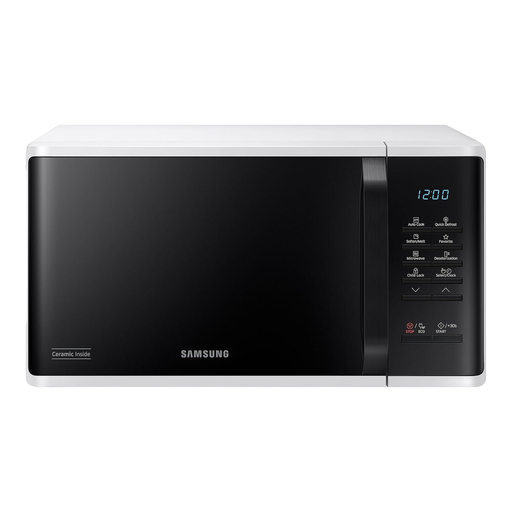 No image available
For compote portions, check that your usual container fits and that the appliance suits its intended location.
The product name identifies Samsung’s Triple Distribution System; do not treat that feature name as a guarantee of even warming for a particular batch.
No, not if warming and defrosting are the tasks you need it for. Which? describes solo microwaves as suitable for heating and defrosting; choose a combi model if you will also use its additional cooking modes.
Measure the bowl, including handles and any lid clearance, then compare it with the chosen microwave’s cavity and turntable dimensions. Its litre capacity cannot confirm fit on its own.
Only use a tub clearly marked as microwave-safe and follow its instructions. Electrical Safety First advises against microwaving containers, foam trays or plastic storage bags that are not specifically designed for microwave use.