Small-batch chocolate melters
If you melt a little chocolate for drizzling, fruit or occasional baking, prioritise manual power selection and check whether a low setting is stated. You will still need to watch and stir a small portion as it heats.


For small portions of cooking chocolate, start with a compact solo microwave that lets you select the power manually; a stated low setting is more useful to check than maximum wattage alone. A 17–20L model is a sensible starting point when worktop space matters. Consider a larger inverter model if you also regularly need room for larger dishes, but you will still need to stop, check and stir the chocolate.
If you melt a little chocolate for drizzling, fruit or occasional baking, prioritise manual power selection and check whether a low setting is stated. You will still need to watch and stir a small portion as it heats.
If the microwave will also handle everyday reheating but worktop room is limited, compare compact solo models against the bowls and plates you actually use. A smaller cavity is less useful if your regular dishes will not fit.
If you work with different types of chocolate across recipes, more selectable power levels may give you more choices between batches. Check the actual wattage of those levels rather than assuming that a higher level count guarantees a particularly low setting.
Choose the power controls before deciding how much cavity space you need; then check whether you can set the time and power comfortably for brief, supervised heating.
| Concern | What to check | Who this matters to |
|---|---|---|
| Gentle heat control | Check the manual power levels and their wattages. Panasonic lists a 100W setting for the NN-ST22QBBPQ; a maximum-output figure alone does not tell you the lowest setting. | If a small portion might overheat before I can stir it, I want a low setting I can select deliberately. Around 42% of consumers put gentle heat control first. |
| Compact everyday use | Compare exterior dimensions, door clearance and turntable diameter as well as cavity capacity; a 17–20L solo model is a starting point, not a required size. | When worktop room is tight but I also reheat everyday meals, the microwave needs to fit my space and my usual dishes. Roughly 33% of consumers make compact everyday use their primary concern. |
| Simple timing and controls | Look for manual power selection and a timer you find easy to set. Check the controls on the particular model rather than relying on an automatic programme for chocolate. | For an occasional bowl of chocolate, I want to set the time, pause and stir without navigating cooking presets. About 25% of consumers prioritise straightforward controls. |
Maximum output does not show how low you can set the microwave for a small portion. Panasonic specifies five settings down to 100W for the NN-ST22QBBPQ, while Toshiba lists ten levels for the MM2-EM20PF (MB) without assigning a wattage to each level in its product specification.
Compare the full power table in the specification or manual before choosing a model for delicate melting.
Panasonic’s container guidance cautions against metallic decoration and recommends checking that containers are microwave-safe.
Choose a microwave-safe bowl without metallic trim, avoid chipped or cracked glassware, and use plastic only if it is labelled microwave-safe.
An unsuitable or damaged container can interrupt cooking and may damage the bowl or appliance.
A larger microwave takes more worktop space without making a one-person portion larger. Panasonic’s NN-ST68QS is a 32L inverter model, while the compact solo models considered here have 17–20L cavities.
Measure your available space and usual dishes. Consider the larger model if you will regularly use its capacity for other cooking tasks.
Its compact solo and larger inverter models illustrate different choices for available space and wider cooking use.
A compact solo option for buyers who want more selectable power steps.
A basic solo-microwave option for buyers who prefer dials and need to consider a smaller cavity.
These solo microwaves offer options for small-portion melting and everyday heating. If a specific low wattage is important to you, compare the manual’s power table before choosing; the larger-capacity models also call for a worktop-space check.
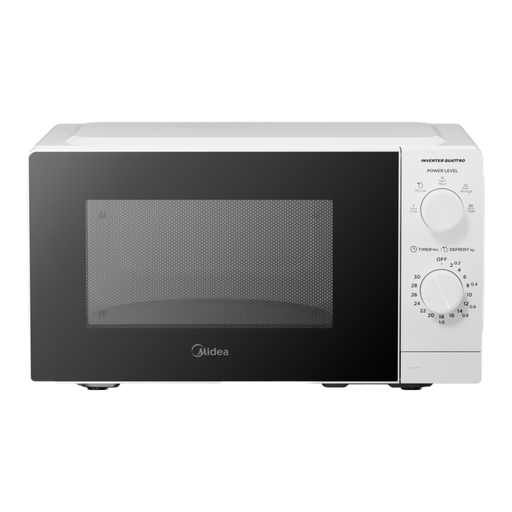 No image available
Consider this model if you want a 20L solo microwave with manual controls for small portions and everyday use.
The product title states 700W maximum output and MET inverter technology. Check the manual’s power table if you need a specified low wattage for chocolate.
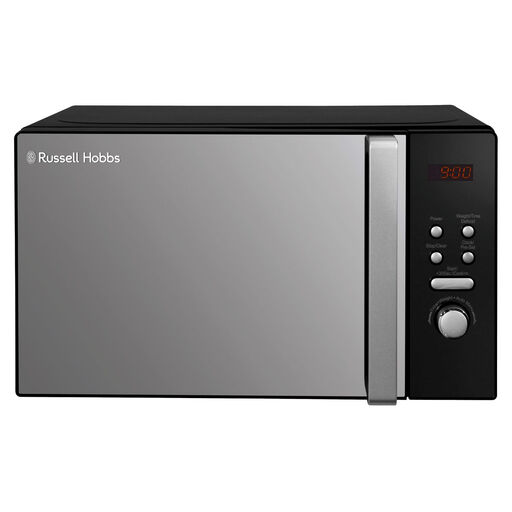 No image available
This is a 20L option if you want manual adjustment for occasional small portions as well as everyday heating.
The product title states 800W maximum output and five power levels. Check the manual for the lowest selectable wattage if that is central to your choice.
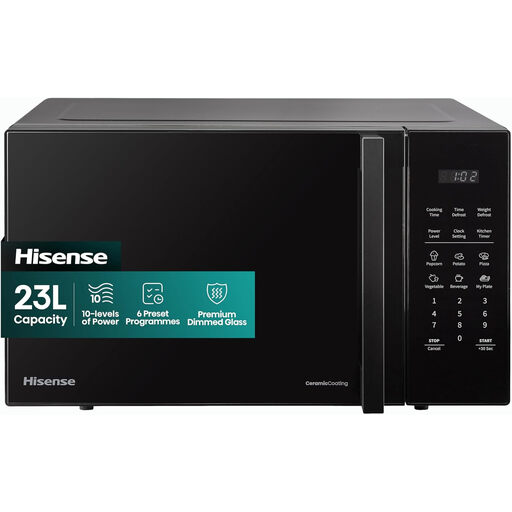 No image available
Consider the 23L cavity if your microwave will also take dishes larger than the bowl you use for chocolate; check its fit on your worktop.
The product title states 800W maximum output. Confirm the power table and whether this variant has touch or rotary controls before buying.
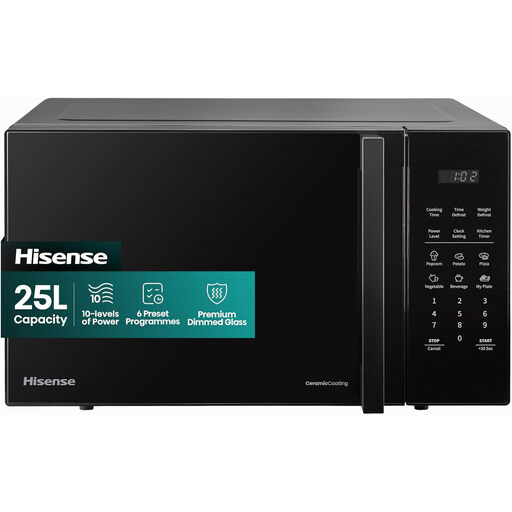 No image available
The 25L cavity is worth considering if you will regularly use larger dishes alongside occasional chocolate melting.
The product title states 900W maximum output. Measure the available worktop space and check the manual’s lowest power setting before choosing it for small portions.
No: a solo microwave with manual power selection can handle this task. Choose a grill or combi model if you will regularly use its other cooking functions, not because they remove the need to check and stir the chocolate.
Use a microwave-safe bowl without metallic trim. Panasonic’s container guidance also recommends avoiding chipped or cracked glassware and using plastic only when it is labelled microwave-safe; these checks apply whichever microwave you choose.
Chop it into roughly similar pieces to help it melt more evenly. Good Food also advises close attention to milk and white chocolate because they can catch and burn more readily than dark chocolate.
Check with your local council or retailer for an available electrical-appliance recycling or take-back route. GOV.UK identifies the Waste Electrical and Electronic Equipment Regulations 2013 (as amended) as the underpinning UK legislation; the collection service available to your household depends on location.