Single-portion pudding warmers
You mainly want to warm one bowl or pot of milk pudding. A timer and adjustable power matter more to this task than grill or oven-style modes.


For mainly warming a serving of milk pudding, start with a freestanding solo microwave that has adjustable power, a timer and controls everyone sharing the kitchen can use. Check its external dimensions, installation clearance and whether your usual bowl fits; consider a larger inverter or combination model only if the kitchen will regularly use its extra capacity or cooking modes.
You mainly want to warm one bowl or pot of milk pudding. A timer and adjustable power matter more to this task than grill or oven-style modes.
You need to agree where a freestanding microwave can sit. Measure the available width, depth and height, then allow for the clearance required by the exact model's instructions.
You also warm varied foods or larger dishes. Extra capacity, programmes or inverter controls may be worth considering, provided the appliance fits the shared space and its controls suit the people using it.
Choose the controls needed for short, adjustable reheats first; then check the agreed worktop position and whether the microwave will regularly handle other foods.
| Concern | What to check | Who this matters to |
|---|---|---|
| Simple, repeatable warming | Look for adjustable power and a timer. Check that your usual microwave-safe bowl fits and follow the pudding's packaging directions. | When I warm one serving, I want controls I can understand and a chance to check the food before heating further. Around 42% of consumers put straightforward, repeatable warming first. |
| Shared-worktop fit | Compare the exact model's external dimensions with the agreed space and read its installation-clearance instructions. | If worktop space is tight, I need an appliance that can be positioned properly without taking over the communal surface. Keeping the microwave within that space comes first for around 33% of consumers. |
| Control for other foods | Consider the capacity, power settings and programmes you would use for other dishes; check the footprint before moving to a larger model. | When the household reheats varied foods as well as pudding, I want enough control and room for those dishes. Around 25% of consumers make broader reheating needs their priority. |
Capacity does not tell you how much shared worktop a microwave occupies. Beko lists the 20L MOC20100W1 at 243 × 444 × 368 mm, while Panasonic lists the 20L NN-ST23QMBPQ at 440 × 324 × 258 mm.
Measure the proposed position, compare dimensions for the exact model and follow its required clearance instructions.
Grill and fan-assisted oven modes serve different cooking tasks from simply reheating pudding. A combination microwave also gives shared users more controls to navigate.
Choose a solo microwave for straightforward reheating unless the household expects to use grilling or oven-style cooking regularly.
Compact models in this article include both 700W and 800W ratings and different control layouts. A time used on one appliance should not be assumed to work the same way on another.
Follow the food's instructions, select the appropriate setting and check the pudding between short intervals, stirring where suitable.
A communal kitchen may tempt users to put a freestanding microwave in a cupboard or close to water. Beko's MOC20100W1 instructions restrict cabinet placement, while GOV.UK advises keeping electrical appliances away from water and metal out of microwaves.
Use only a position permitted by the exact model's instructions, keep the appliance and lead dry, and agree how the shared socket area will be kept clear.
Beko's MOC20100W1 is a compact freestanding solo model for buyers who want manual controls.
Panasonic provides examples of both compact solo microwaves and larger inverter solo models.
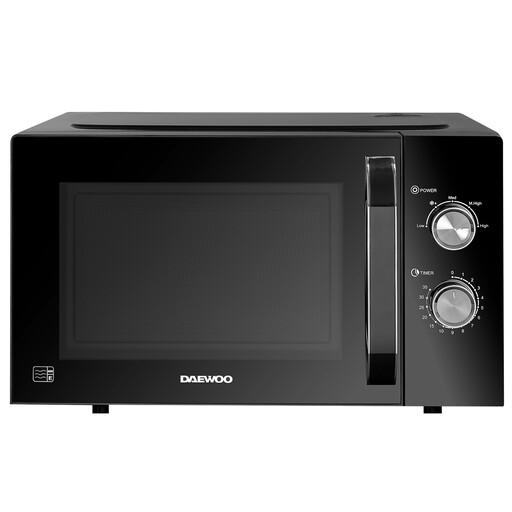
The RHM1731G is an example of a solo microwave with dial controls.
These freestanding solo microwaves offer manual or digital controls for warming pudding and other everyday portions. Compare each model's controls and bowl fit, and confirm that it can be installed in the shared space before choosing.
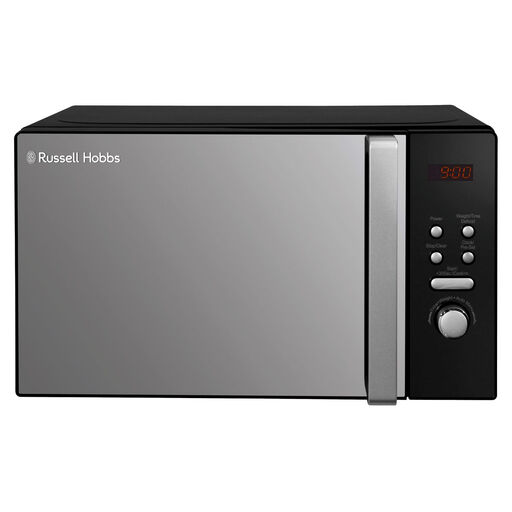 No image available
Consider this model if you want digital controls for shared-kitchen reheating.
Its stated specifications are 800W output and five power levels. Check that your usual bowl and the appliance itself fit the allocated space.
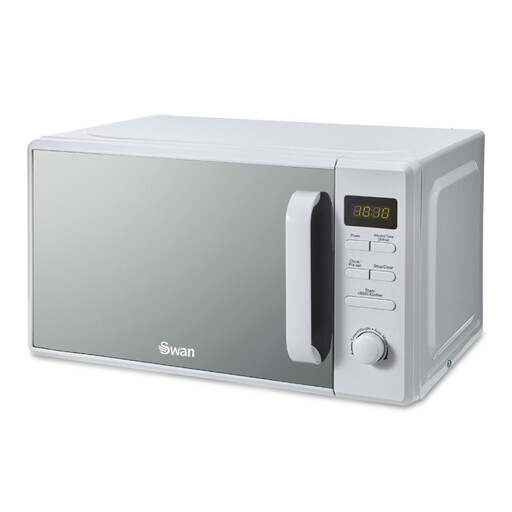 No image available
This is another digital-control option for timed warming in a shared kitchen.
The product name specifies 800W output, five power levels and a 95-minute timer. Check bowl fit and the required installation space.
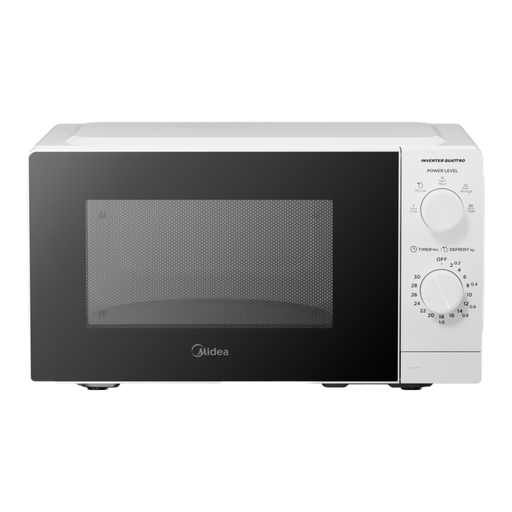 No image available
Consider the manual controls if shared users prefer a straightforward way to set reheating time and power.
The product name specifies 700W output and MET inverter technology; do not assume a particular heating result from that technology label. Confirm the footprint, required clearance and fit of your usual bowl.
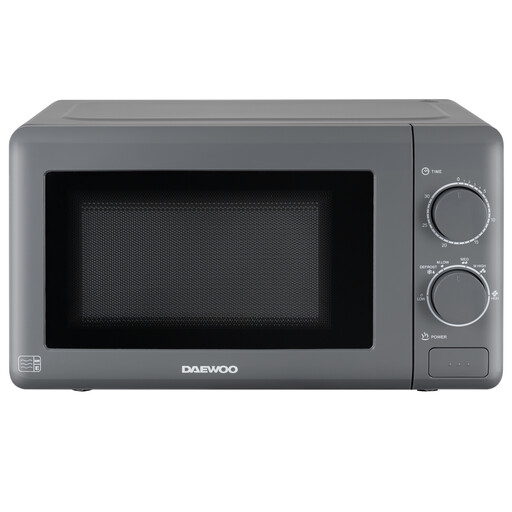 No image available
This manual-control model suits a kitchen where users want to set warming time without navigating automatic programmes.
Its product name specifies 800W output and a defrost function. Confirm the exact number of power settings for this model, as well as bowl fit, before choosing it.
 No image available
Consider the 23L model if the shared microwave will also need to accommodate larger dishes.
The product name specifies 800W output, five power settings and automatic defrost. Confirm its external dimensions and installation clearance before allocating worktop space.
Yes, if pudding and straightforward reheating are its main jobs. Choose grill or combination cooking modes only if the household will also use them for other meals.
Follow the pudding's packaging instructions, use a microwave-safe container and check the food between short heating intervals, stirring where appropriate. The Food Standards Agency advises reheating food thoroughly through to the centre rather than leaving it merely warm.
No: both ratings appear in compact 20L solo models suitable for consideration here. Use timings and power settings appropriate to the exact appliance and the food's instructions rather than transferring a setting unchanged between models.
Agree on a position with enough space for the exact model and its required clearance, plus access to a suitable socket. Follow the manufacturer's placement instructions; GOV.UK also advises keeping electrical appliances away from water and metal items out of microwaves.