
24/7 Customer Support

Free returns

Same-day & Next-day Delivery

Quality Guaranteed

Unlock Your Welcome Offers: FREE Delivery | Up to 80% OFF | Free 30-day JoyPlus trial
Download the APP
A microwave oven is a cornerstone of the modern British kitchen, but choosing the right one can be surprisingly complex. With endless features, sizes and power ratings, it’s easy to fall for marketing hype and end up with an appliance that doesn’t suit your needs. As a Joybuy Product Recommendation Officer, my role is to help you navigate the market and identify the key factors that truly matter, ensuring you find a microwave that serves you well for years to come.
Before you start browsing, let’s look at some common pitfalls that lead to buyer’s remorse.
To make an informed choice, focus on these three core parameters. They will determine how well the appliance fits into your kitchen and your lifestyle.
Your first decision is choosing the right type of microwave oven for your needs.
Microwave capacity is measured in litres, but this figure only tells part of the story.
Power, measured in watts (W), dictates cooking speed.
Here are a few recommendations matched to different user needs, all of which address the common pitfalls and meet key performance criteria.
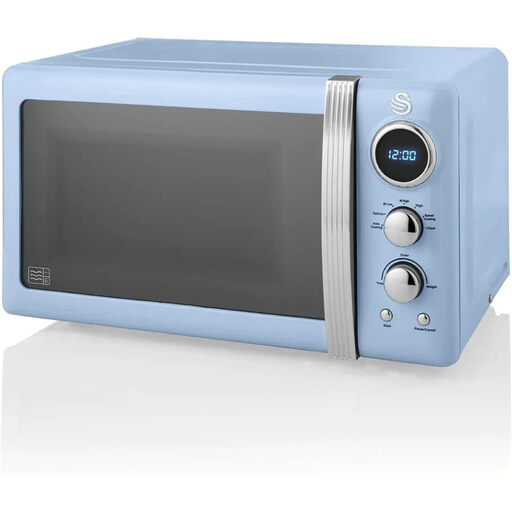
Why This Fits Their Persona: For those who see kitchen appliances as part of their home's decor, this retro microwave is a perfect fit. Its vintage-inspired design and vibrant colour make it a worktop statement piece rather than just a utility box.
It avoids the wattage myth by offering a practical 800W of power, which is ample for a 20L microwave, without inflating the price for unnecessary power.
Its primary advantage is its distinctive aesthetic, combined with user-friendly digital microwave controls and a compact footprint ideal for stylish kitchens.
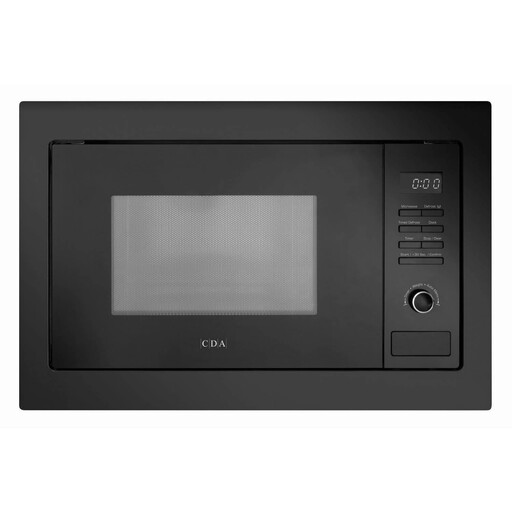
Why This Fits Their Persona: Perfect for modern kitchens where worktop space is at a premium. This built-in microwave integrates seamlessly into a cabinet, creating a clean, uncluttered look. The sleek black microwave finish complements contemporary designs.
It avoids the trap of ignoring internal dimensions. Despite being built-in, it offers a generous 25L capacity and a 27.5cm turntable, ensuring it's practical for daily use.
Its main advantage is the space-saving integrated design. The powerful 900W output and family-friendly capacity make it a fully functional primary appliance, not just a style choice.

Why This Fits Their Persona: For the user who wants maximum functionality in one appliance. This is a true combination microwave that also includes an air fry function, making it a versatile workhorse for baking, roasting, grilling and more.
It completely sidesteps the "combination illusion" by offering genuine convection oven and air fry capabilities, powered by a fan. This is a true multi-function cooker, not just a microwave with a basic grill.
Its key advantage is its 4-in-1 versatility, which can save both money and worktop space by replacing other appliances. The 1000W grill and convection functions provide powerful, oven-like results.
We have compiled a complete, real-time list of products that fully satisfy these strict selection criteria and UK safety regulations.
Proper ventilation is crucial for safety and performance. For a standard worktop microwave, you should generally allow at least 10cm (4 inches) of clearance at the back and sides and 20cm (8 inches) on top. This prevents overheating. For a built-in microwave, the surrounding cabinet must be constructed to the manufacturer's specific dimensions to ensure adequate airflow.
The lifespan of a microwave oven can vary depending on usage and build quality, but most modern appliances are designed to last between 7 and 10 years. Heavy use or poor maintenance can shorten this, while light use may extend it. Signs that it might be time for a replacement include inconsistent heating, unusual noises or a door that no longer seals properly.
Neither is inherently "better"; it depends on your preference. A digital microwave offers more precise cooking with features like pre-set programmes, specific defrost-by-weight functions and exact timers. A manual (or dial-controlled) microwave offers simplicity and durability, with fewer electronic components that could potentially fail. If you value straightforward operation for basic tasks, a manual model is a reliable choice. If you want advanced features and precision, digital is the way to go.