
24/7 Customer Support

Free returns

Same-day & Next-day Delivery

Quality Guaranteed

Unlock Your Welcome Offers: FREE Delivery | Up to 80% OFF | Free 30-day JoyPlus trial
Download the APP
Replacing a microwave can seem straightforward until the appliance arrives and reveals a shallow cavity, awkward controls or insufficient ventilation space. For UK households, students, renters and busy home cooks, the right choice depends less on appearance and more on how well the specifications match everyday use.
The most common buying mistakes are easy to avoid:
A 20L microwave is commonly suitable for singles, couples, students and smaller kitchens. It usually accommodates a standard dinner plate, although plate diameter varies. A 23L microwave offers additional internal room for larger dishes and family portions.
Check all three measurements:
For example, compact worktop models may measure around 44cm wide, while some 23L appliances are closer to 48cm. Leave the manufacturer’s recommended clearance around ventilation openings and avoid placing the appliance inside an enclosed cupboard unless it is specifically designed for built-in installation.
A 700W microwave can handle reheating, defrosting and everyday cooking, often with a slightly longer cooking time than an 800W microwave. Follow the food packaging instructions and adjust the time where necessary.
Look beyond the headline wattage:
Traditional microwaves often deliver lower settings by switching full power on and off. An inverter microwave is designed to provide a steadier output at lower settings. This may be useful when gently defrosting, warming sauces or reheating food where overheating at the edges is a concern.
Inverter technology is not essential for occasional reheating, but it can be a practical consideration for people who use their microwave frequently. Also look for an energy-saving microwave with a standby mode, particularly if the appliance remains plugged in for long periods.
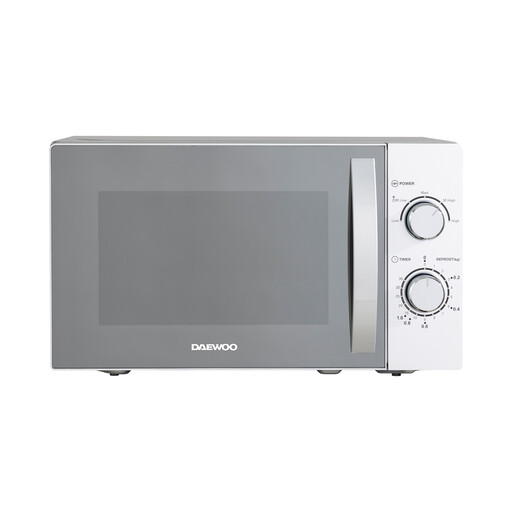
Why This Fits Their Persona: Its compact 20L format and rotary controls suit students, renters and households that want straightforward reheating without a complicated display.
The product information specifies a removable glass turntable, multiple power levels and a defrost function, rather than relying only on a high wattage figure.
700–800W output, mechanical time and power dials, removable glass turntable and compact worktop dimensions.
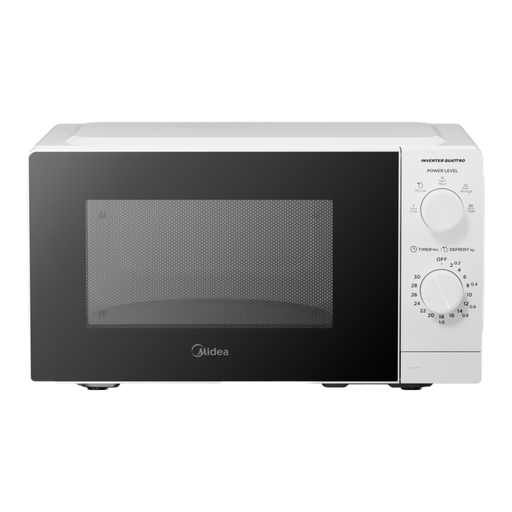
Why This Fits Their Persona: It suits regular home cooks who want compact dimensions with inverter technology and an energy-saving mode.
The specification lists inverter technology, six power settings and a removable turntable, giving more control than a basic single-setting appliance.
700W output, MET inverter technology, six power levels, 35-minute timer and standby energy-saving mode.
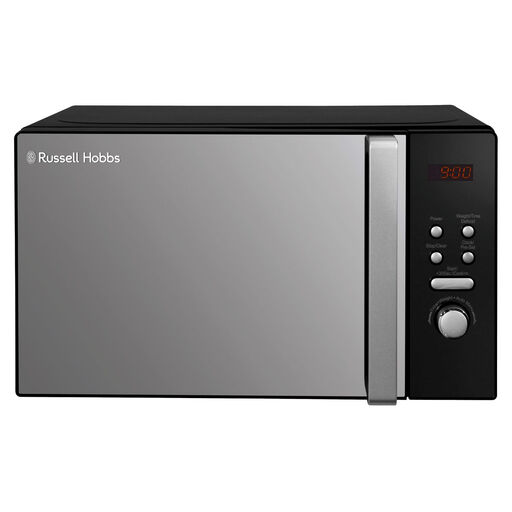
Why This Fits Their Persona: A useful match for busy households that prefer digital timing, automatic programmes and weight-based defrosting.
Its listed features go beyond a digital display, including five power levels, eight auto-cook menus and a child safety lock.
800W output, 95-minute timer, automatic defrost by weight or time and dishwasher-safe glass turntable.
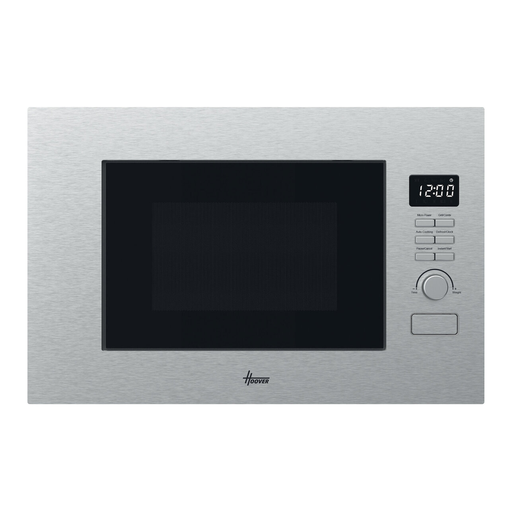
Why This Fits Their Persona: This is intended for fitted kitchens and cooks who want microwave heating alongside grilling and combination functions.
The product information clearly identifies it as built-in and states that cabinet ventilation and the specified cut-out dimensions are required.
20L cavity, 700W microwave output, 800W grill specification, defrost settings and microwave/grill combination modes.
Place a freestanding microwave on a flat, stable, heat-resistant surface with ventilation space around the appliance. Connect it directly to a suitable UK wall socket where instructed, and do not cover the vents.
Use only containers labelled microwave-safe. Avoid metal utensils, metallic trims and sealed containers. Do not operate the appliance empty, and stop using it if the door, latch or seals are damaged.
Electricity use depends on power rating, cooking time and standby consumption. A lower-wattage model is not automatically cheaper to run if it needs considerably longer cooking times. An eco mode can reduce standby use, while short cooking cycles generally use less energy than heating a conventional oven for small portions.
We have compiled a complete, real-time list of products that fully satisfy these strict selection criteria and UK safety regulations.
A 20L model is generally suitable for standard plates, mugs, bowls and ready meals. Couples and small households will often find it sufficient. If you regularly heat large serving dishes or family portions, compare the turntable diameter and consider a 23L microwave.
Lifespan depends on usage, cleaning, ventilation and door condition. Regularly remove food residue, avoid slamming the door and keep vents clear. Stop using the appliance if it develops unusual noises, sparking or a damaged seal, and follow the manufacturer’s service guidance.
Not necessarily. An 800W microwave may complete a task faster, while a 700W model may use less power during operation but take longer. Compare cooking time, standby mode and the features you will actually use rather than wattage alone.