
24/7 Customer Support

Free returns

Same-day & Next-day Delivery

Quality Guaranteed

Unlock Your Welcome Offers: FREE Delivery | Up to 80% OFF | Free 30-day JoyPlus trial
Download the APP
Microwave ovens can look similar on a product page, yet their capacity, controls, installation requirements and cooking functions can differ considerably. The right choice depends less on appearance and more on how you plan to use the appliance.
A student in rented accommodation may need a compact worktop microwave for reheating meals, while a family could benefit from a 23L or 25L cavity. A fitted kitchen may require a built-in microwave with grill, but this type must not be used as a freestanding appliance.
A microwave’s litre rating describes the internal cavity, not the amount of worktop space it occupies. A 20L microwave can suit standard plates, but larger dishes may need a 23L or 25L model. Always check the external dimensions and turntable diameter before ordering, particularly if the appliance will sit beneath cabinets.
A 700W microwave can handle reheating, defrosting and everyday cooking, although it may need longer timings than an 800W microwave or 900W model. Higher output is not a substitute for suitable power controls. Delicate foods can overheat around the edges if the appliance offers limited adjustment or pulses power at low settings.
Auto-cook programmes, touch controls and app connectivity can be convenient, but they may not matter if you mainly heat soup, leftovers and ready meals. Conversely, choosing a solo microwave when you regularly cook food that needs browning can lead to disappointment. A microwave with grill is more suitable for crisping or browning toppings, but it usually needs additional installation space and careful handling of hot accessories.
Measure the space from every side, including the area needed to open the door. Freestanding models need stable, level positioning with ventilation openings left unobstructed. Built-in models must match the manufacturer’s specified cabinet cut-out dimensions and should be installed according to the instructions by a suitably qualified person.
A manual microwave with rotary dials is straightforward and can be useful for users who prefer simple operation. A digital microwave typically provides a clearer timer, button controls and, depending on the model, automatic programmes or child lock functions.
For regular reheating and defrosting, look for:
An inverter microwave is designed to provide more consistent power at lower settings than conventional systems that cycle full power on and off. This can be useful for gentle defrosting and lower-power heating. Check the stated power output and cooking instructions rather than assuming inverter technology automatically shortens every cooking time.
A solo microwave is designed for microwave cooking, reheating and defrosting. It is generally suitable for everyday tasks and is often simpler to clean.
A grill model adds a separate heating function for browning and crisping. It can be useful for dishes such as gratins, toasties or bacon, but the grill rack must only be used as instructed. During grill or combination cooking, the cavity, door and accessories can become very hot.
For energy use, compare the manufacturer’s information on standby or eco mode. Features such as energy-saving mode can reduce standby consumption, although total running cost also depends on cooking time, power output and frequency of use.
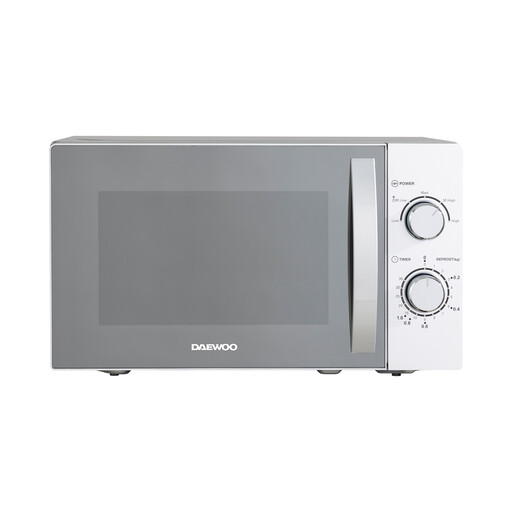
Why This Fits Their Persona: Its compact 20L worktop format and mechanical dials suit students, renters and smaller households that want straightforward daily reheating and defrosting without a complex control panel.
The stated 700–800W output, multiple power levels and defrost function provide more control than a basic single-setting appliance.
Mechanical timer and power dials; removable glass turntable; compact dimensions of approximately 25.9 × 32.1 × 44.9cm.
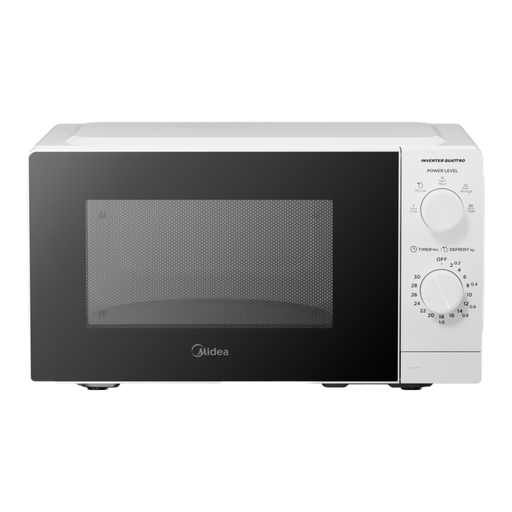
Why This Fits Their Persona: This compact model suits home cooks who want manual operation with inverter technology and an energy-saving mode for regular use in a UK kitchen.
The inverter system is specified for consistent low-power operation, while the energy-saving mode addresses standby consumption.
700W output, six power settings, child lock and removable glass turntable in a 20L cavity.
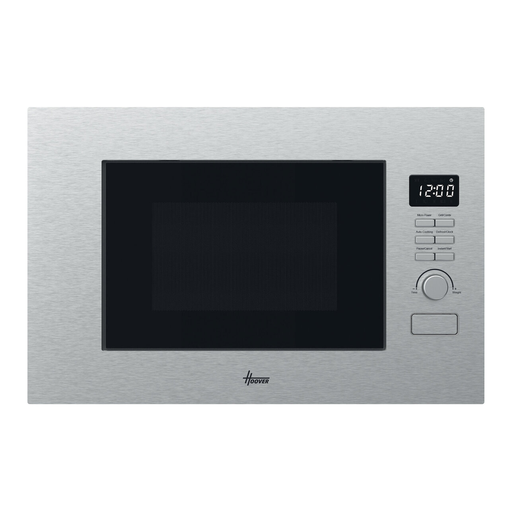
Why This Fits Their Persona: Designed for fitted kitchens and users who want microwave, grill and combination cooking without using additional worktop space.
Its built-in design clearly requires ventilated cabinet installation, avoiding the mistake of treating an integrated appliance as a freestanding model.
20L capacity, 700W microwave power, 800W grill power, defrost options and hOn app compatibility.
We have compiled a complete, real-time list of products that fully satisfy these strict selection criteria and UK safety regulations.
Place a worktop microwave on a stable, heat-resistant surface with adequate clearance around the vents. Use a suitable UK mains socket and follow the manual’s installation guidance. Never operate the appliance empty, and use only microwave-safe containers. Metal containers, foil and metallic trim can cause sparking in microwave mode.
Do not heat sealed containers or whole eggs in their shells. Take care when opening hot food because steam and liquids can cause burns. Stop using the appliance if the door, locking mechanism or seals are damaged.
Running cost depends on the appliance’s power, cooking time and frequency of use. A 700W model may draw less power while taking longer to heat than an 800W or 900W model. Eco or energy-saving modes can reduce standby consumption, but the manufacturer’s specifications provide the most useful comparison.
Lifespan depends on usage, cleaning, ventilation and maintenance. Keeping the cavity clean, avoiding empty operation and not blocking vents can help protect the appliance. Check the supplied warranty and registration requirements before purchase.
Usually not. Built-in microwave ovens are designed for specific cabinet ventilation and installation dimensions. Models such as the Hoover H-Microwave 300 must be installed as directed and should not be operated as freestanding appliances.