
24/7 Customer Support

Free returns

Same-day & Next-day Delivery

Quality Guaranteed

Unlock Your Welcome Offers: FREE Delivery | Up to 80% OFF | Free 30-day JoyPlus trial
Download the APP
Choosing between microwave ovens can be more complicated than comparing wattage and colour. A model may look compact online but occupy more worktop depth than expected, while a feature-rich control panel may add cost without improving your everyday routine.
This guide helps UK households, renters, students and home cooks compare solo microwaves, grill models, controls, capacity and installation requirements before buying.
A microwave listed as a 20L microwave, 23L microwave or 25L microwave refers to the internal cavity volume, not the space available for every dish. Turntable diameter is often more useful: a 20L model may accommodate a standard dinner plate, while larger 23L and 25L models can offer more room for family-sized dishes.
Always check the appliance’s external dimensions and allow ventilation clearance. Worktop models generally need open space around their vents; never place one tightly inside a cabinet unless the manufacturer specifically permits it.
An 800W microwave or 900W model may heat food more quickly than a 700W appliance, but cooking times still depend on portion size, moisture and food density. Higher power is not automatically more suitable for gentle reheating or defrosting.
Look for adjustable power levels and follow the food packaging instructions. A microwave with auto defrost can be convenient, but frozen food may still need turning or separating during the cycle.
Digital displays, auto-cook menus, child locks and grill functions can be useful, but they should match your routine. Manual microwaves with rotary dials are straightforward for reheating and defrosting, while digital microwaves offer more precise timing and programmed settings.
A grill is worthwhile if you regularly want browning or crisping. It adds cleaning and safety considerations, and it does not turn a microwave into a full-size oven.
For one person, a compact 20L microwave is usually practical for mugs, bowls and standard plates. A 23L microwave gives additional room for larger dishes, while a 25L microwave may suit families or users who reheat several portions.
Check:
For renters and students, worktop microwaves avoid installation work. Built-in microwaves need a compatible cabinet opening and proper ventilation. Do not use a built-in appliance as a freestanding model unless the instructions explicitly allow it.
Microwave output is normally shown in watts. Models in this selection range from 700W to 900W. Compare the stated output rather than the appliance’s connected load, and adjust cooking times when moving between wattages.
Manual controls are easy to operate and may suit users who prefer physical dials. Digital controls can provide clearer timing, auto-cook programmes and weight-based defrosting. An inverter microwave is designed to provide steadier lower-power operation than conventional pulsing systems, which may be useful for gentle defrosting and reheating.
A removable glass turntable simplifies cleaning, while a wipe-clean or enamel interior helps with everyday spills. Some models include child locks, eco standby modes or odour-reduction functions.
Use only microwave-safe containers. Avoid metal, foil, sealed containers and whole eggs in their shells unless the manufacturer provides specific instructions. Never operate a microwave empty, and stop using it if the door or seals are damaged. Grill racks must only be used in the mode and position specified by the manual.
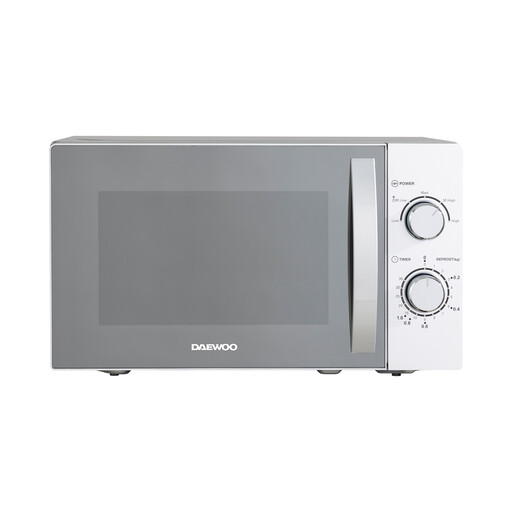
Why This Fits Their Persona: Its compact format and mechanical dials suit students, first-time buyers and renters who want straightforward reheating without learning a menu system.
The manual design avoids paying for unused digital programmes, while its 20L cavity remains suitable for everyday plates and bowls.
700–800W variants, mechanical power and timer dials, removable glass turntable and defrost function.
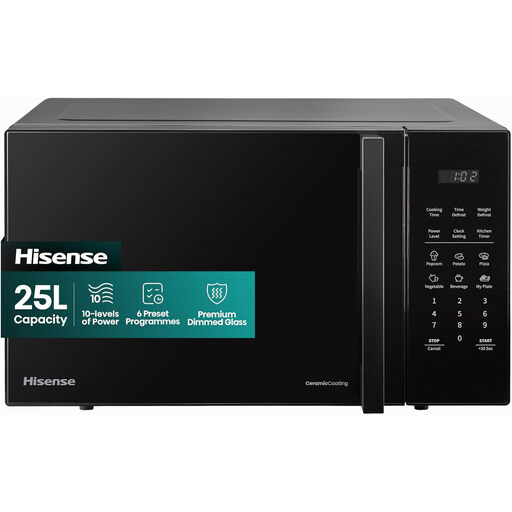
Why This Fits Their Persona: Families and home cooks wanting more capacity, precise controls and programmed settings may prefer this larger digital worktop model.
The 25L cavity and 31.5cm turntable give clearer usable-space information than capacity alone, while auto defrost supports regular frozen-food preparation.
900W output, 10 power levels, touch controls, auto-cook programmes and removable turntable.
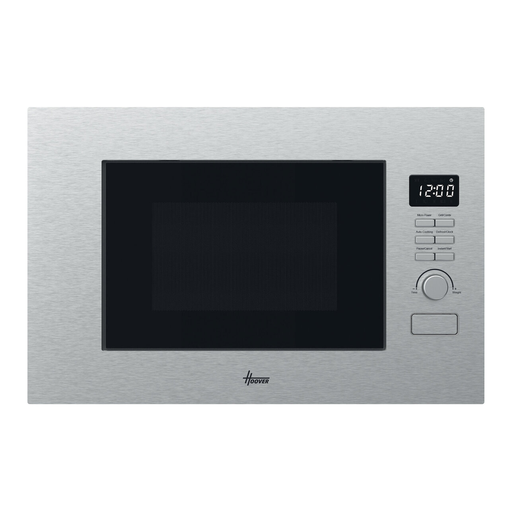
Why This Fits Their Persona: Users planning a fitted kitchen or needing browning and grilling functions may prefer an integrated appliance rather than a worktop microwave.
The listing identifies it as built-in, so buyers can check cabinet compatibility and arrange suitable installation instead of placing it on a worktop.
20L cavity, 700W microwave, grill and combination modes, LED display and hOn app compatibility.
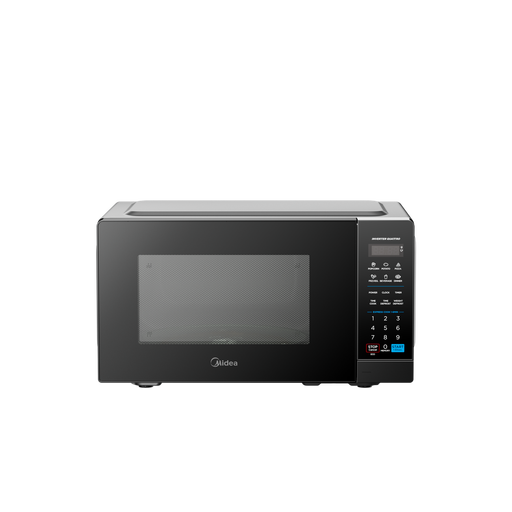
Why This Fits Their Persona: Small households and home cooks who regularly defrost delicate foods or reheat smaller portions may value inverter operation in a compact black microwave.
Its inverter technology is a specific technical feature rather than a vague cooking claim; the 20L footprint also keeps space requirements clear.
Six power levels, removable glass turntable, eco mode, child lock and approximately 440 × 345 × 259mm dimensions.
We have compiled a complete, real-time list of products that fully satisfy these strict selection criteria and UK safety regulations.
Running cost depends on the appliance’s input power, cooking time and electricity tariff. A higher-output model may finish a task sooner, but it can draw more power while operating. Use the wattage shown on the rating label, keep cooking times proportionate and avoid running the microwave empty. Eco or standby modes may reduce power use when the appliance is not operating, but check the manufacturer’s specifications.
Lifespan varies with usage, maintenance and build quality. Regularly clean food residue, avoid operating the appliance empty and do not use it if the door, hinges or seals are damaged. Check the included guarantee or warranty terms before purchase, including whether registration is required.
Built-in microwaves must match the cabinet dimensions and ventilation requirements. Installation should follow the manufacturer’s instructions and UK electrical safety requirements. Where the model requires hardwiring or specialist fitting, use a suitably qualified installer rather than treating it like a freestanding worktop appliance.