Space-limited cottage cooks
If you usually reheat one or two portions, measure the clear worktop space and storage area before choosing a compact microwave. Its litre capacity alone will not tell you whether your usual plate fits.


For reheating cooked pasta, start with a freestanding solo microwave that fits both the cottage worktop and the dishes you use. A compact 17–20 L model may suit one or two portions; larger dishes call for a closer look at turntable diameter or flatbed space, as well as the appliance’s external dimensions. Whatever the wattage, stir where practical and check that leftovers are steaming hot throughout.
If you usually reheat one or two portions, measure the clear worktop space and storage area before choosing a compact microwave. Its litre capacity alone will not tell you whether your usual plate fits.
For several portions or a larger pasta dish, compare the cavity shape and usable dish space. A larger capacity can be helpful, but it also needs room on the worktop.
If timed reheating is the main job, clear controls may matter more than grill or convection functions. Leftovers still need to be heated thoroughly before serving.
Start by measuring the worktop and your largest microwave-safe dish. Then decide whether straightforward controls meet your needs, while keeping thorough reheating as a separate food-safety check.
| Concern | What to check | Who this matters to |
|---|---|---|
| Worktop and dish fit | Measure the clear width, depth and height; compare your largest dish with the turntable or usable cavity. | When counter space is tight, I need the microwave and my serving dish to fit without guesswork. Around 42% of consumers put worktop and dish fit first. |
| Thorough reheating | Choose controls that let you pause and stir; check that leftovers are steaming hot throughout before serving. | For chilled pasta and sauce, I need to check the centre rather than rely on the wattage figure. Thorough reheating is the primary concern for around 33% of consumers. |
| Simple operation | Compare timer and power controls; consider grill or convection only if you will use those functions. | If different guests will use the microwave mainly for leftovers, I want controls they can understand easily. Around 25% of consumers prioritise simple operation. |
A cavity volume does not show whether a pasta dish fits or how much counter space the appliance occupies. Panasonic lists its 20 L NN-ST22QBBPQ at 440 × 324 × 258 mm with a 255 mm turntable, while its 27 L NN-SF464MBPQ flatbed is approximately 529 × 326 × 422 mm.
Measure the intended position and your largest microwave-safe dish, then compare both with the exact model’s dimensions and cooking area.
A poor fit may mean finding different cookware or choosing another appliance.
Rated power does not replace checking the food itself. Food Standards Agency guidance calls for thorough reheating to the centre and says food should be reheated only once.
Pause and stir pasta and sauce where practical, then check that the food is steaming hot throughout before eating.
Electrical Safety First distinguishes solo microwaves for heating and reheating from grill and convection models with additional cooking functions.
Choose a solo model for a reheating-led cottage kitchen; consider the other formats if browning, baking or roasting is a recurring need.
Electrical Safety First advises that countertop microwaves have a fused UK three-pin plug and warns against overloading an extension lead with other high-power appliances.
Check the appliance’s plug and installation instructions, and use a suitable wall socket rather than an overloaded extension arrangement.
Panasonic’s UK range includes compact turntable, larger inverter and flatbed solo microwaves relevant to different cottage layouts.
The RHM1731B is a compact manual solo option for straightforward reheating.
The K23MMB25 offers a larger solo format without requiring a combination oven.
These solo microwaves cover compact reheating choices and larger-capacity options. Compare each one with the space and dishes available in the cottage; the product title alone may not establish dish fit or plug type.
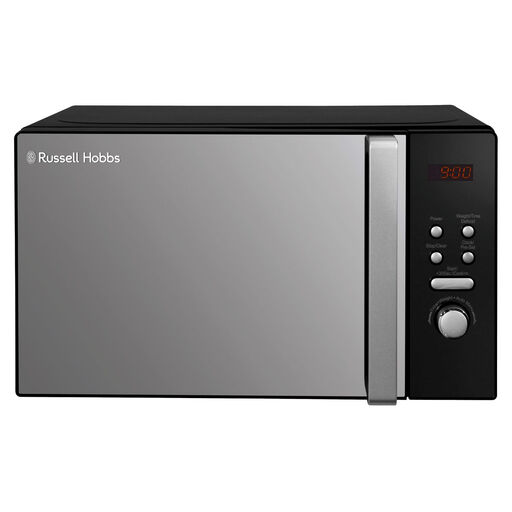 No image available
Consider this for reheating portions where a 20 L microwave suits the available space. The title specifies 800 W and five power levels; check the external dimensions, dish space and plug before buying.
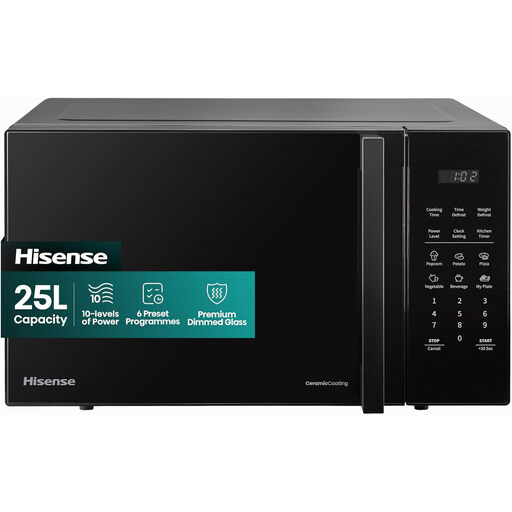 No image available
Consider the larger 25 L format if your usual pasta dishes need more room. The title specifies 900 W and auto defrost; confirm the dish space, external dimensions and UK plug arrangement for this model.
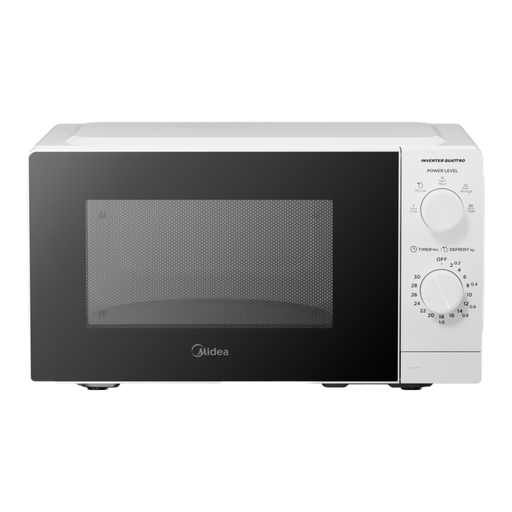 No image available
This manual solo model is an option if straightforward reheating is the priority. Its title specifies 700 W and MET inverter technology; check the turntable diameter, counter fit and plug type for this variant.
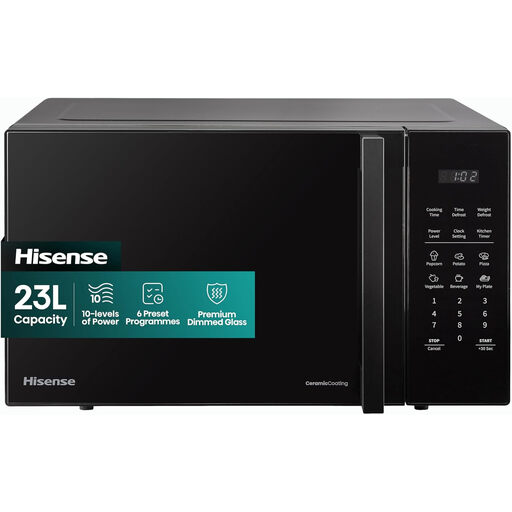 No image available
The 23 L format is worth comparing if a compact dish space feels restrictive. The title specifies 800 W and auto defrost, but its title and description differ on the control type; confirm the controls, dish fit and plug before buying.
 No image available
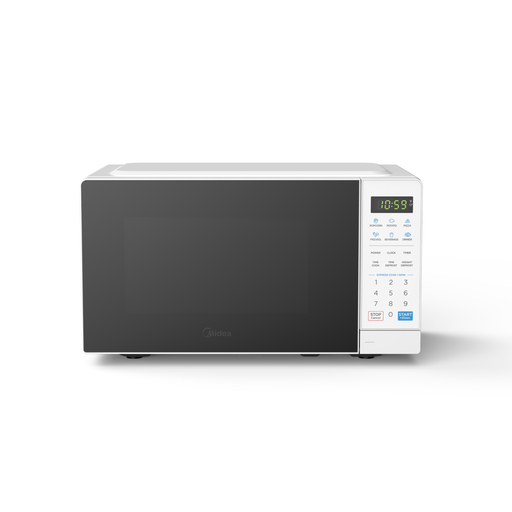
Consider this digital-control model for a 20 L solo reheating setup. Its title specifies 700 W and a 245 mm turntable; measure your dish and confirm the appliance’s external dimensions and plug type.
Yes, if reheating is its main job. Electrical Safety First describes solo microwaves as suitable for simple heating and reheating; choose grill or convection functions if you also intend to use those cooking methods.
Heat it until it is steaming hot throughout, stirring where practical so you can check for cooler areas. Food Standards Agency guidance calls for thorough reheating to the centre and says leftovers should be reheated only once.
Capacity alone cannot tell you whether it will fit. Panasonic lists its 20 L NN-ST22QBBPQ at 440 × 324 × 258 mm with a 255 mm turntable; measure both the intended worktop space and your largest microwave-safe dish against the exact model you choose.
Check for a correctly fitted fused UK three-pin plug and follow the model’s installation instructions. Electrical Safety First warns that sharing an extension lead with other high-power appliances can overload it.