Regular leftover-pasta reheaters
If pasta is your main reason for using the microwave, focus on a bowl that fits, adjustable heating and a timer you can use to pause and stir the food.


For reheating cooked pasta, start with a solo microwave and check that your usual bowl fits before choosing a capacity. A compact model may suit a tight counter, while a larger cavity is worth considering when bigger dishes are a regular need; whichever you choose, leave the ventilation clearance required by its manual and stir the pasta until it is steaming hot throughout.
If pasta is your main reason for using the microwave, focus on a bowl that fits, adjustable heating and a timer you can use to pause and stir the food.
Compare the appliance’s external dimensions and required ventilation clearance as well as the turntable and cavity dimensions. A litre rating alone will not settle whether your usual container fits.
In a house share or communal kitchenette, controls that different users can understand, microwave-safe containers and a routine for cleaning splatters matter alongside dish capacity.
Measure the container and counter position first, then decide how much control and room the people sharing the microwave need. The product information lists illustrative solo models with 15L, 20L and 25L cavities, but each model’s turntable and external dimensions need checking separately.
| Concern | What to check | Who this matters to |
|---|---|---|
| Thorough reheating | Look for adjustable power and a usable timer; choose a container you can pause and stir. | If pasta is often my main meal from the microwave, I want to stir it and check for cooler spots before eating. Around 31% of consumers would put thorough reheating first. |
| Counter and container fit | Measure the bowl, turntable and counter position, including the model’s required ventilation clearance. | With little permanent space in the shared kitchen, I need the appliance to fit without losing room for my usual bowl. Counter and container fit would come first for around 25% of consumers. |
| Shared use and cleaning | Compare the controls and check how the manual says to clean the cavity and turntable. | When several people use the same appliance, I want settings they can understand and surfaces we can keep clean. Around 25% of consumers would prioritise straightforward shared use and cleaning. |
| Room for larger dishes | Compare turntable and cavity dimensions with the largest dish used regularly; check the external footprint too. | If larger pasta containers are a regular part of shared use, I need room for them more than a compact footprint. That would be the primary concern for around 19% of consumers. |
A capacity label does not tell you whether your pasta bowl or lidded container will turn freely, or whether the appliance fits its counter position.
Measure your usual microwave-safe container and compare it with the turntable, cavity and external dimensions. Follow the model manual’s ventilation clearances.
Rated output and programmes are specifications, not a test of how evenly a particular portion of pasta reheats. Cooler areas can remain if the food is not stirred and checked.
Follow any food instructions, pause to stir, and continue heating until the pasta is steaming hot throughout.
Electrical Safety First warns against metal objects and unsuitable food packaging in microwaves, as well as using the appliance for storage.
Use a clearly microwave-safe container, keep foil and cutlery out, stay nearby while heating, and clean splatters as the manufacturer directs.
A shared-kitchen microwave needs a suitable place to run safely, not just enough space for its outer casing.
Check the UK 3-pin fused plug, the manufacturer’s placement instructions and access to a suitable wall socket before buying. Electrical Safety First advises against powering a microwave from an extension lead.
These models illustrate different solo-microwave sizes; their specifications do not apply to every appliance from the same brand.
The Sharp YC-PS204AU-S illustrates a 20L solo microwave with a 245mm turntable and touch-and-dial controls, in the product data.
The LOGIK LMB24 illustrates a compact 15L solo microwave with dial controls and a 245mm turntable, per the product information.
The Kenwood K25MS24 illustrates a 25L solo microwave with a 315mm turntable and 900W rated output, per the product data.
These solo microwaves cover 20L, 23L and 25L options for reheating in a shared kitchen. Match the turntable and counter position to your own container and space before choosing.
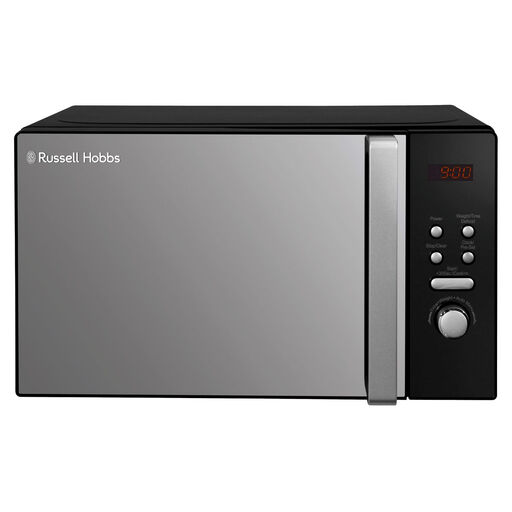 No image available
A 20L option for a shared kitchen where users want a choice of heating settings. Its title specifies 800W rated output and five power levels; check your bowl and the installation clearance before buying.
 No image available
Consider this 20L model if manual operation suits the people sharing the kitchen. Its title specifies 700W rated output and six power levels; check your container, the required ventilation clearance and the plug arrangement before buying.
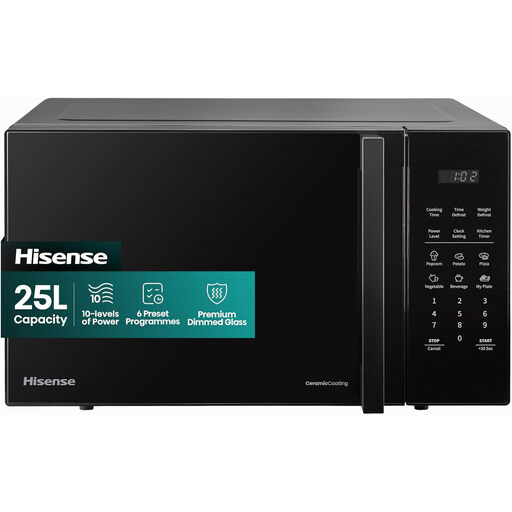 No image available
The 25L capacity is worth considering when larger pasta containers are a regular need. Its title specifies 900W rated output; that rating does not establish reheating speed or evenness, so check dish fit and counter clearance.
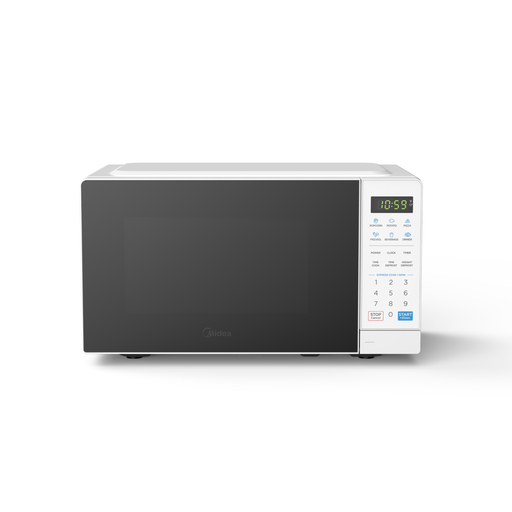 No image available
A 20L solo option for reheating individual portions. The title specifies a 245mm turntable; compare that measurement with your usual bowl and check the appliance’s external dimensions and cleaning instructions.
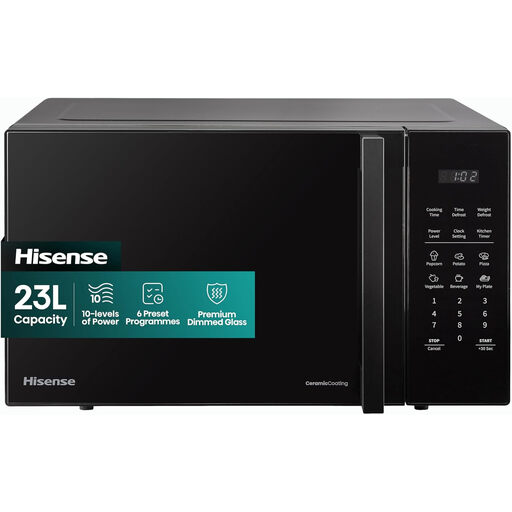 No image available
This 23L option may suit a kitchen that regularly uses larger containers. Its title specifies 800W rated output; confirm the controls for this exact model before buying, and compare its dimensions and required clearance with the available counter space.
Yes, if reheating is the main task: Electrical Safety First describes solo microwaves as providing heating and reheating functions. Choose a model that fits your usual dish rather than adding grill or convection functions solely for this job.
Use a microwave-safe container, stir the pasta during heating and check that it is steaming hot throughout before eating. The NHS advises stirring microwave-heated baby food to remove hot pockets; do not assume that heating time alone tells you whether your pasta has heated evenly.
Electrical Safety First advises against powering a microwave from an extension lead. Plan a position with a suitable wall socket and the ventilation clearance required by the appliance’s instructions.