Frequent leftover re-heaters
If you regularly reheat prepared meals, controllable power and straightforward controls matter. You also need to stir thicker casserole portions and check that they are hot throughout.


For reheating chicken casserole, a solo microwave is a sensible starting point if your usual dish fits inside and can rotate as required. Consider a combination model only if you will also use its grill or convection functions; whichever type you choose, stir the casserole and make sure it is steaming hot throughout before serving.
If you regularly reheat prepared meals, controllable power and straightforward controls matter. You also need to stir thicker casserole portions and check that they are hot throughout.
If you reheat several portions or use a broad dish, compare its dimensions with the turntable and cavity before choosing programmes or other extras.
If the microwave must fit an existing cabinet opening, check the niche and installation requirements rather than relying on the advertised capacity.
Start with the dish you actually use: check its fit, then decide whether solo reheating meets your needs or whether you will use additional cooking functions.
| Concern | What to check | Who this matters to |
|---|---|---|
| Heating thick portions | Selectable power levels and any reheat programme you intend to use; allow for stirring and a check that the food is steaming hot throughout. | When I reheat a thick portion, I want to avoid serving a cold centre even if I use an automatic programme. Around 33% of consumers put thorough reheating first. |
| Dish fit | Turntable diameter and internal clearance, measured against the dish’s base and height; check that it can rotate where required. | A broad casserole dish needs room to fit and turn, particularly when I reheat several portions. Roughly 25% of consumers make dish fit their primary concern. |
| Everyday simplicity | Solo-microwave controls, power settings and programmes that suit your usual reheating routine. | For regular leftovers, I would rather have controls I can use easily than cooking functions I will leave untouched. About 25% of consumers prioritise straightforward reheating. |
| Other cooking or built-in fit | Grill or convection functions if you will use them; for a built-in model, the specified niche and installation requirements. | If the appliance must also cook in other ways or fit a cabinet, reheating alone cannot settle my choice. Around 17% of consumers put one of those additional requirements first. |
Sensor reheat and inverter technology are model-specific features, not a reason to skip stirring a thick casserole or checking its centre.
Use the programme as a starting point. Stir the food and make sure it is steaming hot throughout before serving, taking particular care with food for babies or young children.
A capacity figure does not tell you whether a wide casserole dish will fit or rotate. The cited microwave examples have different turntable diameters despite all being suitable types to consider for reheating.
Measure your dish’s base and height, then compare them with the exact model’s turntable and internal clearance.
A grill or convection function serves a different cooking need; it does not remove the need to stir and check reheated casserole.
Choose a solo model if reheating is the main task. Consider a combination model if you will also use its other cooking functions.
Check that the appliance’s overall dimensions suit your available worktop space.
Built-in microwaves have model-specific cabinet and installation requirements, so matching the old appliance’s capacity does not establish that a replacement will fit.
Measure the niche and check the manufacturer’s installation instructions, including ventilation and electrical requirements, before ordering.
A cabinet that does not match the specified niche may need alteration or a different appliance.
The Panasonic NN-ST65QBBPQ is a larger solo-microwave example: Panasonic lists a 32-litre capacity, 1,000 W output and 34 cm turntable.
The Samsung MC28A5125AK illustrates the combination route. The product information lists it as a 28-litre, 900 W model with sensor cooking.
The Kenwood K25MW21 is a solo-microwave example. The product information lists a 25-litre capacity, 900 W output and 31.5 cm turntable.
The Bosch Serie 4 BFL523MB0B is a built-in solo model that the product information describes as designed for a 38 cm niche.
The Hisense H23MOBS5HUK is a 23-litre solo model with 800 W output and a 27 cm glass turntable, as listed by Joybuy.
These solo microwaves are choices to consider when reheating is the main task. Compare your casserole dish with the exact model’s turntable and internal clearance before deciding.
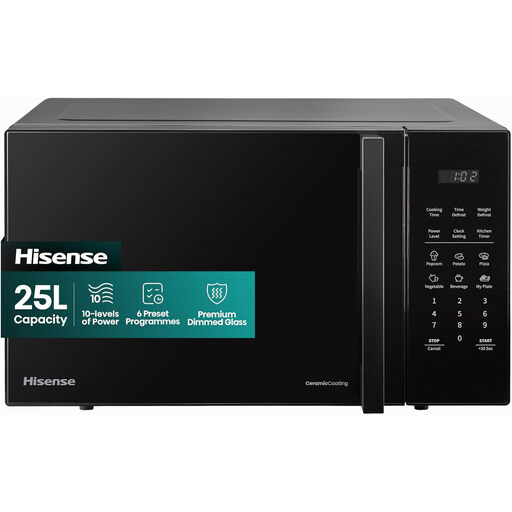 No image available
Consider this solo model if you want a microwave chiefly for reheating and need to assess a larger casserole dish. Its title states 25 litres, 900 W and auto defrost; check the dish against the exact model’s turntable and cavity clearance.
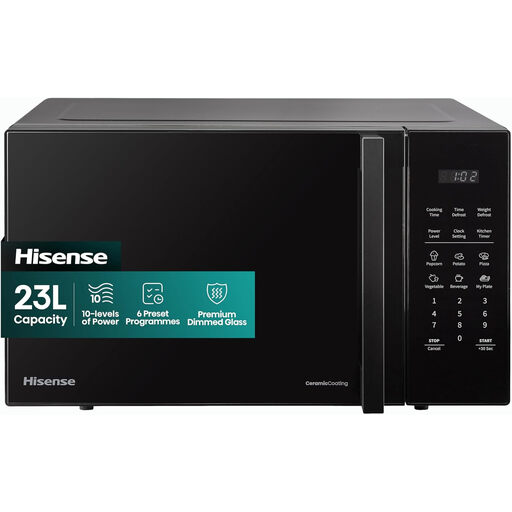 No image available
This solo model is worth comparing with your dish for routine casserole reheating. Joybuy lists 23 litres, 800 W and a 27 cm turntable; also check the internal clearance and whether your dish can rotate.
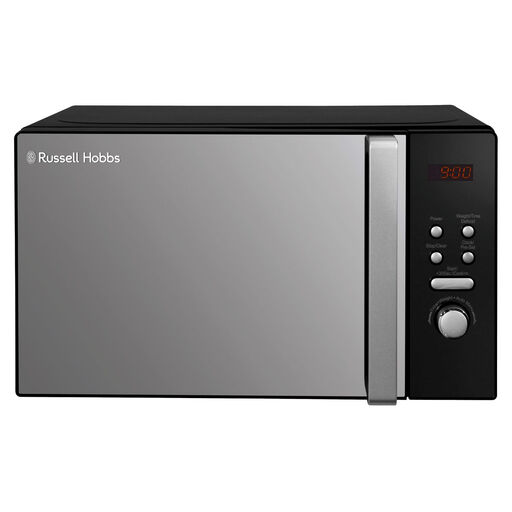 No image available
Consider this model if your casserole dish fits a smaller-capacity microwave and you want selectable settings. Its title states 800 W and five power levels; check the dish against the exact model’s turntable and cavity.
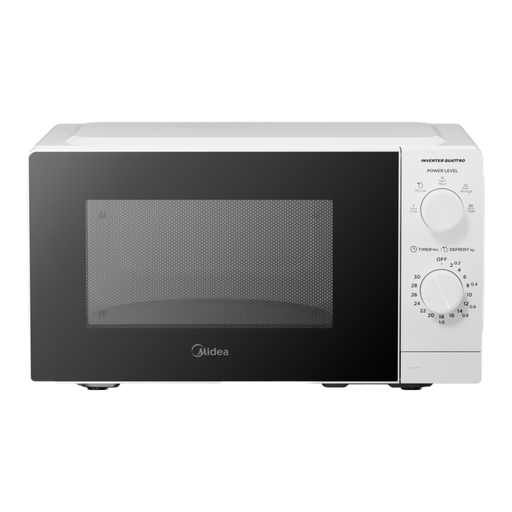 No image available
Consider this solo model if manual controls suit your reheating routine. Its title states 700 W and MET Inverter Technology; check the turntable diameter and internal clearance against your casserole dish.
 No image available
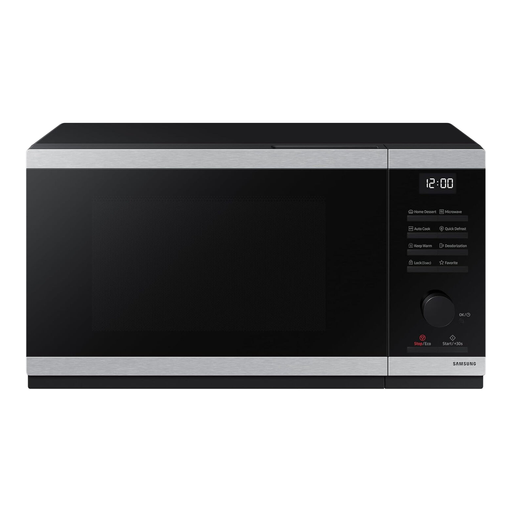
This is another solo option for everyday reheating. Its title states 800 W and names a Triple Distribution System, but the name alone does not establish how evenly it will heat your casserole; check dish clearance and the available power settings.
Use a microwave-safe dish, stir the casserole and make sure it is steaming hot throughout, including at the centre, before serving. The NHS emphasises thorough heating and stirring when reheating food for babies and young children.
Yes, if the main task is reheating and your dish fits the appliance. The product information describes solo microwaves as suitable for reheating; consider grill or combination functions if you also plan to use those other cooking methods.
Start with your dish’s physical dimensions, then check the microwave’s turntable and internal clearance as well as its capacity. On a turntable model, follow the appliance instructions for fitting and rotating the dish.
Only if its installation requirements suit your kitchen. For example, the product information describes the Bosch BFL523MB0B as made for a 38 cm niche; check the full manufacturer installation instructions and your cabinet measurements before choosing it.
Check your local authority’s electrical recycling options or ask a retailer about collection or take-back. GOV.UK identifies the Waste Electrical and Electronic Equipment Regulations 2013, as amended, as the UK framework for electrical and electronic equipment waste.