For reheating tomato sauce alone, start with a solo microwave whose cavity fits your usual bowl and whose controls make it easy to pause and stir. A compact 20L model may suit individual portions; consider a larger or inverter solo model for bigger bowls or frequent reheating, and a combination model only if you will use its grill or oven functions. Whatever you choose, stir the sauce and check that it is steaming hot throughout, as the NHS advises in its food-reheating guidance for baby food.
Who needs which microwave?
Single-portion reheaters
If you usually warm one bowl of tomato sauce, straightforward controls and space for that bowl matter more than extra cooking modes. Check the bowl and any cover against the cavity and turntable dimensions, not capacity in litres alone.
Frequent batch reheaters
If you regularly warm several portions or use larger containers, compare bowl clearance and selectable power levels. Reheat programmes or inverter features do not replace stirring and checking that the sauce is hot throughout.
Multi-function kitchen users
If you also plan to grill, bake or roast with the appliance, a combination microwave may be relevant. Its additional modes are a reason to choose it only if you expect to use them beyond sauce reheating.
What matters when buying?
For tomato sauce, check how you will heat and stir it, whether your usual bowl fits, and how much space the appliance needs before deciding whether additional cooking modes are useful.
| Concern |
What to check |
Who this matters to |
| Hot-through reheating |
Look for usable power settings and controls that let you pause to stir. Follow the NHS advice to check reheated food is steaming hot throughout. |
If I reheat thick sauce, I need to stir it and check it all the way through rather than trust one uninterrupted cycle. Roughly 36% of consumers put hot-through reheating first. |
| Bowl fit and clean-up |
Compare your bowl and cover with the cavity and turntable dimensions; consider how you will clean splashes. |
My usual covered bowl needs to fit without catching as it turns, and I want to deal with splashes after reheating. Around 29% of consumers make everyday fit and clean-up their main concern. |
| Counter space and simplicity |
Check external dimensions and installation type alongside cavity capacity; choose controls you find straightforward. |
If I mainly warm a small serving, I want an appliance that fits my counter without adding cooking modes I will not use. For approximately 21% of consumers, compact, simple reheating comes first. |
| Broader cooking |
Check for actual grill or convection functions, and follow the cookware instructions for each mode. |
I also want to grill or bake, so a solo microwave would not cover all the tasks I have in mind. Roughly 14% of consumers prioritise those additional cooking functions. |
What should you avoid?
-
Choosing by wattage alone
Output power does not tell you whether your sauce bowl and cover will fit or whether a turntable can rotate freely.
Measure the cookware you normally use and compare it with the model’s cavity and turntable dimensions.
-
Relying on an even-heating feature instead of stirring
An inverter or microwave-distribution feature does not establish that a thick sauce is hot throughout. Claims about more even heating are the manufacturer’s own claims.
Pause to stir, then check the sauce throughout before serving. The NHS includes stirring and a steaming-hot check in its guidance on reheating baby food.
-
Using unsuitable containers
Electrical Safety First warns that metal can spark in a microwave and that unsuitable containers can melt or present a fire risk.
Use cookware labelled microwave-safe and check the container’s instructions before reheating.
-
Choosing a combination model for reheating alone
Grill and convection modes add cooking options but do not remove the need to stir and check tomato sauce. They may also require more space and different cookware by mode.
Choose a combination microwave if you will use its other functions regularly; otherwise, compare solo models for the bowl size and controls you need.
Brands to consider
Panasonic
Panasonic has inverter solo models for buyers considering frequent reheating, as well as combination models for broader cooking.
- Panasonic’s UK pages describe 23L and 32L inverter solo models with 1000W microwave power.
- Panasonic’s more-even-heating statements are brand claims, not a substitute for stirring or checking the sauce throughout.
Russell Hobbs
A reference point for buyers who prefer a conventional compact solo microwave with manual controls.
- The Russell Hobbs RHM2027B product page specifies a 20L cavity, 800W output, five power levels and a 25.5cm turntable.
- Check your bowl against the turntable and cavity; this solo model does not provide grill or convection cooking.
Samsung
Relevant if you are comparing solo microwaves and interior finishes for routine sauce reheating.
- Compare the capacity, power settings and interior specified for the exact Samsung model you are considering.
- Samsung’s Triple Distribution System is a brand feature name, not a guarantee that sauce will be evenly hot without stirring.
Bosch
Relevant when the microwave is part of a planned built-in kitchen installation rather than a countertop purchase.
- Bosch lists the built-in BFL523MB0B with a 20L cavity, 800W microwave output and appliance dimensions of 382 × 594 × 317mm.
- Confirm the model’s installation and ventilation requirements against the intended cabinet before ordering.
Joybuy solo microwaves
These solo microwaves are choices for reheating tomato sauce, with stated capacities of 20L or 23L. Compare your bowl with the usable cooking space and choose controls that suit how you pause and stir.
 No image available
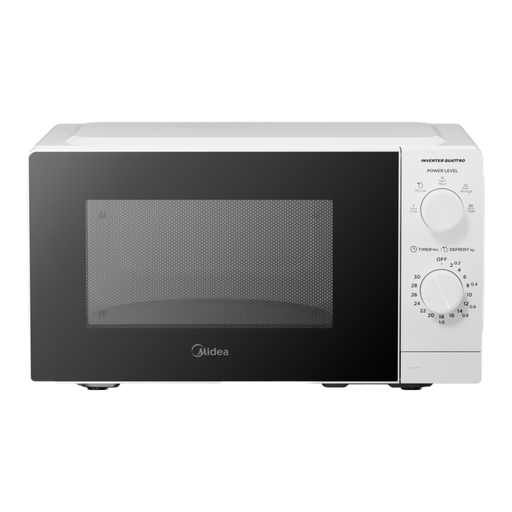
Midea MMOP01MZ-WH 20L Solo Microwave, White
Consider this manual solo model for individual sauce portions if your usual bowl fits.
The product title states 700W output, MET Inverter Technology and an energy-saving mode. Check bowl and cover clearance before choosing it; the inverter feature does not replace stirring.
Joybuy
 No image available
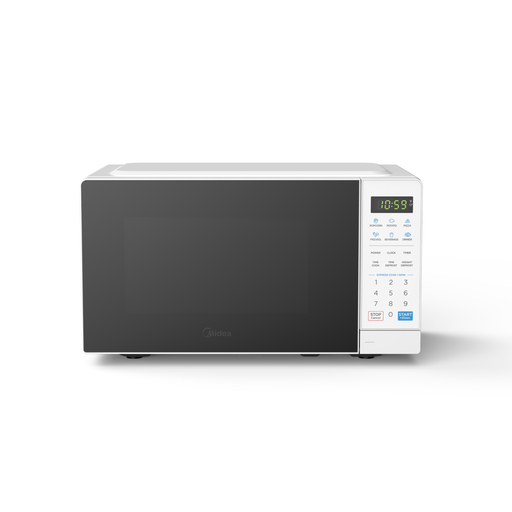
Midea SDA 20L Solo Inverter Microwave, White
Consider this model if you want a stated turntable measurement to compare with your sauce bowl.
The product title specifies 700W output, digital control and a 245mm turntable. Check that your bowl and cover also have enough clearance to rotate.
Joybuy
 No image available
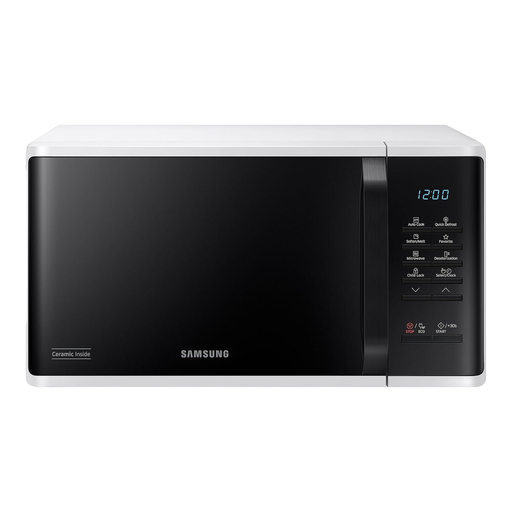
Samsung MS23K3513AW/EU 23L Solo Microwave
Consider this 23L solo model if you use a larger sauce bowl, subject to checking its actual fit.
The product title states 800W output and names Samsung’s Triple Distribution System. That feature is not a reason to skip stirring or the final hot-through check.
Joybuy
 No image available
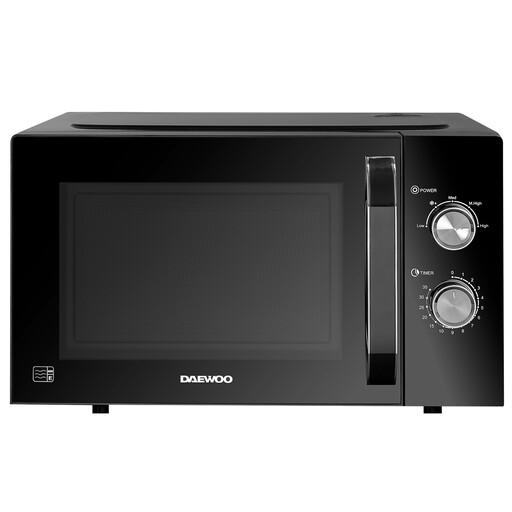
DAEWOO SDA2085GE 23L Solo Microwave, Black
Consider this model if you prefer manual controls when reheating sauce in short stages.
The product title specifies 800W output, five power settings and a glass turntable. Check the turntable and cavity dimensions against your bowl and cover.
Joybuy
 No image available
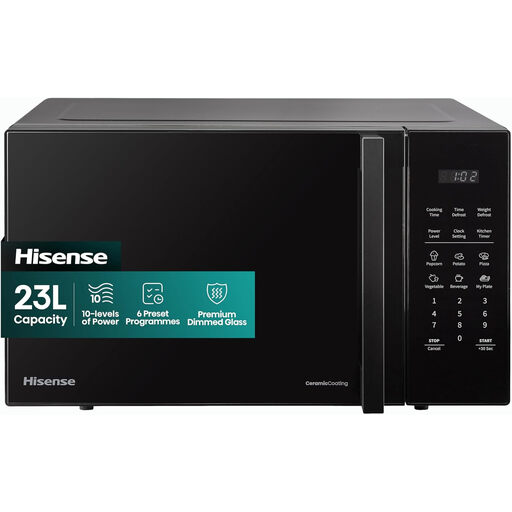
Hisense H23MOBS5HUK 23L Solo Microwave, Black
Consider this solo model for sauce reheating if its cooking space suits your usual container.
The product title specifies 800W output. Check the controls on the exact H23MOBS5HUK model before ordering, as well as clearance for your bowl and cover.
Joybuy
Frequently asked questions
How should I reheat tomato sauce in a microwave?
Use a microwave-safe bowl, pause to stir the sauce thoroughly, and check that it is steaming hot throughout before serving. The NHS recommends stirring and checking for steaming-hot food in its guidance on reheating baby food; cool food appropriately before serving it to a child.
Can I use foil, a metal bowl or any plastic tub?
Do not assume those containers are suitable for microwave reheating. Electrical Safety First warns against metal in microwaves and unsuitable containers that can melt or create a fire risk; choose cookware clearly labelled microwave-safe and follow its instructions.
Does an inverter microwave mean I can skip stirring?
No. Panasonic describes more even heating as a feature of its inverter models, but that brand claim does not establish that every part of a bowl of sauce is hot. Stir during reheating and check the finished sauce throughout.
What should I check before using a countertop microwave?
Check that the appliance fits its intended location and follow its instructions for placement and ventilation. Electrical Safety First also advises checking for a standard UK three-pin plug and fuse, avoiding extension leads and watching for scorch marks around the plug or socket.


