Occasional single-portion reheaters
If you usually warm one serving, a compact solo microwave offers a simpler set of cooking modes. Check that your bowl or plate fits, and look for power and timing controls you are comfortable adjusting.


For an occasional portion of bread pudding, a compact solo microwave with adjustable power is a straightforward choice, provided your usual dish fits and can rotate freely. Consider a larger solo model for wider dishes, or a combination microwave if you also want to brown the top; neither extra features nor wattage replace checking that the pudding is steaming hot through the centre.
If you usually warm one serving, a compact solo microwave offers a simpler set of cooking modes. Check that your bowl or plate fits, and look for power and timing controls you are comfortable adjusting.
If you reheat bread pudding in a wider baking dish, compare the dish with the turntable, cavity and door opening. A larger model may offer more room, but its stated capacity alone does not establish whether your dish will fit.
If a browned topping matters as well as reheating, consider a combination microwave with an appropriate grill or convection mode. Check that the dish and any accessories are suitable for the mode you intend to use.
Choose the cooking modes you will use, then check the space your dish needs and how you will control reheating. A feature list cannot tell you whether a particular pudding is hot through the centre.
Choose it when: You mainly warm one or two portions and want straightforward microwave controls.
Trade-off: The dish still needs to fit and rotate; microwave-only cooking will not brown its top.
Choose it when: Wider cookware matters, or you want features such as sensor reheat. Panasonic lists these features on its 32L ST65.
Trade-off: A larger appliance needs more worktop space, and automatic reheating does not confirm that the centre is hot.
Choose it when: You regularly want to brown or crisp the topping, or use grill and convection modes for other cooking.
Trade-off: There are more modes and cookware requirements to manage if your usual task is simply reheating.
| Concern | What to check | Who this matters to |
|---|---|---|
| Dish fit and worktop space | Measure your widest and tallest microwave-safe dish. Compare it with the turntable, cavity, door clearance and external depth, rather than relying on litres alone. | If my usual baking dish cannot turn freely, the microwave will not suit the way I serve bread pudding; around 36% of consumers put dish fit and available space first. |
| Controlled reheating | Look for power levels and timing controls you can adjust. If comparing specific models, consult model-specific heating tests where available; Which? tests microwave heating and ease of use. | When I reheat a portion, I want to adjust the time and check the middle before serving. Controlled, thorough heating is the primary concern for around 36% of consumers. |
| Browning the top | Confirm the grill, convection or combination mode you intend to use, along with its cookware and accessory requirements. | If I want a crisp topping rather than just a warm dessert, microwave-only cooking does not meet that need; around 28% of consumers prioritise browning versatility. |
Microwaves with the same stated capacity can differ in usable turntable and cavity space. A wide dish may fail to fit or rotate freely.
Measure the dish you actually use, then compare its width and height with the turntable, cavity and door opening.
Neither a higher power rating nor an automatic setting establishes the temperature throughout a particular serving. GOV.UK advises reheating food until it is steaming hot all the way through.
Allow for the portion size and its starting temperature, adjust the heating time as needed, and check the middle before serving.
Grill and convection modes address browning and broader cooking tasks, not a need inherent in simply warming bread pudding.
Choose a combination model when crisping, browning or oven-style cooking will be a regular part of how you use it.
These model lines illustrate different microwave configurations; compare the dimensions and controls of the exact model you intend to buy.
Panasonic lists compact solo models alongside the larger ST65 inverter solo model. Its NN-ST22QBBPQ specification gives 800W output, five power levels and a 255mm turntable; the ST65 lists a 32L capacity, sensor reheat and a 34cm turntable.
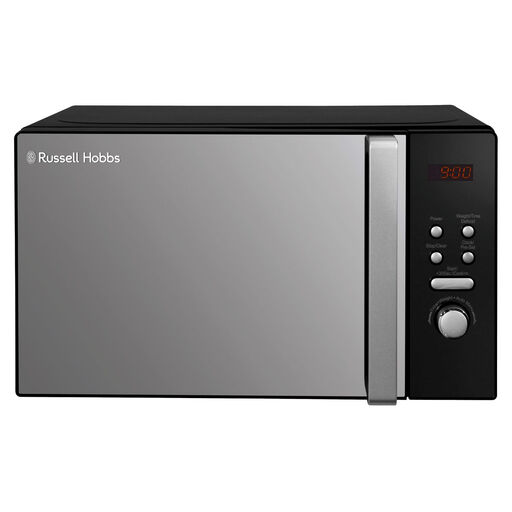
The Russell Hobbs RHMT2004B is a 20L solo model listed with 800W output, 10 power levels and a 24.5cm glass turntable.
Beko lists the MOC20240 as a 20L, 800W digital solo microwave with six power levels and defrost and preset functions.
Toshiba’s 20L MM2-EM20PF solo model lists 10 power levels. Its 26L MW3-AC26SF combination model lists microwave, grill, air-fry and convection functions.
These solo microwaves are options for warming bread pudding without a separate browning mode. Compare their stated capacity and controls with your portion size, and check your usual dish against the dimensions of the exact model.
 No image available
Consider this solo model for reheating individual portions when adjustable power is useful.
The product name specifies 800W output and five power levels. Check your dish against the turntable and cavity clearance before buying; the capacity rating alone does not confirm fit.
 No image available
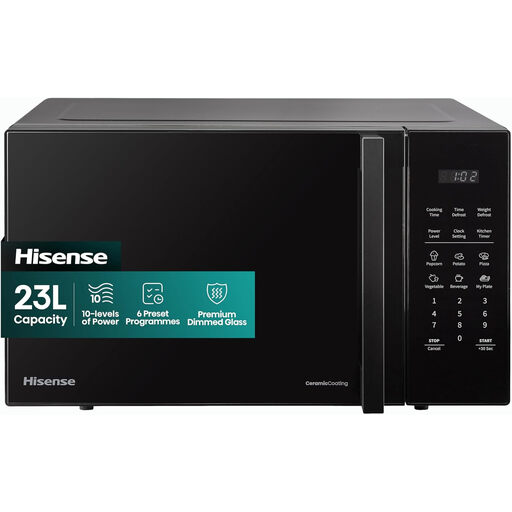
Consider this solo model if you want to compare a 23L appliance with smaller-capacity options for reheating.
The product name specifies 800W output and an auto-defrost function. Confirm how this SKU is controlled before buying, as its title and description differ on that point, and check that your dish clears the cavity and door.
 No image available
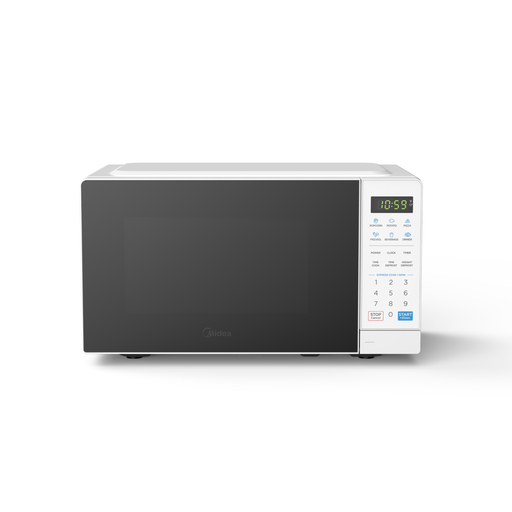
Consider this solo model for portions served in a dish you can compare with its stated turntable size.
The product name specifies 700W output, digital controls and a 245mm turntable. Measure the dish and check cavity and door clearance as well; the turntable figure alone does not confirm that it can rotate freely.
 No image available
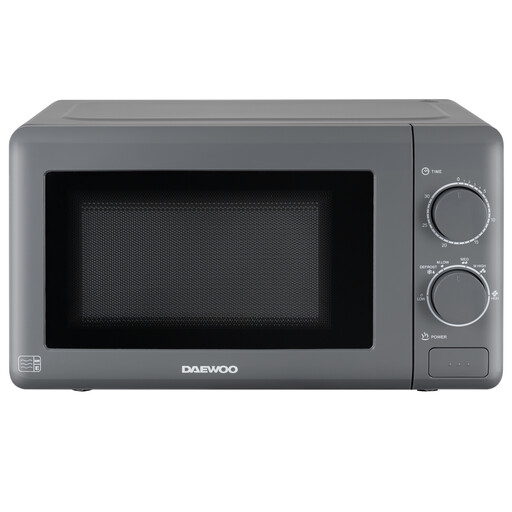
Consider this model if you prefer manual operation for straightforward reheating.
The product name specifies 800W output and a defrost function. Confirm the number of power settings for this SKU, as its listing gives conflicting counts, and check that your usual dish fits and rotates.
 No image available
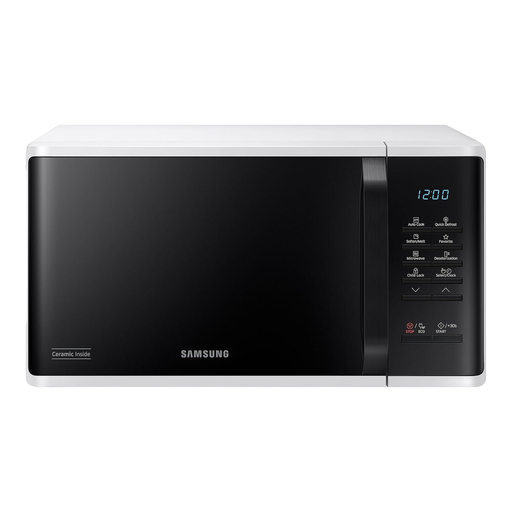
Consider this solo model for microwave-only reheating if its controls and dimensions suit your usual dish.
The product name specifies 800W output and names Samsung’s Triple Distribution System. That feature name does not establish how evenly this particular model heats bread pudding; check dish fit and the available power controls before buying.
An 800W solo microwave can reheat a portion, but its rating does not tell you how long your serving will take or whether it will heat evenly. Adjust the time to the portion and starting temperature, and follow GOV.UK guidance to check that reheated food is steaming hot all the way through.
No: bread pudding can be reheated using manual power and timing controls. A sensor-reheat programme, such as the one Panasonic lists on its ST65, may suit frequent use, but you still need to check that the centre is steaming hot.
Choose a combination microwave if browning or crisping the top is a recurring goal; a solo microwave is for warming without those additional modes. Which? describes combination microwaves as offering functions that can crisp and brown, but check the modes and cookware requirements of the specific model.
Check your local council’s electrical-recycling or collection arrangements for the old microwave. GOV.UK describes the UK waste electrical and electronic equipment framework, while Coventry City Council advises against putting electrical appliances in household bins; collection options depend on your area.