For a usual plate or bowl of cooked broccoli, start with a solo microwave that fits your dish and lets you adjust the power; a grill is unnecessary for reheating alone. Consider sensor reheat if you frequently warm leftovers and want less timing guesswork, or a larger cavity if you regularly use wide family dishes. Whatever the controls, stir or turn the broccoli during reheating and check that it is steaming hot throughout.
Who is each type for?
The size of your usual dish and how often you reheat leftovers are more useful starting points than the number of cooking programmes.
Single-portion reheaters
If you usually warm one plate or bowl of broccoli, a compact solo microwave with direct time and power controls may cover the task. Sharp describes its 20L YC-PS201AU-S as a manual model with six power levels; check that your own dish fits before choosing it.
Frequent leftover reheaters
If you often reheat chilled leftovers, adjustable power and an automatic reheat programme may be worth considering. Panasonic lists sensor reheat on the NN-ST65QB, but the programme does not replace stirring or turning food and checking it before eating.
Family-dish reheaters
If broccoli is usually reheated with a larger meal or in a wide dish, compare the dish with the turntable and internal space. Panasonic lists a 32L cavity and 34cm turntable for the NN-ST65QB; that capacity need not be a priority for a single small portion.
What matters when choosing?
Choose a microwave that accommodates your normal container first, then decide whether straightforward manual controls or a model-specific automatic programme better suits your routine. A grill adds a separate cooking function rather than a requirement for reheating broccoli.
| Concern |
What to check |
Who this matters to |
| Thorough, even reheating |
Check the available power levels and whether the particular model has sensor reheat if you want automatic assistance. Food Standards Agency guidance advises stirring or turning food part-way through heating. |
If I regularly warm chilled broccoli, I want to avoid a cold patch without leaving the rest heating longer than necessary. Roughly 46% of consumers would make even reheating their primary concern. |
| Compact, simple operation |
Compare external dimensions, your plate’s fit and the controls you would use each day. |
When I usually heat one side portion, I would rather have straightforward controls and enough space for my plate than extra cooking modes. About 36% of consumers would put compact simplicity first. |
| Space for larger dishes |
Compare your dish’s diameter and height with the turntable and cavity; capacity in litres alone will not establish whether it rotates freely. |
If broccoli shares a wide dish with the rest of a meal, I need that dish to fit without catching as it turns. Around 18% of consumers would prioritise dish capacity. |
What should you avoid?
-
Buying a grill or convection model just to warm broccoli
These modes are intended for additional tasks such as grilling or baking. They are not needed simply to reheat an already-cooked portion.
Choose a solo microwave if reheating is the main job. Consider other cooking modes only if you expect to use them for other meals.
-
Relying on wattage or an automatic programme alone
Neither a higher stated output nor a sensor-reheat setting removes the need to check the food. The Food Standards Agency advises stirring or turning food during heating to help it heat evenly.
Stir or turn the broccoli part-way through, follow any standing-time instructions for the appliance and make sure it is steaming hot throughout before serving.
-
Choosing by litres without checking your dish
A cavity capacity does not tell you on its own whether your usual plate or lidded container has room to rotate. Turntable size is particularly relevant if you reheat a wide family dish.
Measure the dish you use, including its height, and compare it with the model’s turntable and internal dimensions before buying.
Brands to consider
These examples show how particular microwave models address different reheating needs; the features described apply to the named models, not every appliance from each brand.
Sharp
Sharp describes the YC-PS201AU-S as a 20L, 700W manual solo microwave with six power levels.
- Direct controls and adjustable power suit a routine single-portion reheating task.
- Check your plate against the turntable; this model does not offer the sensor-reheat programme listed for Panasonic’s NN-ST65QB.
Panasonic
Panasonic lists a 32L cavity, 1000W output, seven power levels and sensor reheat for the NN-ST65QB.
- Its listed automatic programme and larger turntable are relevant if you frequently reheat leftovers in sizeable dishes.
- Panasonic’s statements about steam sensing and even inverter heating are manufacturer claims for this model, not a reason to skip checking the food.
Samsung
Samsung lists the ME733K/XEU as a 20L solo microwave with dial-and-button controls.
- The stated capacity makes it a compact-model reference when comparing space for a usual plate.
- Samsung’s Triple Distribution System and its heating claims are brand statements; check dish fit and the controls rather than assuming a particular reheating result.
LG
LG describes the MH6336GIB as a 23L, 1000W microwave with a grill.
- The grill is relevant if you also intend to use that cooking mode for other food.
- The extra mode is unnecessary for reheating cooked broccoli alone; LG’s even-heating and power-control descriptions are claims for this model.
Solo microwaves on Joybuy
These solo microwaves offer different capacities and controls for reheating broccoli. Compare each one with your usual dish; the Midea title also lists an inverter feature, but that wording alone does not establish how evenly it heats food.
 No image available
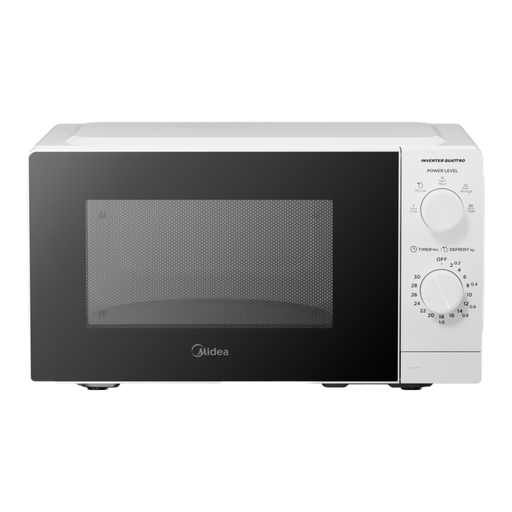
Midea MMOP01MZ-WH 20L manual solo microwave
Consider this for single-portion reheating if you prefer manual controls. The title lists 700W output and MET Inverter Technology; check that your usual dish fits, and do not treat the inverter name as proof of even heating.
View on Joybuy
 No image available
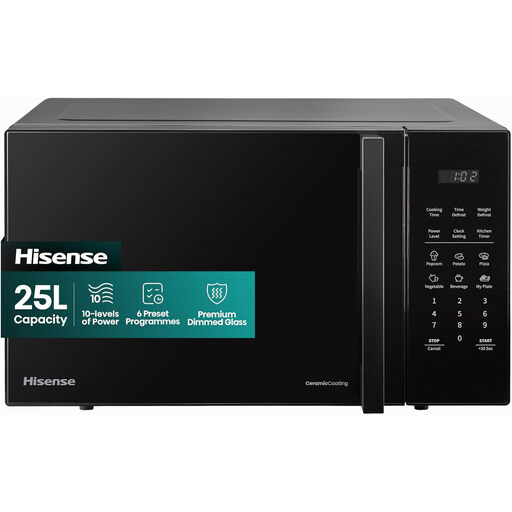
Hisense H25MOBS7HUK 25L digital solo microwave
Consider the larger 25L capacity if you often reheat broccoli alongside other leftovers. The title lists 900W output; compare your dish and available worktop space with the appliance dimensions before choosing it.
View on Joybuy
 No image available
Sharp YC-PS201AU-S 20L manual solo microwave
Its manual controls suit straightforward reheating of one plate or bowl. The model is listed at 700W with six power levels; confirm the turntable diameter against your dish before buying.
View on Joybuy
 No image available
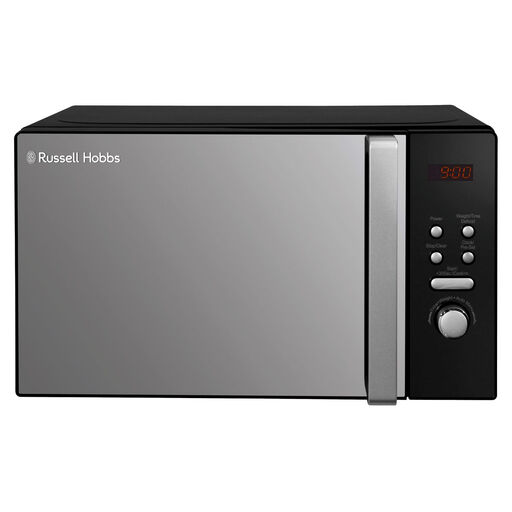
Russell Hobbs RHM2063-AH 20L digital microwave
Consider this 20L model for routine single-plate reheating if digital controls appeal to you. Its title lists 800W output and five power levels; check that your plate fits before settling on a compact model.
View on Joybuy
 No image available
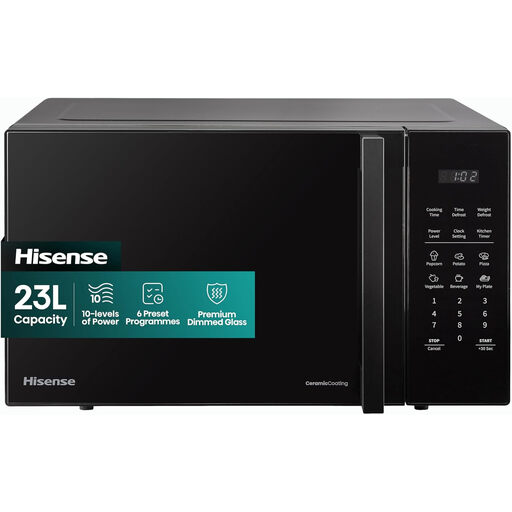
Hisense H23MOBS5HUK 23L solo microwave
The 23L capacity may be worth considering if your usual reheating dish needs more room than a compact option offers. The title lists 800W output; confirm whether this model has touch or rotary controls if their operation matters to you.
View on Joybuy
Questions about reheating broccoli
How should I reheat cooked broccoli in a microwave?
Reheat the portion you plan to eat, stir or turn it part-way through and check that it is steaming hot throughout before serving. The Food Standards Agency advises stirring or turning food during microwave heating so it heats more evenly.
Do I need a grill or convection microwave?
No: a solo microwave can reheat cooked broccoli. Consider a grill or convection model if you also want its additional cooking functions for other meals, rather than for the broccoli-reheating task alone.
Should I choose a 700W or 1000W model?
Either output can suit this task if the microwave fits your dish and gives you usable power controls. Follow the chosen appliance’s instructions rather than copying a heating time from a different wattage, and check the broccoli before eating.
What container should I use?
Use a container marked as suitable for microwave use. West Lothian Council’s microwave-use guidance advises checking for wording such as “microwaveable” or “microwave proof”, or for a microwave symbol on the container.


