Single-portion reheaters
If you usually heat one cooked sweet potato or plated lunch, a solo microwave with room for your usual dish may be enough. Compare its external dimensions with the worktop space available in your shared kitchen.


For reheating a cooked sweet potato or one plated meal, start with a solo microwave rather than paying for grill or convection functions you will not use. Check that your usual microwave-safe dish fits the turntable and that the appliance fits the shared worktop; a larger model is worth considering when people regularly heat bigger dishes or several portions.
If you usually heat one cooked sweet potato or plated lunch, a solo microwave with room for your usual dish may be enough. Compare its external dimensions with the worktop space available in your shared kitchen.
When several people use the appliance, straightforward controls and a turntable that can be removed for cleaning can make day-to-day use simpler. Food still needs to be piping hot throughout before eating, as Guy's and St Thomas' NHS Foundation Trust advises.
If larger dishes or several portions are a regular part of the routine, compare turntable diameters and worktop dimensions as well as capacity. Panasonic's 32L NN-ST65QBBPQ illustrates a larger solo option with sensor reheat.
Start with thorough reheating, then check the fit of both your usual dish and the appliance itself. In a shared kitchen, cleaning and access to a suitable wall socket also affect the choice.
| Concern | What to check | Who this matters to |
|---|---|---|
| Thorough reheating | Look for adjustable power and a turntable. Turn or stir the food where practical, then check that it is piping hot throughout. | If I reheat a whole or halved sweet potato, I want to know its centre is hot before I eat it. Around 42% of consumers put thorough reheating first. |
| Worktop and dish fit | Compare the microwave's external dimensions with its allocated space, and its turntable diameter with your usual dish. | With little shared worktop space, I need my plate to fit without choosing an appliance that takes over the counter. For around 33% of consumers, fit is the primary concern. |
| Shared upkeep and use | Check whether the turntable can be removed for cleaning, whether the controls are clear and whether a suitable wall socket is within reach. | When other people use the microwave, I want to clean up splatters and understand its settings without fuss. That shared-use need comes first for around 25% of consumers. |
Electrical Safety First describes solo microwaves as suitable for simple heating and reheating. Grill and convection functions serve different cooking tasks, such as browning or baking.
Choose a solo model for a reheating-only routine; consider the additional functions if you also intend to use them.
A capacity stated in litres does not tell you whether your usual plate fits the turntable or whether the appliance fits its place on the shared worktop.
Measure the dish and allocated space, then compare turntable diameter and external width, depth and height.
An automated setting does not replace checking the food itself. Guy's and St Thomas' NHS Foundation Trust advises that food should be piping hot throughout and turned or stirred partway through microwave heating.
Turn or stir where practical and check the centre before eating; follow any standing-time instructions for the appliance.
Electrical Safety First advises against powering a microwave through an extension lead and recommends using microwave-safe containers.
Plan a position near a suitable wall socket and check that the dish or cover is marked as microwave safe.
Panasonic's solo range includes compact and larger models relevant to different shared-kitchen routines.
The RHM2076S is a 20L digital solo model for straightforward reheating and shared use.
LG's MS2032GAS is a compact 20L solo model with touch controls.
These solo microwaves include 20L options for single portions and larger cavities to consider if shared users regularly heat bigger dishes. Measure your usual dish and the available worktop space before choosing.
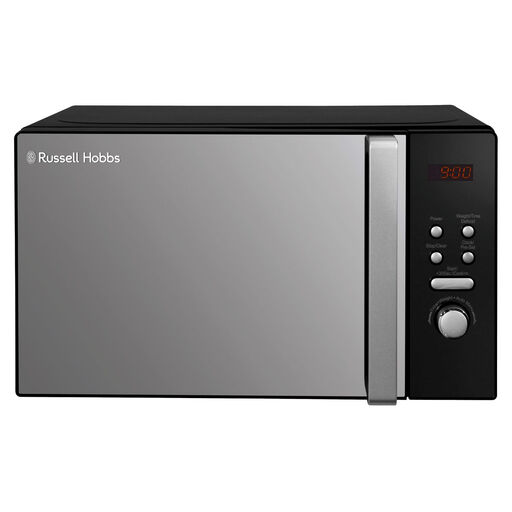 No image available
A 20L solo option to consider for a single plated portion and shared-kitchen cleaning.
The product name specifies 800W output and five power levels. Check that its depth and your usual dish suit the space before buying.
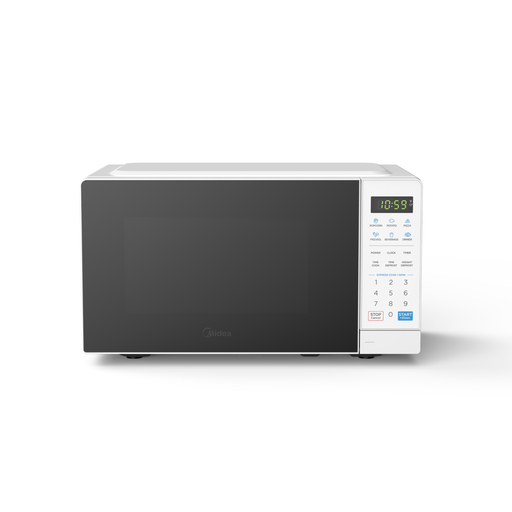 No image available
Consider this 20L model if you want a solo microwave for one portion with digital controls.
The product name specifies 700W output and a 245mm turntable. Measure your usual dish against the turntable and check the plug and wall-socket arrangement.
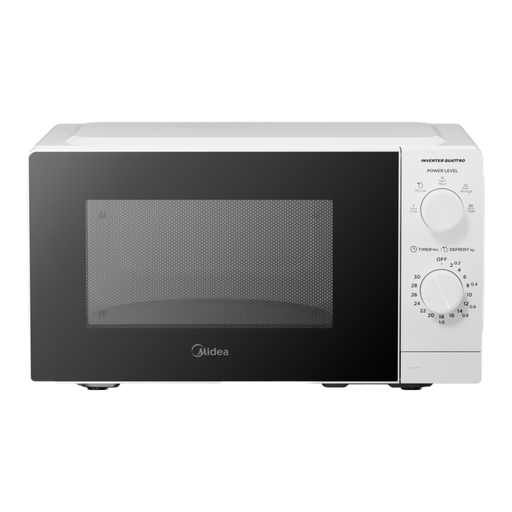 No image available
This 20L solo model is another option for a compact reheating routine.
The product name specifies 700W output, MET inverter technology and an energy-saving mode. Confirm the control type, turntable fit and plug arrangement before choosing it.
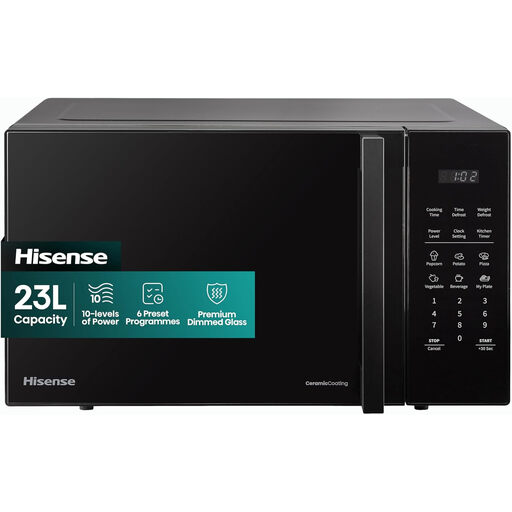 No image available
The 23L capacity is worth comparing if your usual dish needs more room than a compact model offers.
The product name specifies 800W output. Check the controls before buying, as the product information gives conflicting descriptions; also confirm dish fit, worktop space and the plug arrangement.
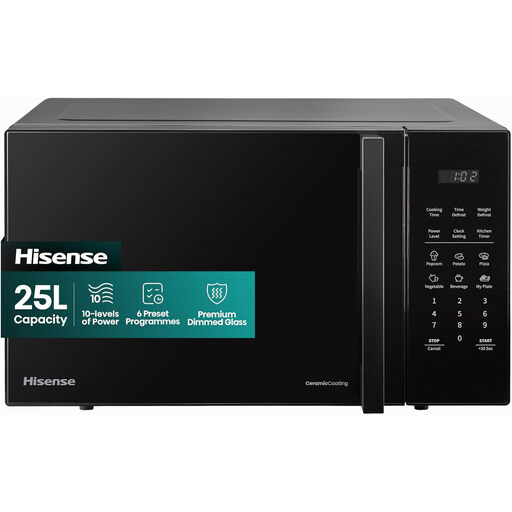 No image available
Consider the 25L cavity if larger plates are a regular part of the shared-kitchen routine.
The product name specifies 900W output. Allow for the appliance's worktop dimensions, and check dish fit and access to a suitable wall socket.
No, not for reheating alone: Electrical Safety First describes solo microwaves as suitable for simple heating and reheating. Consider grill or convection functions if you also plan to brown food or use oven-style cooking.
Check the centre as well as the outside before eating. Guy's and St Thomas' NHS Foundation Trust advises heating food until it is piping hot throughout and turning or stirring it partway through microwave heating where practical; splitting a whole sweet potato can make its centre easier to check.
Electrical Safety First advises against powering a microwave through an extension lead. Choose a position where its plug can reach a suitable wall socket directly.
Use a dish or container clearly marked as microwave safe. Electrical Safety First advises against metal and unsuitable packaging; before buying the microwave, also check that your usual dish fits its turntable.