Space-first shoppers
If the worktop is tightly limited and you usually reheat one portion, check the microwave’s external width, depth and placement requirements before comparing extra functions.


Choose a solo microwave that fits your worktop once its required clearances are allowed for, then check that your usual microwave-safe dish can rotate inside it. A 17L model may suit a single portion, while a 20L model may offer a larger turntable or more controls; capacity and wattage alone cannot settle either dish fit or even reheating.
If the worktop is tightly limited and you usually reheat one portion, check the microwave’s external width, depth and placement requirements before comparing extra functions.
Your usual microwave-safe dish needs room to sit and rotate. Turntable diameter and usable cavity dimensions tell you more about that fit than a 17L or 20L label alone.
If you regularly reheat food, compare the timer, power settings and programmes you would use. Check those controls alongside the appliance’s size rather than assuming more functions will suit a small worktop.
Check the space available for the appliance and its required clearances before measuring your dish; then decide whether manual controls meet your reheating needs.
| Concern | What to check | Who this matters to |
|---|---|---|
| Worktop fit | Compare external width, depth and height with the intended location, then allow for the exact model’s placement instructions. | If worktop room is tight, I need to know the microwave can be positioned properly before considering its functions. Around 38% of consumers put worktop fit first. |
| Dish fit | Measure your microwave-safe plate or covered bowl against the turntable and usable cavity, including room for a lid or handles. | When reheating a sweet potato in my usual dish, I do not want its edges or cover to obstruct rotation. Dish fit is the main concern for roughly 31% of consumers. |
| Reheating controls | Compare timer operation, power settings and any reheat programme; check the food rather than relying on a programme alone. | For frequent reheating, I want controls I can use consistently while still checking that the food is hot throughout. About 31% of consumers prioritise those controls. |
A capacity label does not show whether your plate, bowl or lid can rotate freely. The Cookworks 17L example in the product information has a 24.5cm turntable, while Panasonic lists a 25.5cm turntable for its NN-ST22QBBPQ 20L model.
Measure the dish you use and compare it with the turntable diameter and usable cavity dimensions.
Width, depth and height vary between compact models, and an appliance’s external measurements do not include every placement requirement.
Measure the intended location in all three directions and read the shortlisted model’s instructions for clearances.
Microwave heating can be uneven. Guy’s and St Thomas’ NHS Foundation Trust advises turning or stirring food where practical and making sure reheated food is piping hot throughout.
Use the timer or programme as a starting point, turn the food where practical and check the centre before eating.
The 17L solo microwave in the product information illustrates a straightforward manual-control option for a small worktop.
The NN-ST22QBBPQ is a compact 20L solo model to compare if dish room and worktop fit both matter.
The R270SLM provides a 20L example for comparing additional power settings with available worktop space.
Its cited RHM1725 and Distinctions RHMD832T models illustrate different combinations of capacity and controls; compare the exact model rather than the brand name alone.
These 20L and 23L solo microwaves are options to assess for reheating cooked sweet potato. For a tightly limited worktop, check each model’s placement requirements and whether your usual dish fits before choosing.
 No image available
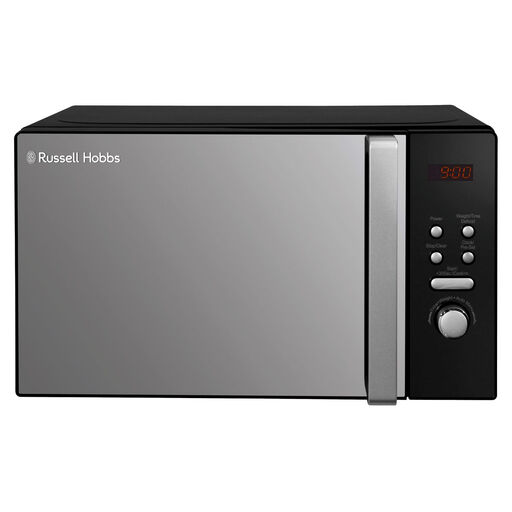
Consider its digital controls if you regularly reheat food, but check the worktop depth and your dish before deciding.
The product name specifies 800W output and five power levels. Follow the exact model’s placement instructions and check that your dish can rotate freely.
 No image available
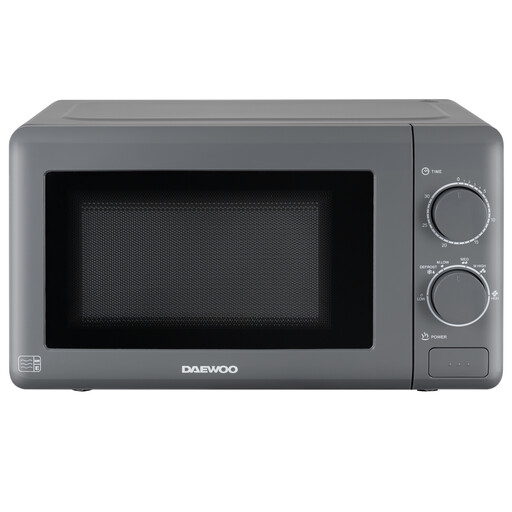
Its manual controls suit shoppers who prefer a straightforward approach to reheating, provided the appliance and usual dish fit their space.
The product name specifies 800W output and a defrost function. Confirm the turntable size and placement clearances for the exact model.
 No image available
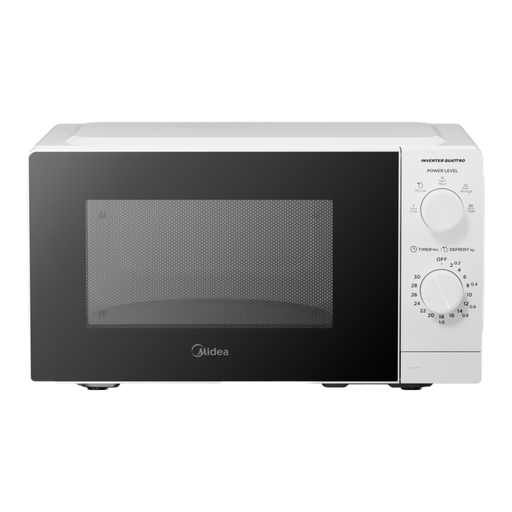
Consider this manual-control model if you want to adjust reheating settings yourself and can accommodate its placement requirements.
The product name specifies 700W output and identifies MET Inverter Technology. Check the exact dimensions, turntable size and usable cavity against your worktop and dish.
 No image available
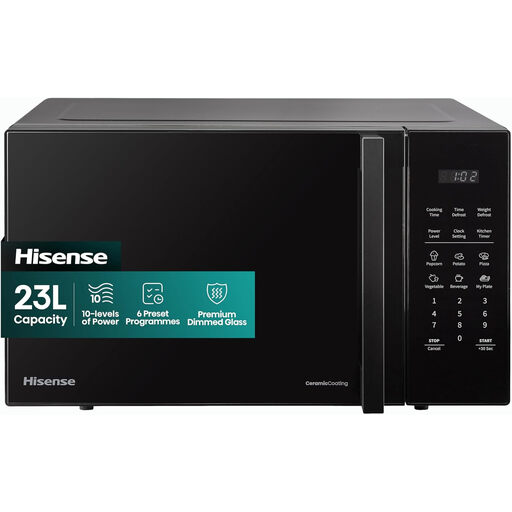
Consider this 23L model only if its larger appliance size fits the worktop location and its cavity accommodates your usual dish.
The product name specifies 800W output and auto defrost. Confirm its controls before buying, as the product information describes them inconsistently.
Measure the clear width, depth and height of the intended location, then compare them with the exact microwave’s external dimensions and placement instructions. Measure your plate, bowl or lid too: capacity alone does not establish that it will rotate freely.
A 17L microwave can suit a single portion if your microwave-safe dish fits and rotates inside it. The Cookworks model in the product information has a 24.5cm turntable, so compare that measurement and the usable cavity with the dish you actually use.
No: wattage alone does not establish how evenly a particular sweet potato portion will heat. Follow the food or appliance instructions, turn or stir where practical, and check that the food is piping hot throughout.
Reheat it until piping hot throughout, turning it part-way through where practical and checking the centre before eating. Guy’s and St Thomas’ NHS Foundation Trust advises turning or stirring microwave-heated food to help it heat evenly and not reheating cooked food more than once.