For softening butter and everyday shared use, a solo microwave with selectable power levels can be sufficient; check that its controls, cleaning arrangements and exterior dimensions suit the kitchen. An inverter model may be worth considering if gentle heating and defrosting matter across frequent use, but Panasonic’s claim of more even heating is not proof of better results with butter. Choose grill or convection functions only if the household will use those additional cooking modes.
Who this choice affects
Home bakers focused on control
If you want to soften butter without melting it, selectable power settings matter more to your decision than maximum wattage alone. Panasonic describes its inverter heating as more even, but that claim does not establish a butter-specific result.
People sharing an everyday microwave
When several people use the appliance for baking prep, reheating and defrosting, consider whether everyone can operate the controls and clean the turntable after spills. Sharp and Russell Hobbs offer examples of different control arrangements.
Households with limited worktop space
Compare the microwave’s exterior dimensions with the available worktop and the clearance required by its manual. The 20L Sharp and Bosch examples show why cavity capacity alone cannot tell you whether a model will fit.
What to check before buying
Start with the heating controls needed for short baking-prep jobs, then check how the microwave will fit and be used by everyone sharing the kitchen.
| Concern |
What to check |
Who this matters to |
| Gentle ingredient control |
Check selectable power levels and how the timer operates. Consult the exact model’s manual rather than assuming one setting suits every quantity of butter. |
When I am preparing butter for baking, I want enough control to stop it becoming melted. Around 46% of consumers would put that heating control first. |
| Shared use and cleaning |
Try to establish how the controls work and whether the turntable can be removed for cleaning. |
If several of us use the microwave, I need controls we can each operate and a practical way to clean up spills. For around 27% of consumers, shared-use convenience is the primary concern. |
| Worktop fit and other cooking tasks |
Compare exterior dimensions and manual-specified ventilation clearance; decide whether solo heating is enough or additional cooking modes will be used. |
With limited shared counter space, I want the appliance to fit while still covering the household’s cooking tasks. Worktop fit and wider use come first for around 27% of consumers. |
Buying pitfalls
-
Choosing by maximum wattage alone
Maximum output does not describe the available lower-power settings. Sharp and Russell Hobbs each specify five power levels for their cited 20L models; Panasonic specifies seven for its NN-ST64QW.
Compare the controls and timer as well as wattage, then follow the chosen microwave’s manual and your recipe when softening butter.
-
Assuming a 20L model will fit the worktop
Cavity capacity does not establish exterior size or the space needed to open the door and ventilate the appliance.
Measure the intended location and check the exact model’s dimensions and installation clearances before ordering.
A model that cannot be placed with the required clearance may need a different location or replacement.
-
Planning to run it from an extension lead
Electrical Safety First warns that a microwave used with other high-power appliances on an extension lead can overload it and create a fire risk.
Plan for a suitable wall socket, check the countertop model’s UK plug and fuse, and keep its vents unobstructed.
-
Using an unsuitable container or leaving food heating unattended
Electrical Safety First warns against metal and containers not intended for microwave use; unsuitable materials can spark, melt or damage the appliance.
Use a container marked microwave-safe, stay nearby during heating and clean splatters after the microwave has cooled.
Brands to consider
Panasonic
Panasonic’s NN-ST64QW is a 32L inverter solo model for households considering a larger cavity alongside adjustable heating.
- Panasonic UK & Ireland specifies 1000W output and seven power levels, and claims more even reheating and defrosting from its inverter technology.
- Those claims are not independent evidence of better butter-softening results; check the model’s exterior dimensions before choosing it for a shared worktop.
Sharp
Sharp’s YC-MS01U range provides a compact manual-control solo option for everyday heating.
- Sharp Consumer UK specifies a 20L cavity, 800W output and five power levels for its compact manual model.
- If different household members prefer digital controls, compare the control arrangement before deciding.
Bosch
Bosch’s FFL020MS2B is a freestanding 20L microwave with published exterior dimensions that can help with worktop planning.
- Bosch GB specifies 800W maximum microwave power and dimensions of 260 × 442 × 345 mm.
- Check the exact model’s power controls if selecting a lower output is central to your baking prep.
Russell Hobbs
Russell Hobbs offers a 20L digital model with settings relevant to a shared microwave.
- Russell Hobbs specifies 800W output, five power levels, a defrost setting and a child-lock option for the RHM2076B.
- Decide whether those digital functions will be useful to the people sharing the appliance; they are not necessary for softening butter alone.
Joybuy microwaves for shared-kitchen prep
These solo microwaves offer choices for butter-softening prep and everyday shared heating. Compare their stated controls and capacity with your worktop measurements; the product names alone do not establish which model will soften butter most evenly.
 No image available
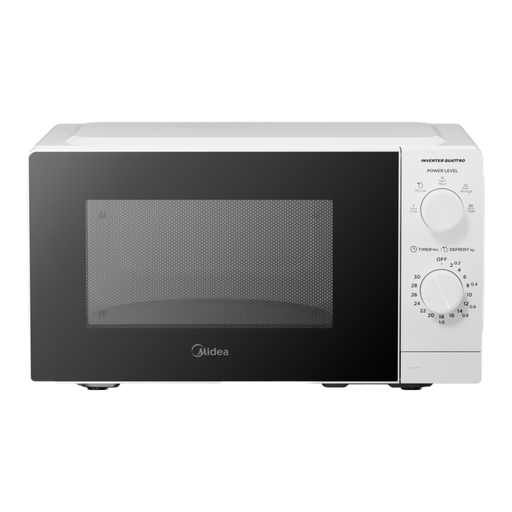
Midea MMOP01MZ-WH 20L solo inverter microwave, white
Consider this model if you want an inverter option for shared baking prep without choosing a larger cavity solely for that feature.
The product name specifies a 20L capacity, 700W output, manual controls and MET inverter technology.
Check the worktop and ventilation space, UK plug and fuse details, and the model manual before use. Inverter technology alone does not establish a butter-softening setting or result.
View on Joybuy
 No image available
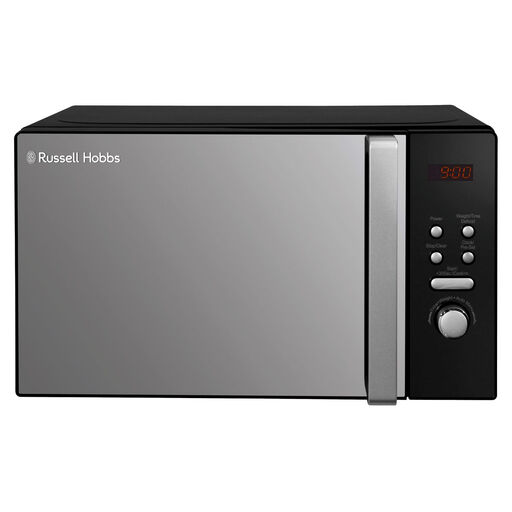
Russell Hobbs RHM2063-AH 20L digital microwave, black
This is an option if shared users want a digital solo microwave with a choice of power settings for short prep jobs.
The product name specifies 800W output and five power levels.
Check the exact model’s timer instructions and UK plug and fuse details before buying; follow its manual and your recipe rather than assuming a fixed butter-softening time.
View on Joybuy
 No image available
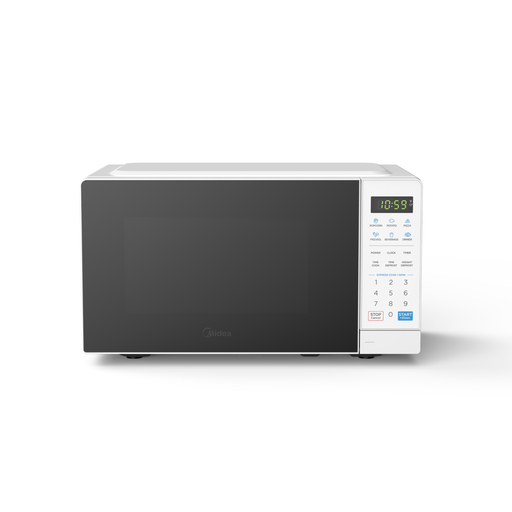
Midea SDA 20L solo inverter microwave, white
Consider this microwave if inverter technology is on your shortlist but you want to assess a 20L cavity for the shared kitchen.
The product name specifies 700W output, digital controls and a 245 mm turntable.
Confirm the exact model identifier, exterior dimensions, required ventilation clearance and UK plug and fuse details. The inverter label does not establish a butter-specific outcome.
View on Joybuy
 No image available
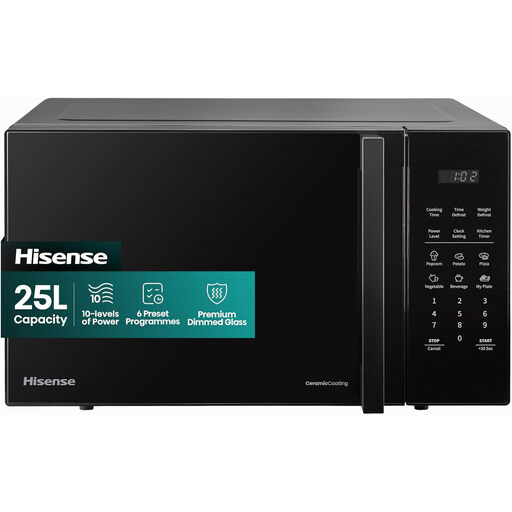
Hisense H25MOBS7HUK 25L digital solo microwave, black
The 25L cavity may be relevant if the household also uses the microwave for dishes beyond small baking-prep jobs.
The product name specifies 900W output and auto defrost.
Measure the worktop and check the control type and UK plug and fuse details before ordering. Capacity and maximum output do not identify a suitable butter-softening setting.
View on Joybuy
 No image available
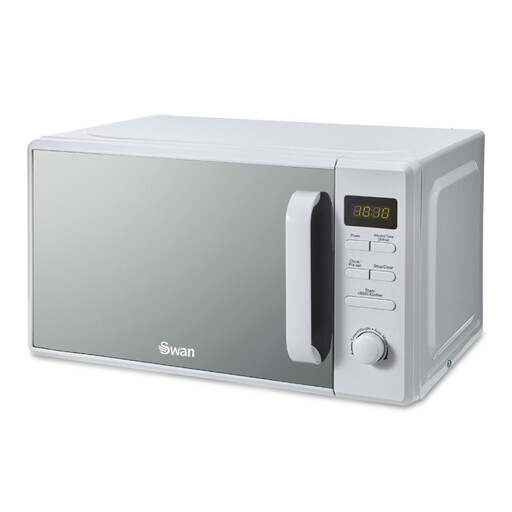
Swan SM4421WHT 20L digital microwave, white
This model offers selectable power settings for people assessing a 20L shared-kitchen microwave.
The product name specifies 800W output, five power levels and a 95-minute timer.
Check how the timer handles short intervals, the available worktop clearance and UK plug and fuse details; use the model manual and recipe for butter preparation.
View on Joybuy
Frequently asked questions
Do I need a grill or convection microwave to soften butter?
No: a solo microwave can cover the basic heating task. Electrical Safety First describes grill models as adding grilling and toasting, while convection models add other cooking functions; choose those modes if the shared kitchen will use them, not for butter softening alone.
What electrical checks matter for a shared-kitchen countertop microwave?
Check the plug, fuse and intended socket before using the appliance. Electrical Safety First advises that countertop microwaves should have a UK 3-pin plug with a fuse and warns against using an extension lead with other high-power appliances because it can be overloaded.
Can I soften butter in any bowl?
Use a container marked as microwave-safe, rather than assuming any bowl will do. Electrical Safety First advises against metal and unsuitable foam or plastic containers; also follow any exposure limit on the container’s label.
How should everyone sharing the microwave look after it?
Clean the cavity and turntable as the manufacturer instructs, and keep ventilation openings clear. Electrical Safety First also advises registering the appliance so its manufacturer can contact you about a safety recall.


