A solo microwave is a suitable choice if warming fruit compote is the job and you do not need grill or convection functions. Measure the microwave-safe serving bowl before choosing a size: its fit on the turntable and inside the cavity matters more than the litre figure alone. If you want finer control while warming, compare power settings, but allow worktop space for any larger model you consider.
Who needs which kind of microwave?
Hosts using a wide serving bowl
If you plan to warm compote in the dish you will bring to the table, measure that dish’s widest point and height. Compare both measurements with the turntable and cavity; capacity in litres does not establish that a particular bowl will fit.
Hosts who want more control over warming
Compare the available power settings if you want to warm a sugary fruit mixture in shorter, gentler stages. Sensor and inverter functions vary by model; neither removes the need to stir and check the compote before serving.
Occasional hosts with limited worktop space
If reheating is your main task, a compact solo microwave may be sufficient once you have checked bowl fit. You need not choose grill or convection functions solely to warm compote.
What matters when choosing?
Start with the bowl you intend to use, then decide how much warming control you want and how much worktop space the microwave can occupy.
| Concern |
What to check |
Who this matters to |
| Serving-bowl fit |
Measure the bowl’s width and height against the turntable and cavity; check the microwave’s external dimensions too. |
I want to warm a larger batch in its serving bowl, so I need the dish to fit and rotate without crowding the cavity. Around 40% of consumers put bowl fit and batch size first. |
| Controlled warming |
Compare selectable power settings and any model-specific sensor or inverter functions; plan to stir and check the compote. |
If I am warming a sugary fruit mixture, I want to adjust the heating rather than rely on full power throughout. Controlled warming is the primary concern for around 40% of consumers. |
| Compact, simple operation |
Check the worktop footprint, controls and timer, then confirm that the smaller cavity still accommodates your bowl. |
For occasional entertaining, I want straightforward reheating without taking up more worktop space than necessary. Around 20% of consumers prioritise compactness and simplicity. |
Mistakes to avoid
-
Choosing by litres without measuring the bowl
A larger stated capacity does not tell you whether a wide or tall serving dish can sit on the turntable and rotate. The cited Sharp 20L models have a 255mm turntable, while the Kenwood K25MS24 listing gives 315mm and Panasonic UK lists 34cm for the NN-ST46KBBPQ.
Measure the dish at its widest point and check its height against the cavity. Also allow room to open the door and follow the appliance’s ventilation instructions.
-
Expecting a feature to guarantee even warming
Power settings, sensors and inverter technology differ between models. Manufacturer descriptions of heating distribution do not establish how every bowl or batch of compote will warm.
Warm the compote in short intervals, stir carefully and check it before serving. Choose extra controls because you will use them, rather than treating a feature name or wattage as a performance guarantee.
-
Using an unsuitable container
Electrical Safety First advises using items clearly marked as microwave safe. Metal can spark, while unsuitable packaging may melt during heating.
Transfer the compote to a microwave-safe bowl, follow any stated exposure-time guidance for the container and stay present while it heats.
-
Overlooking the power supply and placement
Electrical Safety First cautions that a microwave used with other high-power appliances on an extension lead may overload it.
Follow the model’s installation instructions, use a suitable wall socket and check the plug and socket for damage before use.
Relevant brands to consider
These examples show how capacity, controls and worktop size can differ between specific solo microwave models; a brand name alone does not establish bowl fit or reheating performance.
Panasonic
Panasonic UK lists the NN-ST46KBBPQ as a 32L solo microwave with a 34cm glass turntable, seven power levels, a sensor and 1000W inverter microwave power.
- Its stated turntable diameter gives hosts with a wide serving bowl a measurement to compare with their dish.
- The listed external dimensions are 525 × 310 × 388mm, so check worktop space and installation clearances. Panasonic’s statements about even heating are manufacturer claims for this model, not a reason to skip stirring and checking the compote.
Samsung
Samsung UK lists the MS23T5018AC as a 23L solo microwave with touch controls, Quick Defrost and a ceramic-enamel interior.
- Samsung describes its ceramic enamel as easy to clean and says this model’s Triple Distribution System directs microwaves in three directions; these are the brand’s model-specific claims.
- Check the intended bowl against this model’s actual turntable and cavity measurements rather than assuming a 23L appliance fits the same dishes as a larger one.
Sharp
Sharp Consumer UK lists the YC-MS01U and YC-MS02U as 20L, 800W solo microwaves. The manual YC-MS01U has five power levels; the digital YC-MS02U has 11.
- Their listed 255mm glass turntable provides a concrete starting point for checking a modest serving dish.
- A wider bowl may not fit or rotate freely. Check the exact model’s dimensions and current availability before deciding.
Solo microwaves for compote warming
These solo microwaves cover compact 20L and mid-size 23–25L options for straightforward reheating. Compare your serving bowl with the exact model’s turntable and cavity before choosing; the capacity printed in a product name is not a bowl-fit measurement.
 No image available
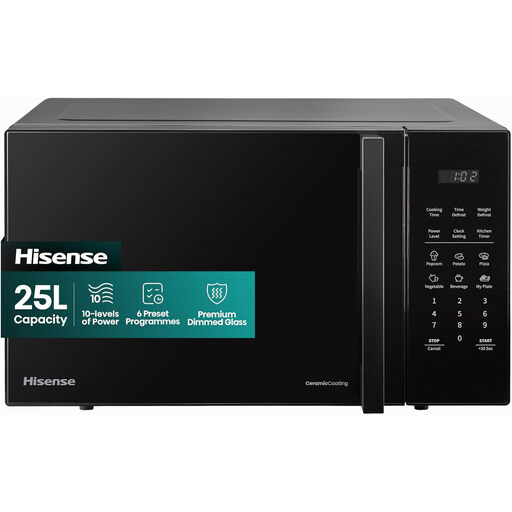
Hisense H25MOBS7HUK 25L digital solo microwave, black
Consider this 25L solo model if you want a mid-size appliance for warming compote; confirm that your serving bowl fits before buying.
The product name specifies 900W output and auto defrost. Check the appliance’s external dimensions against your worktop and leave the required ventilation space.
View on Joybuy
 No image available
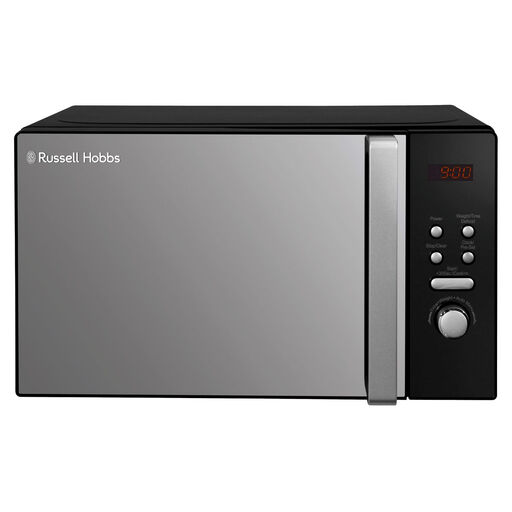
Russell Hobbs RHM2063-AH 20L digital microwave, black
This 20L model is worth considering when you need a smaller microwave and your compote bowl fits inside it.
The product name specifies 800W output and five power levels. Check the turntable and cavity measurements against the bowl you will use.
View on Joybuy
 No image available
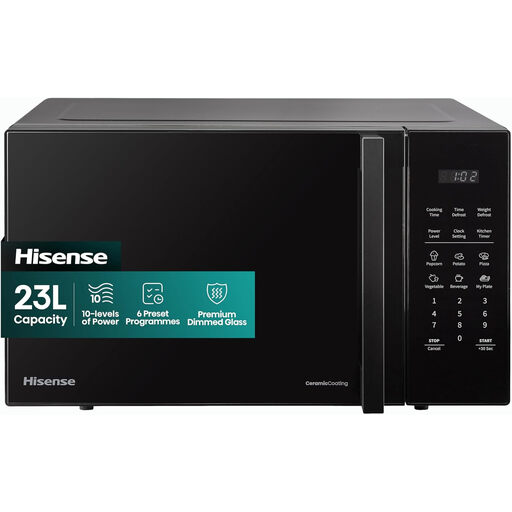
Hisense H23MOBS5HUK 23L solo microwave, black
Consider this 23L solo model if a compact cavity seems restrictive but you do not need a 25L model.
The product name specifies 800W output and auto defrost. Check the bowl’s fit and confirm the exact controls before buying, as the product information describes them differently.
View on Joybuy
 No image available
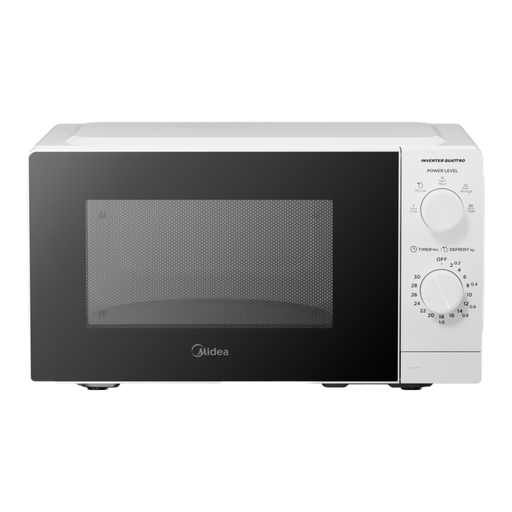
Midea MMOP01MZ-WH 20L manual solo microwave, white
This 20L manual model suits consideration where simple reheating and a smaller appliance matter more than a large serving cavity.
The product name specifies 700W output, MET Inverter Technology and an energy-saving mode; those feature names do not establish heating or energy-use results. Confirm the turntable diameter and your bowl’s fit before choosing it.
View on Joybuy
 No image available
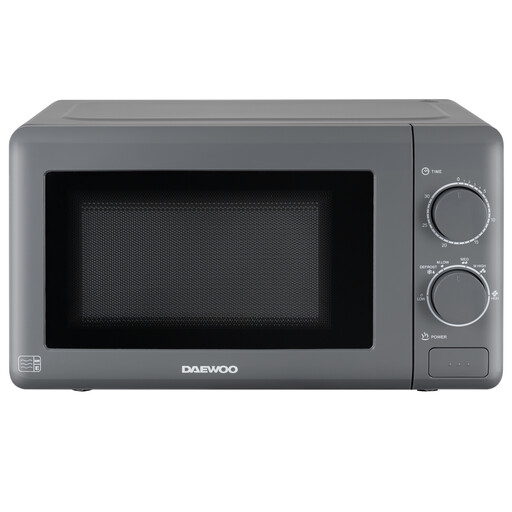
DAEWOO SDA1961 20L manual solo microwave, grey
This 20L manual solo microwave is an option for occasional compote warming if its cavity accommodates your dish.
The product name specifies 800W output and a defrost function. Confirm the turntable diameter and exact number of power settings before buying, as the setting count differs across the product information.
View on Joybuy
Common questions
Is a solo microwave enough to warm fruit compote?
Yes, if warming or reheating is the intended task. Solo microwaves handle straightforward heating; grill and convection functions serve additional cooking tasks and are not needed solely for warming compote.
Can I choose a microwave by capacity in litres?
Not by litres alone: measure your microwave-safe serving bowl and compare it with the turntable diameter and cavity dimensions. Also check the external dimensions so the appliance fits its intended worktop position with the required clearance.
Can I warm compote in any serving bowl?
No; use a bowl clearly marked as microwave safe. Electrical Safety First advises against metal and unsuitable foam or plastic containers, and recommends checking any stated maximum exposure time for a microwave-safe container.
What should I check before using a countertop microwave?
Follow the model’s placement and electrical instructions, including its ventilation requirements, and check the plug and socket for damage. Electrical Safety First cautions against using an extension lead with other high-power appliances because of overload risk.


