For warming custard in a shared kitchen, start with a freestanding solo microwave that has several power levels, a timer and controls everyone can use. A dial-controlled model keeps operation straightforward; digital controls offer more selectable settings, but neither provides a universal custard programme. Measure the shared worktop, use a microwave-safe container and follow any stirring or standing directions on the custard packaging.
Who this suits
Shared-kitchen routine warmers
If several people will warm individual portions, choose controls that are easy to set and reset. The compact solo models described include timers and multiple power levels; agree on a cleaning routine as well as a warming routine.
Gentle-heating control seekers
If avoiding overheated or unevenly warmed custard is your priority, look for adjustable power and timing rather than extra cooking modes. Follow the packaging instructions, including stirring and standing where directed, as advised by GOV.UK and the Food Standards Agency.
Counter-space constrained sharers
If the microwave must live on a communal worktop, measure its position before choosing a freestanding model. A built-in microwave is a different installation decision: the Bosch example is designed for a 38 cm cabinet niche.
What matters when choosing
Decide how much control the kitchen needs, then check that the appliance and the bowls used for custard will fit the available space. For a packaged product, its microwave directions take precedence over a preset or a time copied from another portion.
| Concern | What to check | Who this matters to |
|---|
| Controlled warming |
Look for selectable power levels and a timer that allows short intervals; follow any package directions to stir or leave the custard to stand. |
If I warm portions of different sizes, I want to adjust time and power rather than rely on one preset. Around 42% of consumers put controlled warming first. |
| Easy shared use and clean-up |
Choose controls the kitchen users can operate and check how the turntable and cavity should be cleaned. |
When several people use the same microwave, I need a simple routine for setting it and clearing up splashes. Ease of shared use is the main concern for around 33% of consumers. |
| Worktop space and bowl fit |
Measure the worktop, door-opening space and ventilation clearance; check that your bowl fits inside the cavity. |
If communal counter space is limited, I need room for the microwave without making the worktop awkward to use. Around 25% of consumers prioritise fit and usable capacity. |
Mistakes to avoid
-
Treating wattage or an automatic programme as a custard setting
A microwave’s settings do not establish one suitable time for every portion, container or starting temperature. GOV.UK and the Food Standards Agency advise following the food manufacturer’s microwave instructions, including stirring and standing where specified.
Choose adjustable timing and power, use short monitored intervals, and follow the custard packaging when it provides directions.
-
Putting unsuitable containers or foil in the microwave
Electrical Safety First warns that thin metal items such as foil or cutlery can spark, and advises using items clearly marked microwave-safe.
Transfer custard to a microwave-safe container when needed, removing foil lids and metal cutlery before heating.
-
Choosing a built-in unit for a temporary worktop need
A built-in microwave needs a compatible cabinet niche; it cannot simply take the place of a freestanding worktop model. The Bosch example is designed for a 38 cm niche.
Choose a freestanding unit unless the shared kitchen has an appropriate niche and fitting arrangements are clear.
A built-in choice also commits the kitchen to fitting and future replacement arrangements.
-
Forgetting cleaning and ventilation in a communal kitchen
Splashes affect the next person using the appliance. Electrical Safety First also advises keeping microwave vents clear to prevent overheating.
Agree who cleans the cavity and turntable, wipe up spills promptly and leave the manufacturer’s required ventilation space unobstructed.
Brands to consider for this task
These model-specific examples illustrate different controls and space requirements; a brand name alone does not tell you how a particular microwave will fit your kitchen.
Sharp
The Sharp YC-PS204AU-S is a 20-litre, 700 W solo microwave with touch-and-dial controls and 10 power levels.
- Its selectable settings suit users who want more control over short warming intervals.
- Measure its placement and ventilation space; more settings do not establish a custard-specific heating result.
Beko
The Beko MOC20100BFB is a 20-litre, 700 W solo model with dial controls, six power levels and a 30-minute timer.
- Dial controls may suit a kitchen where several people need to set a warming interval quickly.
- This particular model has no digital display; check whether its control style suits everyone who will use it.
Hisense
The Hisense H20MOWS4UK is a freestanding 20-litre, 700 W solo microwave. Its dimensions are listed as H26.1 × W45.5 × D32.6 cm.
- Stated exterior dimensions give you a starting point for checking the proposed worktop position.
- Its automatic programmes do not replace custard-package directions or a check that your container is microwave-safe.
Hamilton Beach
The Hamilton Beach HB70T20S is listed as a compact 20-litre, 700 W solo microwave with six power levels.
- A timer and selectable power levels cover the basic controls relevant to warming custard.
- The listed features do not establish how evenly a particular portion of custard will warm.
Solo microwaves on Joybuy
These solo microwaves offer dial and digital controls for a shared-kitchen warming routine. Compare the 25-litre model’s worktop fit with the 20-litre choices before deciding how much capacity you need.
 No image available
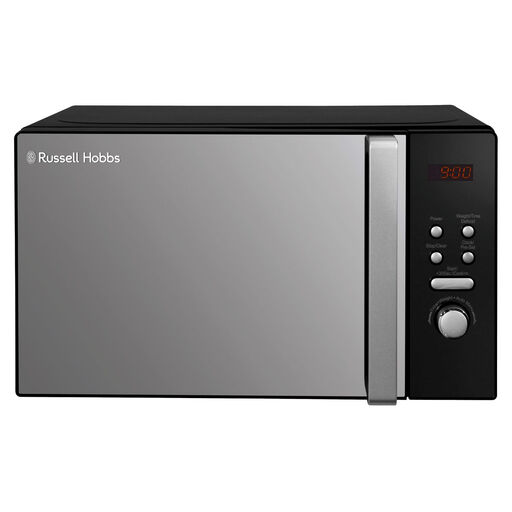
Russell Hobbs RHM2063-AH digital microwave, black
Consider this for a shared worktop if digital controls suit the people using it; check its dimensions, door clearance and cleaning instructions before purchase.
20 L capacity, 800 W output and five power levels are stated in the product name. Follow the custard packaging rather than assuming a fixed warming time.
View on Joybuy
 No image available
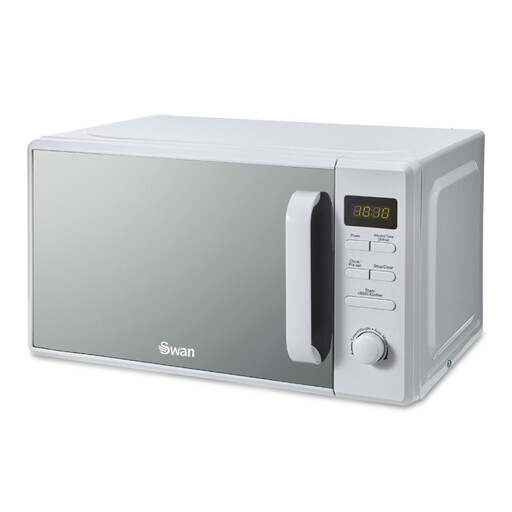
Swan SM4421WHT digital microwave, white
Consider this if the kitchen users prefer digital timing; agree on a simple warming and clean-up routine for shared use.
The product name specifies 20 L, 800 W, five power levels and a 95-minute timer. Check the available worktop space and use the custard’s package directions for the portion being warmed.
View on Joybuy
 No image available
Sharp YC-PS201AU-S manual solo microwave, silver
Its manual controls may suit a kitchen where several people want to set a short warming cycle without navigating digital menus. Confirm that its timing controls meet the group’s needs.
The product name specifies 20 L, 700 W and six power levels. Measure the proposed worktop position and door clearance.
View on Joybuy
 No image available
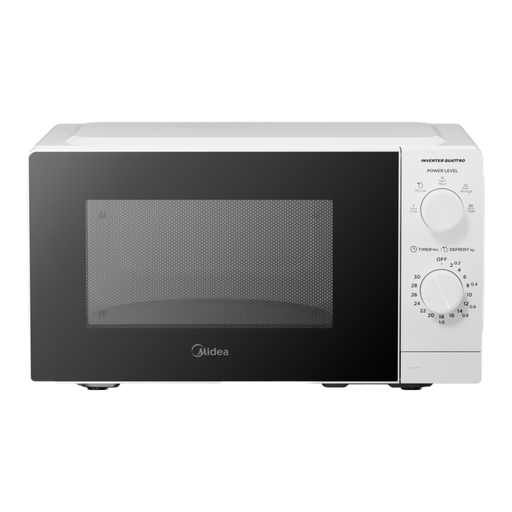
Midea MMOP01MZ-WH manual solo microwave, white
Consider this manual-control option if straightforward shared operation matters. Check its size and ventilation requirements against the intended worktop position.
The product name specifies a 20 L capacity and 700 W output. Its inverter technology is named in the product title, but that does not establish a particular custard-warming result.
View on Joybuy
 No image available
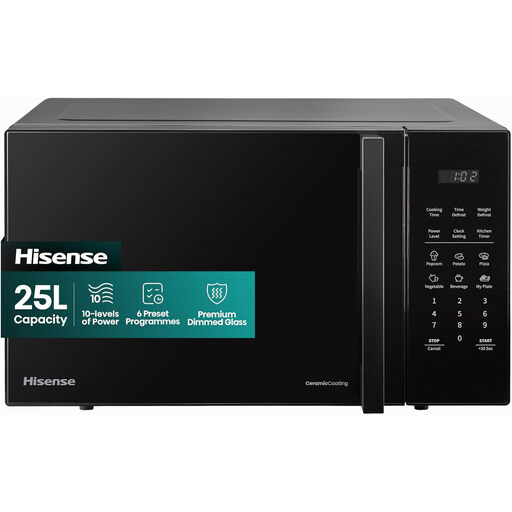
Hisense H25MOBS7HUK digital solo microwave, black
Consider the larger cavity if the kitchen users need room for bigger containers, but check whether the appliance leaves enough shared worktop and door-opening space.
The product name specifies 25 L and 900 W. Confirm that its timing controls suit short warming intervals, and follow the custard packaging rather than an automatic programme.
View on Joybuy
Common questions
What type of microwave is enough for warming custard?
A freestanding solo microwave with a timer and several power levels is a sensible starting point for a shared kitchen. Choose controls the users can operate comfortably and check the worktop and bowl fit; grill or combination functions are not needed for this narrow warming task.
Is there one microwave time or power setting for custard?
No single setting suits every portion and container. Follow microwave directions on the custard packaging, including stirring and standing where specified; GOV.UK and the Food Standards Agency advise following those manufacturer instructions. For custard without package directions, use short monitored intervals and check it carefully.
Which container should I use to warm custard?
Use a container clearly marked microwave-safe. Electrical Safety First warns that thin metal items such as foil or cutlery can spark, so remove them before heating and do not assume ordinary storage packaging is suitable.
How should we look after a shared microwave?
Clean spills promptly and clean the cavity and turntable according to the manufacturer’s instructions. Keep the vents clear as Electrical Safety First advises, and agree who is responsible for regular cleaning so the appliance is ready for the next user.


